
Introduction:
Praise be to God. There is no other God except God. Today I want to actually make a commentary on the surah, the Romans. I’m just going to read some verses and kind of comment on it a little bit.
I seek refuge in God from Satan the rejected. Surah 30 in the Quran is titled: “The Romans”.
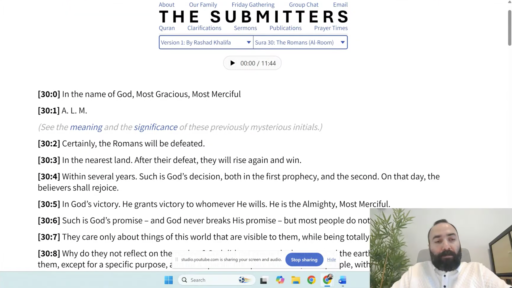
[30:0] In the name of God, Most Gracious, Most Merciful
[30:1] A. L. M. —which we know the geometrical value of ALM is 71, so we can also just say 71.
[30:2] Certainly, the Romans will be defeated.
[30:3] In the nearest land. After their defeat, they will rise again and win.
[30:4] Within several years. Such is God’s decision, both in the first prophecy, and the second. On that day, the believers shall rejoice.
[30:5] In God’s victory. He grants victory to whomever He wills. He is the Almighty, Most Merciful.
[30:6] Such is God’s promise – and God never breaks His promise – but most people do not know.
Okay, so I just want to comment on these verses. These verses are sort of understood in a very narrow, specific way based on historical sources, and I want to expand today more on that. To do that, before I do that, I want to first show the history of the Romans—who they were and things like that—so we can understand it better and then know how it applies to us today.
One of the things which I quite often like to do online—when I’m bored—is I like to watch states expand. Let’s say how the US was colonized or how ancient empires expanded. It’s just kind of like watching maps—I like maps. So I’m going to show a YouTube video. I hope you guys can see it okay.
The Expansion and Splitting of Rome
The YouTube video is “History of the Romans Every Year.” So basically here at the right corner, let me see if you guys can see it—yeah, I think you can see it—here at the right corner, we have the year, and here we have whoever was the king and the capital. Rome pretty much started around the year 750. It’s not for sure, but approximately then. I’m just going to play the video so we can see how Rome; the Roman Empire, expanded and then how it kind of vanished, and comment. Maybe I’ll comment on the way, so let me play the video. I’m going to play it at 1.5 speed so it doesn’t get boring.
Basically, this red dot here is Rome. Supposedly, I don’t know if it’s true, started by two brothers—one of the two brothers—and it just expanded from there.
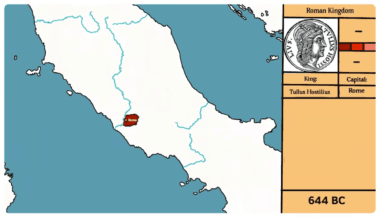
So this is around the year 600 BC (Before Christ).
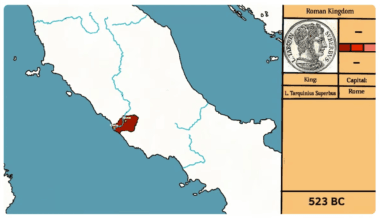
And about 500 BC.
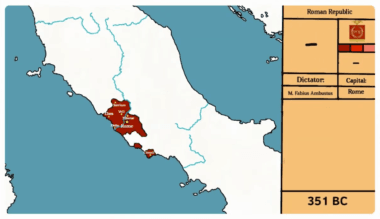
And this is around the year 300 BC.
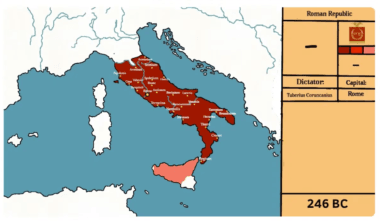
Pretty much as Greeks are getting weaker, the Roman Empire is much stronger, but they are including the Greeks there.
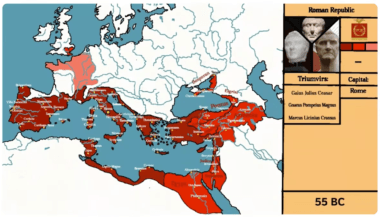
By the year 50, it includes Israel as well, Jerusalem. So at year zero, which is when Jesus was born, it included Israel, so technically Jesus was born in Israel but within the Roman Empire. [By year 150] It expanded I think all the way to Britain and all the way to Romania, I guess, and Spain.
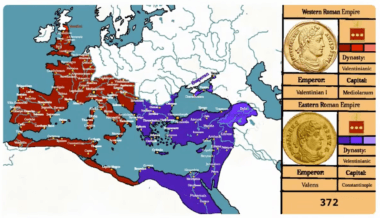
Now we have two sides, I don’t know exactly the dates. First it was split for practical reasons, and then it remained like that: split into the Eastern Roman Empire and the Western Roman Empire—two separate empires, sort of separate empires.
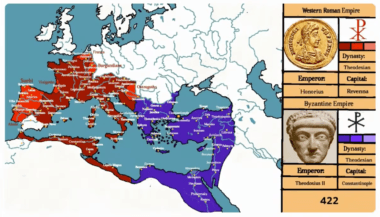
We are around the year 400 here. The Western Roman Empire pretty much fell very early around the 400s, depending on how you define it.
The Eastern Roman Empire, they called themselves, by the way, Romans. Here in the video, it says Byzantine, which is a later name used by historians and the Greeks because what they wanted to say is that they weren’t Christian enough—that’s what they meant by that, and it’s a later name. But the people in the year 400 in that region—let’s say the people in Turkey, the people in Egypt, the people in the Balkans, the people in Syria, the people in Israel—if you ask them, “What are you?” they would say Roman. That’s all they knew. They didn’t identify themselves as Egyptian or Albanian like today; they would say Roman in that region if you asked them in that year. Later on, they renamed those regions. They had cities of course, so they would say “I’m from Jerusalem if someone is from Jerusalem or from Petra. They themselves would think that they are Romans.
The Revelation of the Prophecy
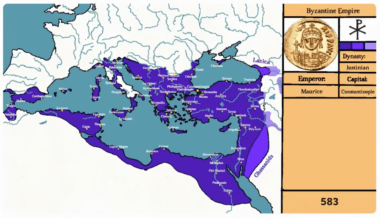
Around this time, Muhammad was born. Now we are at year 595, 602, 606, 608, 610, 611, 612.
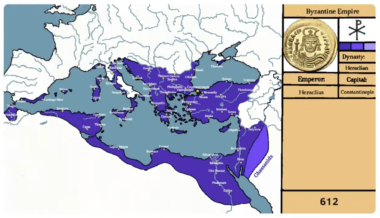
This is the key part. Most historians will focus only on this part because the Quran does mention it. Let’s go back to the Quran, what the Quran says. The Quran says, [30:2] Certainly, the Romans will be defeated. That’s how Rashad translated it, but in the Arabic, it says certainly the Romans pretty much just got defeated.
This Surah was revealed in the year, I think, 613 or 614—I think 614 is the more accurate date—and it says certainly the Romans pretty much got defeated in the nearest land. After their defeat, they will rise again and win. So in the year about 614, Muhammad was being persecuted in Mecca, and news comes from the Romans that they had been defeated. News comes to Saudi Arabia, and God reveals this Surah telling Muhammad pretty much don’t worry, they will rise again and win.
The reason why this is revealed is because the idol worshippers of Mecca during the time of Muhammad favored the Persians more because they didn’t have scripture; they were not people of the scripture. Meanwhile, Muhammad and the believers wanted the Romans to win because the Romans had the scripture—they had the Bible and all that. So they were rooting for two different teams, if you can say that.
The Romans got defeated in 614, which is pretty much the time when Muhammad is really being persecuted a lot in Mecca. Later on, we’ll see that when the believers win at the Battle of Badr—which is the first time that the believers win—is also when the Romans come back and defeat the Persians back.
Here we’re at year 612, and what happened, by the way, in 614—pay attention to this region around Jerusalem. This is year 612 now, 614—look, they kind of lost Jerusalem.
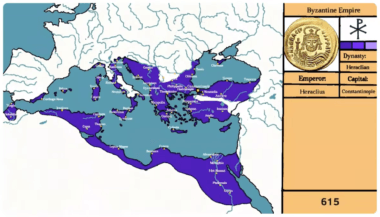
No, this is 615, the map is going fast. Around 614 they lost Jerusalem, and this is the region which would be in contact with the Arabs, meaning that the Arabs, when they thought of Romans, they pretty much thought of the closest part which they encountered from the Romans. That’s why the Quran says “in the nearest land,” meaning whatever part of the Roman Empire is nearest to Mecca and to Muhammad, that was defeated—not necessarily all Romans. We can understand it like that, even though you’ll see we can also understand it globally.
Around 614 this region was lost around Jerusalem; the Persians defeated the Romans, and then about 8 to 10 years later they get it back. That’s what the historians will mention as the reason for this Surah. We’re going to 619—look, the Persians even got Egypt at some point, and look now at around 624 or around 630 they get it back again.
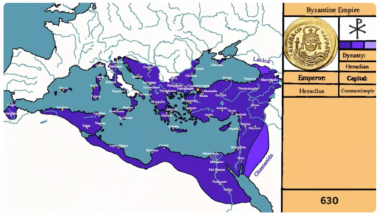
The map is moving fast, so it’s really hard to catch it. Around 630 they have it back again, and this is what the believers of the past meant when they read this surah; this is what they understood.
Expanding to a Global Prophecy: The Fall of 1453
However, as we can see, Rome is a big empire spanning through many centuries. Do you think God would just mention a specific case? Let’s continue because actually they lose it again. Does it mean that actually they didn’t win? What happened? Let’s actually continue through the whole history and understand it fully.
Rome is losing again here, meaning it’s getting smaller around the 600s. By the way, at this time, even though in the year 700 Rome was part of the Roman Empire, it was actually Constantinople which was the capital—the center moved to Constantinople, what today is called Istanbul. We’re around the 800s. As you can see, the Roman Empire is just getting weaker and weaker. Even at this point, if you ask these people, “What are you?” they would say Romans.
The year 1000 comes. As you can see, the Roman Empire is getting weaker and weaker, and they were just trying to survive as they were. At this time they were being attacked by the Ottomans, or surrounded by the Ottomans who are, at least in name, Muslims. Pay attention now to these regions, which are pretty much colonies of Constantinople. The main region is the center in Constantinople at this time.
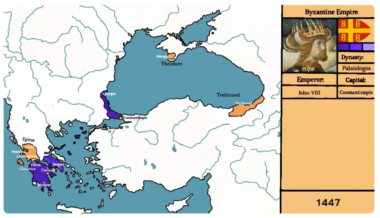
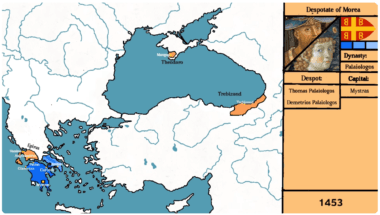
Here is the year 1447, and in the year 1453 Constantinople falls; it becomes Istanbul after that. That’s when the historians agree that the Roman Empire fell—it pretty much was defeated in the year 1453. Let’s go to 1452—look, Constantinople is gone. By the way these are some regions which end up losing as well. Pretty much the Roman Empire ends in 1453. It’s defeated by many nations gradually. But finally, the Ottomans give an end to it in 1453 when Constantinople falls, or according to some, when it is freed. This is pretty much the history.
The question which I want to ask is: when we now go and read the Quran again, it says:
[30:2] Certainly, the Romans will be defeated.
[30:3] In the nearest land. After their defeat, they will rise again and win.
[30:4] Within several years. Such is God’s decision, both in the first prophecy, and the second. On that day, the believers shall rejoice.
[30:5] In God’s victory. He grants victory to whomever He wills. He is the Almighty, Most Merciful.
When we read these verses, does it make more sense to just think of a specific case in history, or do you think it’s talking about all of the Roman Empire? It definitely makes more sense to talk about all of the Roman Empire. So what I’m saying is that the way they understood it in the past about a specific battle in the year 614 is such a limited understanding. The Quran does apply to it, but it’s limited because it’s not the whole Roman Empire which loses. Here the Quran is talking about the Romans being defeated; I don’t think we should limit it only to the fall of Jerusalem. Technically, when the Quran says the Romans will be defeated, it is a big historical prediction for centuries, for thousands of years, and eventually they did get defeated in 1453.
Understanding “The Nearest Land” in Time
But then what does the Quran say? It says “in the nearest land.” How can we understand “in the nearest land” In this case? We can understand it actually with a better understanding. So when the Quran says “the Romans will be defeated”, we can understand it many ways. However, the best understanding, at least for us, for our generation, is that it is talking about all of the Roman Empire, not just Jerusalem. All of the Roman Empire will be defeated, and it says “in the nearest land.” What does it mean? It means the land which is nearest to us for the Roman Empire.
So basically, if we go backwards in time, who are the people who would be the nearest to us in time—not in space, in time—who would be Romans? That would be Istanbul.
Basically, what it’s saying here is that the Romans will finally be defeated in the nearest land—which is Istanbul, because that’s the latest time that the Roman Empire existed, which is nearest to us. When we read the Quran today, the nearest Roman Empire to us in the past was in 1453. Before that, it was even further, deeper in history, further in the past. But the nearest part was in 1453. So the Quran says that “the Romans will be defeated in the nearest land”, meaning in Istanbul, after their defeat they will rise again and win. It’s a prophecy.
What does it mean that the Romans will rise again and win? If we understand it like this, it actually helps us sort of understand the future, not just the past. The way they understood it in the past, it was all about the past. But if we understand it like this about all of the Roman Empire, we don’t just focus on the past, but in this way we can also understand the future.
Again, what the verse is saying: “Certainly the Romans will be defeated in the nearest land”—meaning the nearest land to us in time is Istanbul. And then it says after their defeat they will rise again and win. What does it mean they will rise again and win?
In 1957, there was a thing called the Treaty of Rome, where the European Union was created, and the European Union is pretty much similar to the Roman Empire. How is it similar? First, it starts with Rome. By the way, 1957 is a multiple of 19, but it doesn’t matter. It starts with Rome, and it expands and contracts—there are countries which join, countries which leave, similar to Rome. And it’s a predominantly Christian community, which was exactly how Rome was. And it’s pretty much in a similar region—it doesn’t have to be exactly the same region because even the ancient Roman Empire had different regions at different times in history. But they all included Rome. It wouldn’t make sense for the Quran to call the Romans Romans unless it included Rome, because that’s where the name comes from.
Let’s look at the European Union, which was created in 1957. Let’s repent. Toubou ila Allah
Praise be to God. There’s no other God except God.
The Romans were defeated in 1453 totally, and then they didn’t come back until the Treaty of Rome, which established sort of a new community of different regions, now they are countries to join and leave. Let’s look at the history of the European Union—this is shorter. The European Union started in 1957. Technically, they say that it started earlier, but then it was called the European Steel and Coal Community. I don’t think that counts as EU. The reason is that after World War II, some of these countries agreed that they are going to produce steel together, not separately, so that they could not produce weapons and fight against each other. They didn’t want to fight again, so it was called the European Steel and Coal Community. But that doesn’t make a state; that doesn’t make an empire or a community, because it’s just about steel, it’s just business.
In 1957, when the Treaty of Rome happens, that’s when they eliminated tariffs and created a common market. Basically, that’s what makes a state. They wanted to have shared travel, a shared market, and trade without tariffs—basically the beginning of a new entity which is called the European Union. Let’s see the history of this European Union.
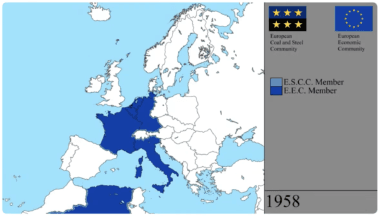
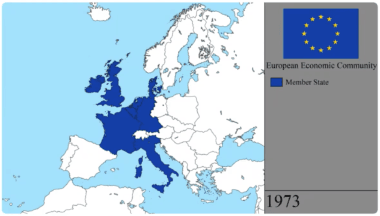
This is 1957, so these are the first countries which join. The UK joins around the 1970s. Greece joins around 1981. Basically, a community which started again with Rome is expanding through 1995, 2004, 2005, 2007, and 2008,
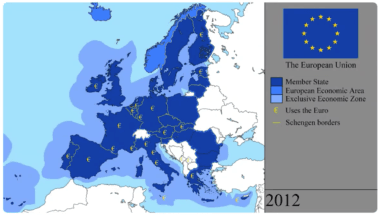
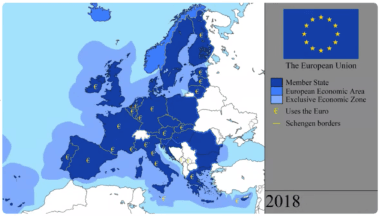
and it’s pretty much similar even today. So this community is expanding.
Future Predictions and the Rejoicing of Believers
Looking back at the Quran, we can actually make predictions because what does the Quran say? Certainly the Romans will be defeated. They were totally defeated in 1453 when the Ottomans defeated them in the nearest land, meaning in Istanbul. After their defeat, they will rise again and win, because here it’s talking still about the nearest lands, meaning that EU will rise again and win, basically capture Istanbul—probably willingly, it doesn’t have to be a war. Turkey has wanted to be part of the EU for a long time; they just don’t want them because they are mostly Muslim. So the EU doesn’t want Turkey to be part of the EU, even though Turkey for a long time has wanted to become part of it. I don’t know about today, it has shifted a little bit, I think they don’t want it as much.
But we can see here that eventually, the prediction we can make is that eventually Istanbul will become European again, whatever it means. I don’t know what it means exactly. Does it mean they join on their own, or does it mean there’s going to be a war and they lose? It doesn’t matter. The important part is—and a lot of Turkish people probably want to be part of it, it’s fine—we can predict into the future what will happen based on verses in the Quran, if we understand the Quran globally, not just as one specific event.
The more important part is what the Quran says after that, in the next verses: it says “within several years.” The Romans will win again, meaning Istanbul will become again part of the Roman Empire, in this case EU, it says within several years. By the way, the “several years” in Arabic doesn’t give us specific years, and we can know that exactly from here. Maybe we can talk another time about this.
ALM, the value of this is 71, so 71 years from—I explained something in the video of the end times, you can see that in the video of the end times. Within several years, such is God’s decision, both in the first prophecy and the second. This has many meanings. The first prophecy can be understood the old-fashioned way or the new-fashioned way, but also the first prophecy meaning when they lost and when they win. There are so many ways to understand it, and all of them are correct. What I’m saying is this is the most correct because it includes all of history. All of them are correct, but this is the most correct way to understand it, because it includes all of history, not just one specific time.
On that day—and this is the important part—on that day the believers shall rejoice in God’s victory. He grants victory to whomever he wills. He is the almighty, most merciful. What does it mean? This means that when Istanbul becomes part of Europe—whatever it means, I don’t know if it’s going to be called the European Union, or if it is going to change its name, it doesn’t matter how it’s called. The important part is that it’s going to become part of a predominant community which is mostly Christian, where Rome is also in the same community. We can define it like that, because I don’t want to make predictions about the EU specifically; the EU can change, it can fall, it doesn’t matter. The important part is that Istanbul will be part of that future community which is very likely the EU, which is why in the video at times I called it Europe instead of the EU, because you never know, they change the names.
The important part is that at that time, it says the believers shall rejoice. Some people say today it’s part of Europe. It’s not. I mean, part of it is in the European continent, but does it really share the same trade? Can people from Istanbul travel to Rome without a visa? No. So, basically, think of it like when people of Istanbul can travel to Rome without a visa and without any restrictions, like basically being considered the same citizens as the people of Rome. So, basically, when the citizens of Rome and the citizens of Istanbul are pretty much citizens of the same community, that’s the better definition. So, it says on that day the believer shall rejoice, and this is the good news. The good news is that around that time—which I believe is told to us by this ALM, by the number of years—so, around that time, the believers, and this is by the way after the smoke comes, the believers will become a dominant community, basically with mosques with thousands—I don’t know how many—probably a million, lots of submitters. And they are going to be able to meet with each other and they will rejoice, meaning that they will feel like, “Oh kind of we won, we made it. We made it”. Even today, the community is going well, but we really are such a small community, and during the time they feel like, oh, we kind of made it. So, let’s just keep going.
Does anyone have any questions? If you want to know exactly when that year is, I don’t want to specifically focus on the years here; it is in the video “The End Times” and the video explaining Quranic initials predicting the future.
Questions from the Congregation
Faisal is asking, “Will the rejoice of the believers be just because of travel restrictions or will other things happen?”
No, the believers will rejoice because—I didn’t want to go into specifics, but let me say it like that—at that time, the next messenger will come. And by rejoice, that means that actually they will sing songs. The method of preaching for the next messenger will be to sing, and they will sing. Singing is connected with victory in pretty much all the times of believers. David sang when he won; whenever the believers won, they did sing, or whenever they sang they did win—whichever causes the other one. What it’s talking about here is that the future messenger and the believers will be in a state of joy and celebration. It doesn’t have to do with the travel restrictions; that’s for the Turkish people, meaning that the Turkish people can rejoice for having the travel restrictions removed, but submitters are not necessarily Turkish people. Submitters will rejoice for another reason, which is that yes, Alban was correct about this, yes, the next messenger came, and yes, we are having fun, if we can say it like that, with the next messenger. Basically, they will be dominant; they will have reason to be happy in this world. Of course, we are happy for the next world and we’re happy in our souls, but I’m talking about ethnically happy, more rich.
Let’s see if someone has any other question. The reason why I’m saying this, partly, is because when the Romans won again during Muhammad’s time, Muhammad didn’t win with the Romans; he won in the Battle of Badr, which was a separate winning. One more question, and God willing, I will end it.
Faisal is saying, “If we are alive then,” with a smiley face. “If we are alive then we will be so old.”
Well, let me say something. For those who get lucky to have children, they want their children to be happy more than them, and only parents understand this. It doesn’t matter if someone is not enjoying that part. Probably a lot of us will be dead, maybe most of us, I don’t know. A lot of us, some of us will survive. People live long these days. And by the way, Faisal, why so pessimistic? I think you’ll be alive, you’re so young, God willing. I don’t know for sure, but I think you’ll probably be alive—old, but yeah, alive. Okay, so anyway.
Faisal is saying, “Ah, I’m not pessimistic, just a wake-up call.”
Yeah, okay, thanks for the reminder. I understand you’re being a little bit—but yeah, it’s important to understand that then it’s not going to feel like—because here is the issue. When believers become old, they focus on the hereafter more and more. Moses never managed to go to the promised land on this earth, even though God had promised the people of Israel that they would go to the promised land; Moses never managed that. However, he got better: he went to heaven, and that’s the bigger promised land. If you ask Moses at the time, “Would you rather go to heaven or wait for this victory?” Moses would say, “Yeah, I want to go to heaven,” because by the time people get old, they really look forward to the next life rather than this life. They want the other submitters, the younger submitters, to be happy, but for themselves, they just want to prepare for the next world. That’s how a typical believer behaves. They get old, and they just want things for the next life more than for this life.
God willing, whoever gets old among us—most of, I think almost all of us are believers, if not all—wait for this victory. This is just such a flimsy victory, flimsy in the sense that it’s just about this world. It’s not really that important—I mean its important because the Quran mentions it. But its not the most important thing; only a few verses about it are in the Quran. The real victory is in heaven.
Let’s do the contact prayer for whomever has to do the contact prayer, and the rest of you, peace be upon you.
Friday Sermon by: Alban Fejza, Online Congregation Director