
Introduction and Recap of the Last Sermon
Praise God. Praise be to God; there is no other god except God.
In the last Friday sermon, I spoke about Dhul Qarnayn, and we concluded that Dhul Qarnayn was Cyrus the Great—I think he is also called Cyrus II. We concluded that from the Bible and pretty much from the Quran as well, a little bit. We used the Quran as a framework, and then we found the details in the Bible.
The topic is: who was Dhul Qarnayn? Dhul Qarnayn is mentioned in the Quran. It means “the one with the two horns,” and we concluded that it was Cyrus the Great, one of the people who helped the Jews. He traveled on one side of the earth, on the other side of the earth, then another side. We know that.
Linguistic Insights into the Quranic Text
According to Arabic, but many other languages as well, when God says “he”—even in Albanian—it does not automatically mean a gender like a male. Sometimes in a lot of languages, actually in most languages except for English and a few others, “he” is used for objects as well. For example, in Albanian, the TV is a “he” and the microwave is a “she.” I don’t know how they came up with this, but it is just grammar. That is why in the Quran, when God says “he,” it does not automatically mean that He has male organs; it just means that languages have only two genders, and those genders are sometimes used for objects as well, for things.
In Albanian, for example, a mountain, mali, is a “he,” while a hill is a “she.” We can go deep into the psychology of why people decided to call some objects “he” and some objects “she.” Psychologically, I think it has to do with the fact that things which do things to others are usually called “he”—kind of like the more dominant things which act on others. Things to whom things are done, are usually perceived as female, psychologically, and that is why they use those different genders. Let’s say a river in Albanian is a “he,” lumi, because it can do things to you. But a tool, you do things to it, so it is a “she.” A stick in Albanian is a “she.” This is also in Arabic, sort of; it uses those gendered nouns for things, as do most languages.
What that means is that when God says “he” about Dhul Qarnayn, it does not necessarily mean it is a human male. First of all, it never says it is a human. Second of all, when it says “he,” we can literally translate it as “it” in English as well. God willing, when I read the translation, I can use the word “it” as well, because, again, we haven’t concluded necessarily that it is always talking about a human.
The Prophetic Nature of Quranic Terminology
How do we know it is not necessarily talking about a human? First of all, why would God tell us about Dhul Qarnayn, the one with two horns who is Cyrus the Great, and not just say Cyrus the Great? God could have just said Cyrus the Great. People knew the name of Cyrus during that time, in whatever the Iranian or Arabic version was; they knew the name. God could have just used his name, but God didn’t. The reason for that is because the Quran is revealed for all times, and therefore, for our times, we can learn more from those verses, not just about Cyrus the Great.
We learned the history of Cyrus the Great, but at the same time, using the same language which the Quran uses, we can conclude other things. At the end of the day, Cyrus the Great doesn’t really concern us. He was important for the Jews: for the believers of that time, for the Children of Israel of that time. He was important for that, but he is not really important for us. Do we even care if Cyrus the Great existed or not? Yeah, we know who he is, but it doesn’t matter to us much. That is why God uses double meanings, many meanings, in those verses. Those verses which mention Dhul Qarnayn: “the one with two horns”, have many meanings. The one with two horns has many meanings: some meanings refer to the past, and other meanings refer to our time so we can understand other things.
Defining the Symbolism of “Horns”
Let’s try to find out together what the one with two horns is. Before we find out what it is, first of all, let’s define what a horn is. What is a horn?
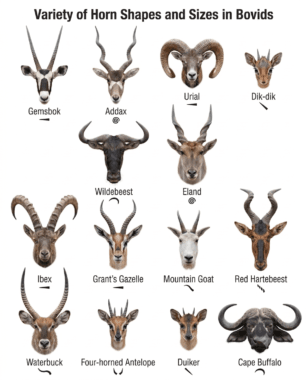
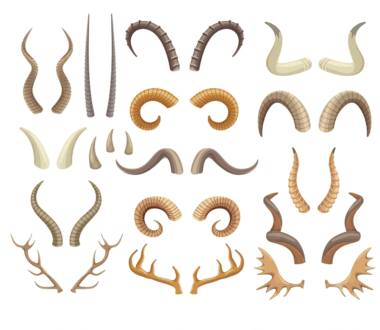
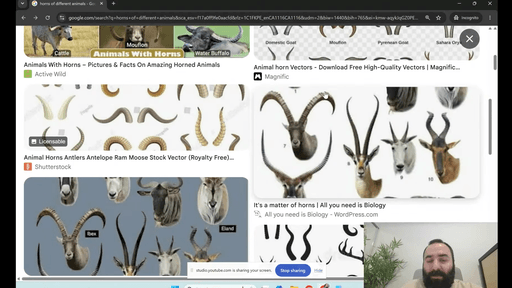
These are horns. What do they have in common?
Let’s define what a horn is. First of all—what can we conclude?
- They always come in two. I don’t want to use the word “pairs” because it is a repetition, but maybe I have to use it in English, I guess: two pairs, or a pair, let’s just say two.
But what are they made of?
- They are made of organic material. All horns are made of some specific stuff. Also, they usually have bones inside, so that is organic material. So, two organic materials which mirror each other. As we can see, the left horn is always almost the same—not exactly the same, but almost the same—as the right one. We can say they mirror each other.
So far, we have defined it this much: horns are two organic materials which mirror each other, useful for living creatures.
The Biological Purpose: Protecting the Offspring
What are they useful for? What is the function of the horns? Biologists—the people who study these things—I don’t think they have fully reached a conclusion. They have reached a conclusion for the most part. I don’t think they fully understood the depth of why animals have horns, why some animals have horns and others don’t. If you ask a lot of them, they will either say sexual selection, meaning that they are used to show the females which male is stronger or has more protective strength, or they say to protect against predators. For example, the horns of the bull might be used to protect against predators.
Again, we are trying to define what horns are. Horns are two organic materials—I’m defining it right now as we go. Horns are two organic materials which mirror each other, useful for living creatures to do what? This is what I want to explain. If horns were only for protection—let’s say if the bull used the horns only for protection—it would be easier for the bull to invest all that energy which goes into growing new horns, because it takes energy to grow them, and it also takes energy to have them because they are heavy, so it is going to take lots of energy. It would be better for the bull to actually just use that energy for strength to run away. It would be much better for the bull to run away from the wolf than to actually fight it.
Then why does the bull, why do some creatures have horns and others don’t? A rabbit, for example, a rabbit doesn’t have horns. When a wolf chases a rabbit, what does the rabbit do? It runs. It invested all its energy into having fast muscles, and it is going to run away. But the bull doesn’t do that, or it might try to run away, but it also has horns. Why do some creatures have horns?
The reason is to protect their offspring. Basically, what they use the horns for—because the bull can run away, but if the bull has a pregnant mate, let’s say a cow, and if a cow is pregnant, the cow cannot run away. If the bull runs away when the wolf comes, the wolf is going to eat the cow. When she is pregnant, she cannot run. If she has just given birth, the calf—the young cow or the young bull—cannot run either. It cannot run as fast. It can run a little bit, but not as fast. So, there is a period of time when the offspring of the bull, which could be inside the pregnant mother or just very young, is vulnerable. During that time, the best thing for the bull to do is to fight the wolf. In this way, it protects the offspring, the child, rather than running. If the bull runs, the child is going to be eaten.
What we have concluded is that the horns are useful for the protection of the offspring. The bull doesn’t need the horns for itself, because rabbits, which don’t have horns, have small offspring that can hide in holes and dens, don’t need horns. Other creatures (mammals) which can run, or creatures which don’t have vulnerable times. But there are mammals which have vulnerable times, like cows or sheep. I think sheep produce only once a year, and it might be during that time when the wolves will try to eat the lambs. The ram technically has the horns mostly to protect the lamb, not for himself. Himself, he could run; it would be better for the ram (the male sheep) to run from the wolf than to try to fight it. The only reason why he chooses to fight it is because he is trying to protect the lamb and the female partner. So, The horns are two organic materials which mirror each other, useful for living creatures to ensure the continuation of their offspring, basically their children—I don’t know if the word “children” can be used for animals—to ensure the continuation of their offspring. And this is the time when I want you to chat. Now, can someone tell me what else fits this definition? So let’s delete the word horns from the definition.
“______ are two organic materials which mirror each other, useful for living creatures to ensure the continuation of their offspring.”
Connecting Dhul Qarnayn to Modern Science (DNA)
This is the definition of horns. Can we fill in the blank here with something else? What are two organic materials which mirror each other, useful for living creatures to ensure the continuation of their offspring?
- Chat 1: “Mitosis”
- Alban: “Okay, close enough”
- Chat 2: “Legs”
- Alban: “Legs are not to ensure the continuation of your offspring. They are to ensure the continuation of you.”
What passes from the parent to the offspring?
- Adam Fraser is saying, “Chromosomes”
- Alban: “Very close Adam. But what are they made of?”
- Trevor said, “Genomes”,
- Alban: “Yes.”
What I want to say is DNA.
Maybe I should have divided it more. Horns are two organic materials of helical shape, shaped like helixes, shaped like a helix. We saw the shapes of the horns; they are shaped like a helix, and they mirror each other. So, it’s the DNA we’re talking about. The two horns—it’s talking about the DNA, because the DNA… let’s go to the DNA shape. Look at the shape of DNA.
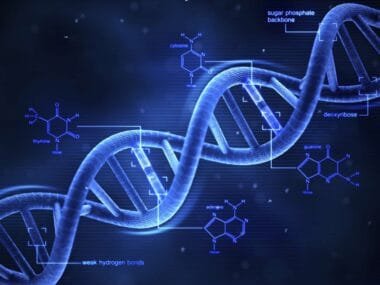
It’s like two horns: one horn and then another horn, and they mirror each other. Technically, these are all microscopic two horns, two horns which are very small. That’s what the DNA is: two horns.
The Discovery of the Double Helix
How I came to discover this is because, years ago, I remembered that in my biology class in the US, in my fourth year in high school—biology was never actually my favorite subject—but I do remember the teacher showing us something about how they discovered the DNA. I think it was a photo of DNA, this photo.
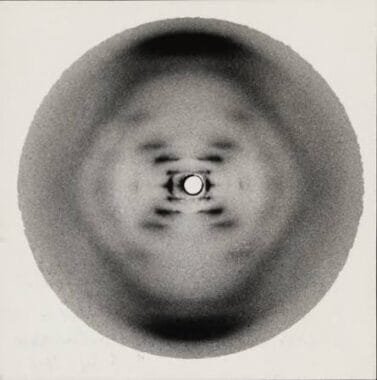
I was amazed at how they found it out, because it’s not actually about biology; it’s more about math and physics.
This is the photo which a woman scientist took; it’s called Photo 51. Basically, it’s just X-rays passing through what is supposed to be DNA. This is Photo 51. There are many other photos which don’t necessarily have this shape, but this one was interesting because it was from a specific angle which showed this shape. Including all the other photos and all the other shapes, the people who discovered that DNA is a double helix used really advanced math and a real-life model to try to figure out which shape would give this shade, because this is technically just a shade through crystals. I don’t know exactly what the method is, but basically, this is an X-ray. They had to imagine, using math as well, what shape would be the cause of that shadow. Because with X-rays we only see the shadow, a 2D shadow. Imagine that this is the shadow of the DNA. They discovered it without ever having seen it; they had never taken a photo of the DNA, but through this shadow and other shadows from other angles, they managed to discover that only a double helix will create that shadow. That’s amazing. That’s why I remembered it, because it had to do with math. I was like, “Wow, they must have been geniuses.” They discovered from the shade what the shape of the DNA is.
Re-evaluating the Quranic Narrative
What I mostly remembered is not just DNA, but that it is called a double helix. Technically, DNA is a double helix; that’s the informal name, double helix. It means two twisted shapes, which is pretty much two horns, because horns are helixes; horns are twisted shapes. We saw how horns look; they look like twisted shapes. Basically, we can replace the words “two horns” in the Quran with the words “double helix,” because it’s the same thing: two horns, double helix. Let’s see what we have. Once we do that, we realize that the Quran is actually telling us the story of the DNA, the story of the double helix.
God willing, we’ll read the story of Dhul Qarnayn again, but instead of thinking of him as Cyrus the Great, we’ll think of it as the double helix. God willing, in one of the future translations, instead of saying “two horns,” it will say “double helix”. Meaning two twisted shapes which are horns and which mirror each other, of course.
Before we do that, let’s first of all repent. Toubou ila Allah
The Linguistic and Genetic Roots of “Qarnayn”
Praise be to God; there is no other god except God. Let’s read the Quran now. Let’s go to the Quran, and instead of saying “two horns,” which is the literal meaning… oh, by the way, it makes sense. That’s why in the Quran, when we go to the Quran glossary, Surah 18, verse 83, I think that’s where it’s mentioned. It says,
“They ask you about Dhul Qarnayn.”
If I click here on Qarnayn, it means horn, but it also means generations.
By the way, the word “generation” has the same root word as “genes.” “Generations” is just like “gene”; it’s the same word in English. Generations means the next offspring, and the next offspring, and the next offspring. It’s the same word in English: genes and generations come from the same word. The root word is also telling us that it’s talking about genes, not only about horns, but also about genes which pass on from generation to generation. That’s what genes do: they pass from generation to generation. It’s pretty much the only thing which passes from one generation to another generation. All the other materials in the human body, or the body of living things, are different, but the genes pass from one generation to another.
Now let’s read this surah knowing that we are talking about the double helix, which also means genes. Let’s read the whole section and try to understand, actually for the first time, what it can teach us. Most of it is already discovered, but it can teach us the journey of the DNA. Let’s read that part of the Surah with this other understanding. I’m going to go to Surah 18, verse 83. This is how I translated it, and this might be one of the translations for this part of the Surah.
Quran • Surah 18:83–86
“They ask you about the one with the double helix (DNA)—the one with two horns, the one with two generations, two genes.
[18:83] They ask you about the one with a double helix (DNA), Say, “I will tell you something about its history.”
It is actually telling us the history of the DNA, how the DNA travels from the beginning until the end, because DNA has been here pretty much almost from the beginning of the earth, and it’s going to be here until the end of the earth. It’s telling us the journey of the DNA.
By the way, I am using a more literal translation. Almost word for word from the Arabic, more than Rashad. Rashad kind of gave himself more liberty.
[18:84] We established (created safety for) it on earth and gave it instructions for everything.
What does DNA do? It has instructions for life.
[18:85] So it followed the path.
Of course, DNA traveled from generation to generation throughout history.
[18:86] Until it reached the place where the sun disappears…
Here we’re not talking about the sunset; here we’re talking about when the sun ends at the end of times, when the sun basically gets destroyed.
The Scientific Symbolism of the Black Hole
Quran • Surah 18:86 (Continued)
[18:86] …It found the sun disappearing in a pupil of black material (black hole), …
In Arabic, it means spring, but it also means pupil; it means the part of the eye, the retina, the circular part of the eye. It says, “in a pupil of black material,” which is like the black part of the eye, but this is the same thing which happens in a black hole. A black hole is just a spring where materials go in and they never come back. Why are they the same, the pupil of the eye and a black hole? They have pretty much the same concept because the reason why the pupil, the most central part of our eye, is black is because the light goes in and it never comes back; it gets absorbed by our eye. Then, as a chemical or electrical reaction, it goes into our brain. I don’t know exactly what kind of reaction, but basically, the light disappears there; it gets absorbed in the eye.
Just like in a black hole, when the light goes in, it disappears and never comes back out. When light hits our skin, for example, part of it comes back, it goes back. When it hits any part of our body, part of it goes back. But when light hits the black part of our eye, the part which sees, it never comes back. That’s why it’s black. It’s the same thing with black holes, and that’s why the word “spring” is used in the Quran. It says it is setting in a spring of dark mud. When you look at the word “spring” in Arabic, ayn, it also means eye.
The root word means eye, spring, eye. The word spring and eye come from the same root in Arabic. The reason is because springs in the desert typically have a circular shape like an eye, and usually, they have some kind of color and a darkness in the middle where it’s deep. That’s why they use the same word. What’s more amazing is that whatever happens in the eye is exactly what happens in black holes: light enters and it never comes back. That’s the most important part.
Now, this is telling us how the sun will end. It says, “until it reaches the place where the sun disappears,” meaning at the end of times, “it found the sun disappearing in a pupil of black material, a black hole.” I explained in the video about The End Times that the way the world will end is that all the stars will be put together, and physicists know that when you put a lot of material together—let alone all the stars, but if you just put a million stars together, not even all of them, just a million is enough—they are going to create a black hole. There is so much material in one space that it creates a black hole; it bends space, and then when light enters, it never comes back, which is why it’s dark. That’s why they call them black holes; they should have called them dark holes rather than black holes, anyway, it doesn’t matter.
Basically, it’s telling us that when the DNA reaches the end of time—by the way, this also tells us that there is going to be DNA at the end of time, which means that there will be people, animals, and creatures until the end of time. When they reach that end of time, the Quran says that the stars will be all put together and thrown into hell. As the stars are put together, they will create a black hole. So basically, the sun—and the sun is one of the stars—will end up in a black hole as they are being put together.
Quran • Surah 18:86–88
[18:86] … It found the sun disappearing in a pupil of black material (black hole), and it found a community there, (people). We said: “O you with a double helix, you may either punish or treat them good.”
[18:87] It said: “As for the one who wronged, soon we will punish him. Then he will be returned to his Lord, and He will punish him with a terrible punishment.
DNA might be used because the Quran says that that is the day when God will make the skins talk and the fingers talk. DNA might be used, meaning… I don’t know, are the bad people going to be created a bit more ugly? I don’t know how the DNA will be used, but probably they might turn out more ugly. DNA will be like, “Oh, I’m not going to be nice to you this time; how about you’re ugly this time?” You know what I mean. Anyway, it’s going to be used just like the skin will be used, our tongues will be used, our eyes will be used against us if we are disbelievers. If people are disbelievers, their organs will be used against them, and also their DNA.
[18:88] “As for him who believed and did good, for him is a good reward. We will speak to him from our command gently.”
Journeying to the Beginning of Creation
Quran • Surah 18:89–93
[18:89] Then it pursued another way.
The DNA, we are imagining, traveled all the way to the future, and now it’s pursuing another way, all the way to the past.
[18:90] Until it reached the place where the sun became apparent…
This means the start, the beginning of times. By the way, this is important to explain: what the Quran calls the sun, moon, and stars is the way we perceive them, meaning the 2D shape, not what the astronomers call the sun. When the Quran says “sun,” it means as we see it, meaning the 2D shape. Astronomers call it the sun disc or the moon disc—basically what we see in the sky as a disc, not as a ball. That’s why the Quran says the moon becomes like an old, curved sheath; it changes shape. It actually doesn’t happen to the 3D moon; it happens to the 2D moon. It’s like the way we use the word “profile” today. When we say to someone, “Send me a profile,” what we mean is the 2D picture; we don’t mean the full 3D face or 3D body. The actual, real face is us, but when we say profile, we mean the 2D representation of that. In the same way, the Quran speaks to us from our perspective. So when it says sun, moon, and stars, it’s talking about the way we see them. That’s why the sun disappears; the 3D sun doesn’t actually set, it’s still there, but the Quran says that the sun does set, meaning that it’s talking about the 2D appearance, what we see in the sky.
What this means is that when it says “when the sun became apparent,” it’s talking about when the sun became apparent on earth, not when the sun was created. It’s the first time when the sun became apparent on earth. You can sort of see this in the video clarification which has to do with the seven days of creation. There you can see that the sun appeared and disappeared, and things like that, because of the atmosphere. There were gases and things which covered the sun, so it was not fully seen on earth. But here it’s talking about the beginning. Not the beginning of the sun, but the first time the sun appeared on top of the DNA.
… It (The DNA) found the sun appearing on a community (of cells) for whom we did not create any covering from it (atmosphere).
Of cells of course, because then there were no creatures, just a community of cells.
Of course, because then there were no creatures, just a community of cells. “For whom we did not create any covering from it.” In the beginning, when the simple cells were created, there were no complex organisms; it was just separate cells. At that time, before plants existed, there was no oxygen and no protective atmosphere. It’s basically through plants that most of the atmosphere was created, most of the oxygen, which forms the ozone layer that protects from the sun. So they had no protection. Basically, in the beginning, the cells which had the DNA didn’t have much protection from the sun, and this actually tells us a lot because this helped with mutations, meaning that it helped DNA change faster so that things could be created. Once you hit the DNA with sun rays, ultraviolet light, and all types of light when there’s no atmosphere, it creates more mutations. It makes evolution faster and harsher—meaning that some creatures will be created faster, but it’s also going to be harsher on other creatures, and they will die faster.
Let’s go back to reading from this part:
[18:89] Then it pursued another way.
[18:90] Until it reached the place where the sun became apparent. It (The DNA) found the sun appearing on a community (of cells) for whom we did not create any covering from it (atmosphere).
We know how the situation was from the video clarification where I talk about the seven days of creation.
[18:91] Naturally, we encompassed the (genetic) information with him.
The Arabic text only says “information”; I added “genetic.” We encompassed the information with it, so basically, God and the angels knew what information was inside the DNA.
[18:92] Then it followed another path.
So basically, it went all the way in the future, where the sun disappears. Then all the way to the past (almost the past), where the sun appeared (on earth)—where the sun was first seen on earth. And now it’s going on another path from the past towards somewhere in the middle (almost middle).
[18:93] Until it arrived between the two barriers…
The Cellular Barrier and Mitochondria
The two barriers are the membranes of the nucleus. The nucleus of the cell has two membranes, one on top of the other, and this is interesting because this membrane did not exist in the beginning. Cells did not have nucleuses in the beginning; there was no nucleus. Later on, it created this protective barrier where the DNA is protected, which was not there in the beginning. It’s telling us that at some point, the DNA reached a place where there were nucleus membranes inside the cell.
Quran • Surah 18:93–98
[18:93] … He found besides them a community (of mitochondria)…
Later we’ll see why mitochondria are that community. Mitochondria are just organelles inside the cell. There are about 100 to 2,000 mitochondria in each cell. Since there’s about a thousand mitochondria in each cell, we can call them a community.
… whose language (meaning genetic code), it could barely understand.
This is what’s amazing, how this shows that it’s really talking about the DNA, because mitochondria are the only part of the cell which has its own DNA. The whole living cell uses the DNA which is found in the nucleus, in the center, but mitochondria have their own DNA. Mitochondria are just small parts in a cell—a community, the Quran calls them—but they have their own DNA. Because it’s different, it’s not exactly the same DNA as the one in the nucleus, it says, “whose language, meaning genetic code, it could barely understand”. Meaning that they have their own language. It’s amazing, right? We’ll see why it’s talking about mitochondria, because it fits completely. They have their own genetic code, meaning their own language, which is not really understood well by the DNA in the nucleus.
[18:94] They said: “O double helix, the fast fires (enzymes which speed up the chemical reactions) and where the fires are placed (probably different types of proteins) are causing corruption on earth.”
The mitochondria said this to the double helix when they were created at some point in time. Scientists probably know approximately at what time cells started to have mitochondria; they didn’t have mitochondria before, but at some point, they started to have them. In the Quran, it says Ya’juj and Ma’juj. In English, they assume that it’s Gog and Magog, but in Arabic, the words Ya’juj and Ma’juj literally mean “fast fire.” It’s not talking about Gog and Magog necessarily; it’s talking about fast fire. Ya’juj means fast fire, and in Arabic, when you add the letter ‘m’ to the beginning of a word, it means the place where that thing exists. For example, sajda is prostration; you add the ‘m’ in the beginning and it becomes masjid, the place of prostration. This happens with a lot of these things; adding the ‘m’ in the beginning creates a place. Probably even Mecca means some kind of place. Basically, Yajuj and Majuj are the fast fires and the place where that fast fire is placed, the place where that fast fire exists.
What is a fast fire inside a cell? It represents enzymes, which speed up chemical reactions. Basically, the enzymes in the cell take chemical reactions which would happen slowly and speed them up. Chemical reactions are the fires, so they speed up the fires. The fast fires mean enzymes, and the place where the fires are placed, probably represents different types of proteins where those enzymes are attached and things like that are causing corruption on earth. Because these enzymes can also damage the genetic code in the mitochondria. Basically, mitochondria are not protected from that, and the mitochondria are telling the DNA in the nucleus, “Can you protect us from these fast fires, from these enzymes? Can we give you something so that you can create a barrier between us and them?” This tells us that initially, the mitochondria didn’t have any protection, and then we’ll see how DNA created the protection for them.
[18:95] It said, “What my Lord established me on is better, but help me with energy (O mitochondria)…
Anyone who really knows this stuff can tell you that the mitochondrion is where energy is stored. “But help me with energy”—basically, the DNA is telling the mitochondria, “Just help me with the energy.” That’s what mitochondria do: they produce the energy. Then it says,
… I will make between you and between them a barrier.
[18:96] “Bring me layers of iron.”…
Where is the iron stored in the cell? In the mitochondria. Mitochondria use iron to produce energy.
… Once he filled the gap between the two cliffs, …
These cliffs are the membranes of the mitochondria.
… it said, “Blow (the oxygen).” Once it was fire, (oxidized)…
In chemistry, “fire” just means oxidized. When chemists say fire, they mean oxidized.
… it said, “Bring me copper to pour on it (to help with iron metabolism).”
Basically, copper in the cell helps metabolize iron faster or better, and iron is used by the cells to produce energy. These are in our bodies. Basically, the DNA helped structure where the iron is going to be, and it helped the mitochondria with that.
[18:97] Thus (the enzymes), they could not go over it or penetrate it.
Because of these irons and coppers, which help the mitochondria produce energy, and the membranes which surround them, the enzymes which would be damaging to them could not go over it or penetrate it; they couldn’t go and damage the mitochondria.
[18:98] It said, ‘This is mercy from my Lord, but when the promise of my Lord, (programmed cell death), comes
Cells die in two ways. In quite a few verses in the Quran, when it says “the promise of God,” it refers to death. When the promise of God comes, quite often in the Quran it means death; we can see that in other verses. But here it’s talking about the death of the cell. Cells can die in two ways: one is by accident, like if you damage it—if I pinch my skin here, some cells will die, which is accidental. The other way is programmed, and almost all cells have a programmed death. What it means is that the DNA tells the cell when to die so that the cell can free up space for a new cell. It dies, it gets degraded, it’s chopped up by different molecules in our body, and then it is flushed out. All our cells die pretty much; I don’t know about neurons, you can check it out, it doesn’t matter, they also die in the end when we die. Here it is telling us that the death of the cell has been pre-programmed.
It said, “This is mercy from my Lord, but when the promise of my Lord, (programmed cell death), comes, He will cause it to crumble…
The barrier between the mitochondria and the enzymes is going to crumble, and the enzymes will rush in and destroy everything, meaning that it’s just going to become a mess. That’s pretty much how cells die. “Inevitable” is the word used in the Quran.
… The prophecy of my Lord is inevitable, (pre-programmed.)”
Programmed Cell Death and Resurrected Life
Quran • Surah 18:99–101
[18:99] At that time, we will let them, the dangerous chemicals, invade one another, …
The cell is just going to become a bunch of dangerous chemicals invading one another.
… then the horn will be blown, and we will summon them all together (to create life again).
Basically, those chemicals are going to be reassembled, and then life will be created again.
[18:100] We will present hell on that day to the disbelievers.
[18:101] They are the ones whose eyes were too veiled to see my message, nor could they hear.
The Quran is telling us the story of the double helix, which is the story of the DNA, and all the verses fit. We can learn a lot about the cell:
- how it was in the beginning,
- how it will be in the end,
- and how it was in the middle of what we call evolution.
It also sort of confirms partially what scientists know about evolution. Of course, this is a better way to teach evolution because it’s saying that God did it; it’s saying that God did it through DNA, but it’s also not denying that the DNA traveled through all those creatures.
This is another way to understand it. Because there are two more things the two horns can refer to. Let me just say it quickly. One other thing it can refer to is the DNA of humanoids, meaning Neanderthals and creatures which looked like humans; you can learn a lot from that as well. It also refers to the earth’s magnetic field, the two poles—North Pole and South Pole—the magnetic field of the earth. Honestly, I think we spent too much time on this; I might talk about it someday, or I might not. Just know that the two horns refer to Cyrus the Great, it refers to the double helix which is the DNA, and it also refers to the magnetic field, the two poles of the earth which protect from the fast fires. Basically, we can translate the whole thing again and use the magnetic poles of the earth and see that it all fits again, and it’s going to tell us a whole new thing. Maybe I can just use that in a translation and you guys can realize what it means. I might not do another Friday sermon with it, or I might, I don’t know, I’ll see, God willing.
Q&A Session
Does anybody have any question?
Adam Fraser: Did DNA evolve on Earth or was it created as is?
I wouldn’t call it evolved, but yeah, it did change; let’s call it it did change, yeah. There were mutations. Good that you asked this question because here I translated it as enzymes, but another thing those barriers protect from is radiation from outer space, and that radiation actually has changed the DNA. So yeah, if you use scientific terminology, you can say DNA evolved, but there are really exceptions, though, like humans were created from scratch. Our DNA started pure. The Quran says that the human was created in the best form, then we turned them sort of into monkeys, meaning that there was mixing of humans with Neanderthals and other creatures around the world which were human-shaped. So yeah, it’s confirming most of evolution, but there are so many things which it does not extend to, like the creation of humans. I think that there was intervention in the creation of animals versus plants, so there was a specific intervention there, but most of it was just kind of like evolution, which Rashad calls creation. It’s actually God’s way of creating things, creating the living bodies in this world.
Jad: The word for misery here can also be translated as dust, i.e., being dark, so maybe yeah, they will be resurrected ugly,
Yeah, okay, very likely.
Faisal: So when transcription and translation happens, does it count as the barrier being broken?
I don’t know about that. You can think of it like that, but basically, the DNA is passing to another cell. You can say that the barrier is broken, but it’s just passing to another cell. Is the barrier broken necessarily? I don’t know. A biologist will know. I don’t know enough about how the splitting of cells happens, but do they actually die or do they… I think they just split, they don’t die anyway.
Question: “Bring the iron” is it set by the mitochondria or DNA?
Okay, so I think it’s set by the DNA, sorry. Basically, the DNA is telling the instructions to the mitochondria, but the mitochondria are doing it. Here in the Quran, it says, “Bring me layers of iron,” so the DNA is telling the mitochondria what to bring. By the way, this is also one interesting thing: it doesn’t say iron, it says layers of iron. This is very interesting because iron on earth always exists as it gets oxidized, what they call iron ores, meaning that iron cannot really exist on earth in a pure form; oxygen always attaches to it. That’s why you see the red rust on the iron unless you split it into layers, and those layers happen naturally on what they call iron crystals, I think. I don’t know exactly, but they do happen in places with lots of pressure. Also, when iron is absorbed in the body, it is not exactly iron; it’s actually created into layered shapes so the oxygen is not allowed to attach to it. I think they have a name; I probably can find it. Let me search it. What is the organelle or whatever which transports iron called? Ferritin or something, I don’t know. I think they have some kind of name like that. Whoever knows biology might know it. It’s kind of like a protective shell around the iron, and it has layers of iron in it, so it protects the iron from being oxidized.
Trevor: Do you plan on making a video about how Adam was put on Earth?
I guess so, yeah, very likely.
Faisal: From what I remember, the RNA strand goes in and out of the nucleus, and enzymes help transcribe the genome from the DNA strand. So I was curious how this fits with the verses about the barrier.
Yeah, I thought of that because I said, what if the RNA is actually the one with two horns? But actually, the RNA is just one strand, and it exists so that the DNA doesn’t have to go out of the nucleus. Basically, based on what you’re saying, I think it probably doesn’t mean that the barrier is broken; it’s just that the RNA goes in and out. It’s some sort of messenger which transfers the information from inside the nucleus to outside the nucleus. It doesn’t mean that the barrier of the mitochondria was broken. So I would say this answers your previous question: it’s probably not referring to that. Definitely, it’s not talking about RNA; RNA might be the friend of Dhul Qarnayn, I have no idea. Let’s imagine Dhul Qarnayn was a king, so let’s imagine he has a servant who does part of his job, like helps him do stuff, yeah.
Faisal: RNA does function as a messenger, true.
Okay, so I have to end it here because it’s almost an hour; it’s actually an hour that we spoke. For those who have to do the contact prayer, do the contact prayer. The rest of you, peace be upon you.
Friday Sermon by: Alban Fejza, Online Congregation Director