
The Spiritual Importance of Hope in God’s Mercy
Praise be to God. There is no other God except God.
In the past, but partly in today’s world as well, people went through difficulties. Either difficulty through health, difficulty through poverty, difficulty through not having the right people around you, travel difficulties, things like that, inconvenience difficulties, discomfort difficulties, not having a place to sit, for example, and things like that.
And in the past, they were more, if we can call them, they were never random, but more random in the sense that people would have different difficulties at different times. Someone would be more rich, someone would be more poor. In today’s world, this has kind of been a little bit more standardized because of the modern world, what I call the global forced behavior, and so some of that is actually just common for everyone. And yeah, you still have variation, but a lot of it is common.
The Modern System of Delayed Gratification
One of the, let’s say, common difficulties is the delay of any sort of, let’s call, gratification. Delay of the first home. People today get the first home a little bit later than they would have gotten it in the past. It’s not their fault; it’s just the system has created that situation. And it is what it is. If instead of getting, let’s say, your home at 30 or 40, you might get it at 50. Or instead of getting married at 20, you might get married at 30 or 40. It’s just everything has been delayed.
Of course, the people in power have done that, thinking that they are going to solve our problems. Democracies thinking that, “Oh, what do we do about,” let’s say for example, in their mind, “how do we solve poverty? We do this, we do that, we do that, we educate people.” But that actually just delays stuff; it just delays poverty for later or delays things for later.
Given that so much of this is delayed—your first marriage if you’re not married, your first kids if you don’t have kids, your first home if you don’t have a home, your first car if you don’t have a car, your first bike if you don’t have a bike. Some people don’t even have a bike. It’s okay. It’s normal.
What could it be, the first job. Your first job can be delayed. In the past, people when they got 16, 18, yeah, it was not the best job, but they had something to do. Today, a lot of people go to college, even masters, sometimes doctors. They don’t get a job until 25, 30. And it’s normal. It’s okay. It’s delayed. So all of these are delayed.
Why Believers Must Never Lose Hope
When all of these are delayed, it’s really important for submitters, for us, for the believers, not to lose hope. It’s really important not to lose hope. Why is it important not to lose hope? It’s because if you hope that things will get better, which is what a believer should believe, then it shows that you know that God is merciful.
Because when you lose hope, what do you think inside? “Oh, God is not merciful.” Because if God is merciful, He wouldn’t let you forever, or for a very very long time, more than you can handle, He wouldn’t let you in a difficult situation. Eventually, it will end. All difficult situations for believers, eventually they end. Be it a few years, a decade more, a few more years, they all end. All the bad situations end if you’re a believer. If you’re a disbeliever, the difficult situation can last forever. But if you’re a believer, it will end. Eventually, it will end.
That’s because God is merciful. And because He is merciful, He wouldn’t let you suffer forever or be in a bad situation forever. So it’s really important that you have hope.
The topic of today that I’m emphasizing is that we shouldn’t lose hope if we are believers. We shouldn’t, let me specify more correctly, we shouldn’t lose hope of God’s mercy. That’s how the Quran says it. Because if you lose hope of God’s mercy, you don’t believe that God is merciful.
Being merciful is one of God’s important qualities or names. God is many things. God is just, God is Great, God is powerful. All of those are important. But one of those important qualities of God, is that God is merciful. And if you lose hope, that shows that you don’t believe inside of you that God is merciful. So when you want to be more hopeful, just remember God is merciful. He’s not going to let you in that situation forever.
Lessons from the Stories of the Prophets
This is especially important because when you look back at what happened with the previous prophets, you’ll see that actually if they didn’t have hope, it would be unreasonable, or none of the situations which happened would happen.
Adam
Let’s go back to Adam. Adam did get kicked out of heaven. Let’s take him as an example. Adam made a mistake with his wife. He got fooled by Satan. What did God say? “Get out of here. Get out of heaven,” or the Garden of Eden. “Get out. Get out of the Garden of Eden.”
If Adam didn’t have hope that he might get potentially back to heaven, he would never ask God to forgive him or he would never pray to Him. The Quran says God gave Adam specific words by which He redeemed him. But if Adam didn’t have hope, thinking, “Oh, now I’m out of heaven and it’s over for me. Done,” if Adam thought like that, he would never get back in heaven. He would never pray. He would never ask God to forgive him because he lost hope. So it’s important to have hope, and he had hope because he knew that God is merciful. Kind of like you get kicked out, you know, “Oh, yeah. He might actually let me back. He’s merciful. He’s not going to let me down.” A lot of the prayer comes from hope.
Moses
Or let’s take the example of Moses and the children of Israel. When Moses went to preach to Pharaoh and to release the children of Israel, what did Pharaoh do? Pharaoh made it harder for them. Like in the Bible, it says Pharaoh made it twice as, like let’s say if they had to carry one brick, the next day they would have to carry two bricks, only because Moses asked from Pharaoh to free the children of Israel. So it became twice as difficult for them for a while. If they didn’t have hope, what would they do? They’d give up. They’d be like, “Oh, let’s we are siding with Pharaoh now.”
Abraham
Or let’s take the example of Abraham. Abraham was promised that he was going to have a child, and his wife, and it lasted for years, years and years and years. A promise. If he didn’t have hope, God knows what he would have done. Kind of like his wife a little bit lost hope because then they kind of had another child through one of her slaves, but still they mostly kept hope. Abraham kept the hope.
Jacob
Or the case of Jacob. When they took Joseph away from him, they thought that they totally fooled him. But they didn’t. Jacob knew that Joseph was, he had certain information that Joseph was still alive. If Jacob lost hope, imagine he would think that Joseph is dead. So he would live all his life thinking that Joseph is dead. And if Jacob lost hope, the situation would have turned differently.
Jonah
Or the situation of Jonah. He got swallowed by the fish, whale, whatever it is. And according to the Quran and the Bible, he stayed there for three days. He stayed in the belly of the fish. If Jonah lost hope and didn’t pray to God, the only reason why someone would pray to God in the middle of the belly of the fish in total darkness, the only reason why they would pray to God is if they hoped that, “Maybe God will forgive me, and maybe God will take me out of the situation. Maybe God will make it better.”
That’s, by the way, having hope is not a guarantee that what you want will be granted, because a lot of those are wishes, but it’s definitely in general going to get better. Sometimes we limit ourselves to like, “Oh, I cannot build a house because I want that bigger house.” Yeah, we’re just delaying it ourselves. It’s our own fault. However, we should hope that in general things get better. Why? Because God is merciful, and they get better for believers.
Muhammad
And by the way, there are roller coasters, meaning that sometimes they get worse for a while, but it’s always temporary. Let’s say the example of Muhammad. Muhammad preached to Meccans for a while. Things got worse, actually. Similar to the case of the children of Israel, for a while things got worse. Muhammad thought that Meccans eventually will believe. He had hope that God will be merciful and eventually the situation will become easier and the Meccans will believe. But for a while, they actually got worse. They kicked him out. They fought him. If he didn’t have hope, he would give up. He’d be like, “Oh, I thought Mecca is going to eventually get better.” But it didn’t. It got worse for a while. And he would have given up, and giving up means that you don’t believe that God is merciful.
The Distortion of Time During Hardship
And by the way, hope, let me sort of remind you that it’s really important to know that after a difficult situation, things get better if you’re a believer. Because when you go through a difficult situation—it could be not having enough money, or maybe having depression, whatever it is—whatever that difficult situation is, it seems that it’s going to last longer than it is, or you might even be convinced that it’s going to last forever.
Why? Because when we are in a difficult situation, as a lot of us know this, when you’re going through tough times, it seems like time is moving slower.
Let me take an example. Let’s say that you have some kind of big health problem in your body, and the doctor tells you, “Oh, you have to do surgery. Then after the surgery, you will have to lay down in your bed for two weeks. You cannot move, you cannot do anything else for two weeks, and then you’ll get better.”
If you hear this information when you are sick, really sick, you will think that two weeks is very long, especially if you’re in pain. Time moves really slowly. Every second it seems like every second is too long, every second is too long, and that convinces you that two weeks is really long. “How am I going to last for two weeks like that?” That’s unbearable. You think it’s unbearable. And that convinces you that maybe you shouldn’t have hope.
However, if anyone else is told before they are sick or after they are sick, “You’re going to have to go through surgery and it’s going to last for two weeks,” if you’re not suffering at the moment when you hear that, it doesn’t seem as long. Because when you are doing well, it feels like time is moving fast. So two weeks, you’re like, “Yeah, of course, after two weeks I’ll get better and that’s it.”
So it’s especially important to have hope, and I’m reminding you to understand that things get better eventually, that no bad situation lasts forever. It’s especially important because if you are actually in that situation right now, or whenever, you will think that it’s going to last longer than it does. It feels like it’s going to last longer, so it’s easier to lose hope. Let’s repent.
Praise be to God. There is no other God except God.
Quranic Verses on Hope and Mercy
And now let me actually just read some verses from the Quran, which remind us not to lose hope.
Surah 39, verse 53 says:
“Proclaim, ‘Oh my servants who exceeded the limits, never despair of God’s mercy, for God forgives all sins. He is The Forgiver, Most Merciful.’”
See again, God is reminding us that He is most merciful. Because understanding that quality of God, knowing that God is merciful, is what gives you hope. Because He could be the most powerful God; if He’s not a good God, a merciful God, that doesn’t mean that things will get better. But if He’s merciful, things definitely will get better for believers.
Then in Surah 3, verse 139, it says:
“You shall not waver, nor shall you grieve, for you are the ultimate victors if you are believers. If you suffer hardship, the enemy also suffers the same hardship. We alternate the days of victory and defeat among the people. God thus distinguishes the true believers and blesses some of you with martyrdom. God dislikes injustice.”
In Surah 12, verse 87, the example of Jacob is given, where Jacob says:
“Oh my sons, go fetch Joseph and his brother, and never despair of God’s grace.”
So don’t give up, basically.
“And never despair of God’s grace. None despairs of God’s grace except the disbelieving people.”
And this is a strong statement. If you think that things will never get better for you, never, then you have forgotten that God is graceful, that God is Most Gracious, and that God is The Most Merciful. Let’s not despair of God’s grace, especially in difficult times.
How Difficulties Get Solved and Equalized
It’s important to remember this because, as I said, in difficult times it seems like time is slowing down. Time is moving less fast, which makes you think that it’s going to last forever, but it just goes away. You could be in the worst depression; it can go away. By the way, I’m not saying you shouldn’t seek help with doctors, therapists, things like that. You should do that. But it’s going to go away. If you’re a believer, it’s going to go away, whatever difficulty you are on, or it can be solved with a change of situation.
You can even have some kind of permanent health problem, maybe born without an arm or something. Eventually, even if you don’t change, things will get easier for you because, let’s say, phones are created where you can speak to the phone, so you don’t need the arm as much anymore. Most people today actually don’t cook. A lot of people don’t cook. They don’t need their arm as much. I mean, it’s important to have arms, but the differences are not that big.
Or let’s say someone is married, someone is not married. The differences have become less and less pronounced as we move into the future. But as people age, at a certain point, let’s say 60 or 70, someone who’s married and someone who is not married, their life is about the same, about equal. Because that person who got married, he’s blessed, but he might have some difficulty with kids who are teenagers, you have to send them to college, so there are difficulties. And the guy or the woman who never got married, now she’s totally free. Basically, she doesn’t have to spend money for college. So at some point they get equalized.
Even someone who doesn’t have an arm, it gets better. Even for that person, it gets better. At some point, they all get a little bit older. What are they going to do? Stay on the phone. The person who doesn’t have an arm is going to speak on their phone, similar to the person who does have an arm.
So what I’m saying is it gets better. There are so many ways it can get better because God is merciful. And the most important part, it definitely gets better in heaven. So let’s not forget that, even after death it gets better. Even when we die, or the process of death, it might be difficult for a week, for two weeks, for a month. Some people suffer with diseases for years, 10 years, 20 years, and it eventually gets better. If you’re a believer, it gets better.
The Promise of Ease
Let me read the last two verses from the Quran. Surah 94, verse 5 says:
“With difficulty comes ease. Indeed, with difficulty comes ease.”
This is what the Quran says. “With difficulty comes ease.” And this should give you hope if you truly believe this. “With difficulty comes ease. Indeed, with difficulty comes ease.”
And this is especially important because here’s the good news. If you went already through difficulty, or if you’re going through difficulty, that’s guaranteeing you that you will have an easy time in the future, or in the near future, or the far future, either way. So with difficulty comes ease.
The good news is that other people who have not gone through that difficulty, they eventually might have to; otherwise, they will not get to the same place in heaven. They might get to a lower heaven, or if they are bad people, they might go to hell. But if they want to get to the same place in heaven as you, if they haven’t gone through that difficulty, they will go through it in the near future when they get older, whatever it is. But if you went through it already, good news, it’s going to be easier if you trained more. Let’s say if you had a hard physical life, when the disease hits you or something, it’s going to feel easier.
So yeah, let’s not forget this. Let’s not forget that with difficulty comes ease, and that God is The Most Merciful. If we understand these and keep these two facts in our mind, then we will not lose hope of God’s mercy.
For those who have to do the contact prayer, do the contact prayer or whenever the time. So, whenever the time for contact prayer is, just do the contact prayer. Peace be upon you.
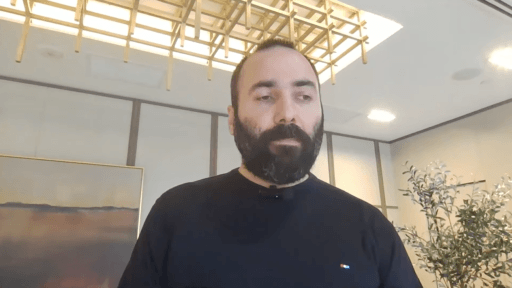
Friday Sermon by: Alban Fejza, Online Congregation Director