[search-in-place-form in_current_page="1"]

Cultural Limitations

Sermon Introduction

Praise be to God, there is no other god except God.

Um, today I want to talk about what I call cultural limitations. I kind of thought about bringing this topic up because I think it might be needed for the following Friday sermons when we deal with—let’s call it the marriage app. It’s not yet an app, but whatever, the marriage system we have. I realize there are quite a lot of cultural limitations which might be challenged by it. So I just wanted to bring examples about this issue: the cultural limitations which people have, which I’m not trying to change, I’m just trying to bring them up so that people can become a little bit more aware and hopefully someone can grow spiritually, culturally, so that there’s less limitations.

By the way, this is a sermon where I’m not trying to change anything. All I’m doing is raise awareness so that people can feel comfortable to look within themselves and within their own cultures to maybe realize that, “Oh, maybe they can be a little bit more open-minded.” Again, it’s not something which necessarily has to change, because I believe it’s part of the global force behavior. But some people actually might want to open their mind a little bit more, but they didn’t think about this before, and for those people it might be helpful.

Defining Cultural Limitations Through Personal Experience

What do I mean by cultural limitations? Like, I just played a music; it was rock. And in the past, probably for me, culturally it would give me a bad feeling and unacceptable feeling if I heard it in the context of a Friday sermon. But then eventually I outgrew that limitation, so I’m okay with rock music in a Friday sermon.

Another limitation I had for a while was I couldn’t understand jazz music. Jazz music was not something which I thought was good music; I thought it was tasteless music. I don’t think it’s tasteless music anymore.

And people have those limitations. Now, this doesn’t mean that I’m trying to say that all music is the same. All I’m saying is that it could be that it’s your limitations about cultural limitations. And by the way, they sometimes don’t have to be fully about your culture—the whole state, or the whole country, or your people. They could come from family relatives, the way you grew up, something you heard which your mom laughed at. All it takes when you’re five years old, seven years old, all it takes is for your mom to laugh at something or someone, and then it’s forever in your mind that that’s not acceptable. They didn’t even try to discourage you, they didn’t even tell you not to do it, but you probably heard your parents laugh at it, and now, forever in your mind, you just cannot imagine yourself doing that.

Now, what I’m trying to do is not change that, because I also have my cultural limitations. But at least be aware that we have our cultural limitations.

Scriptural Context: Human Weakness & Cultural Bans

Let me give you some examples. I’m going to start from my own culture and the things which are more—and by the way, I’m not trying to justify them, at the same time I’m not saying that those are good, because the Quran says… and here more specifically I’m talking about things which the Quran does not prohibit, but people culturally prohibit. The Quran says in—let me find the verse, I hope I can find it quick… okay, so I think it’s in Surah 5, verse 87, it says: “O you who believe, do not prohibit good things that are made lawful by God, and do not aggress. God dislikes the aggressors.”

So the Quran is telling us not to prohibit things which are lawful. However, many cultures will prohibit things. What I’m saying is that’s bad, it’s definitely bad. However, they have no other choice; it’s kind of like within the global force behavior. They technically have a choice, but it would take such big efforts. Let me put it like this: if all people, all they can do is only apply 70% of the Quran, and 30% is always left out by the nature of our weakness… The Quran says that people in the past were stronger, we are weaker, we have more limitations. Some people will limit some parts of the Quran, other people will limit other parts of the Quran, another culture will limit some other parts. So there will be differences in cultural limitations, however, it’s probably all of them will limit kind of a similar amount.

So what I’m saying is it’s bad, but it’s unavoidable given the strength which we have. Let me give you a perfect example: not fasting during Ramadan is bad, but there are limitations some people have. Like a child who is probably eight years old, I would understand if they don’t fast. It’s fine; I’m not saying it’s good, it’s just their limit, it’s just too much for them. So they have a limitation to how much they can do.

And limitations can even come from physical limitations. Someone might be so overweight, I don’t think—of course it’s bad if they don’t pray, but they might not be fully able to do the prayer in the perfect way. It’s a limitation; it comes from whatever weakness they had from their parents, their culture, whatever. But it is what it is. I’m not going to tell them it’s good what they’re doing, but also I’m not going to judge them for having that limitation.

So all I’m doing is raising awareness, not trying to change it, that there are limitations: physical limitations in some people, in some ages, and also limitations in total, like the whole culture in some cases for certain issues.

Cultural Case Studies: Marriage Practices & Dietary Habits

So I’m going to start with my own culture’s limitations and some limitations I have which the Quran does not limit, just so you guys can understand what I mean.

For example, for some reason, my background where I grew up… I grew up in Kosovo, and it’s about 95% traditional Muslims, something like that. For some reason, people in Kosovo inherited Islam from the Middle East and the Ottoman Empire, the Turkish people. They got Islam from the traditional Muslims, but for some reason, they never got cousin marriages. They could never accept it. And because of that, because I grew up in that culture, I grew up with the idea that it’s kind of unacceptable to have cousin marriages. I’m totally aware the Quran allows it, I accept that that’s the truth. I accept that cousin marriages are allowed in the Quran, but it’s really hard for me to imagine doing that myself.

And I’m not presenting it as some sort of, “Oh, I’m better than the Quran.” I’m presenting it as a shortcoming, as a limitation, as a flaw which my culture has. Probably if cousin marriages were allowed in Kosovo and in most of Europe, Europe wouldn’t suffer from a population decline. Maybe there would be some things which would be better if that limitation didn’t exist. Well, the limitation does exist, and I’m not trying to change it, because it’s their flaw, it’s their limitation. It would be better if they changed it, but I’m not going to try to change it.

Here’s the good thing about it: we as Submitters accept each other and each other’s cultures. We don’t approve it, we don’t say it’s good, but we sort of accept someone even with those cultural flaws as long as they do the contact prayer and the zakat. That is what unites us. Because we have something which unites us, we don’t have to agree on everything.

So basically, I have a flaw that comes from my culture: I cannot imagine myself marrying my cousins, it’s just hard. Let me give you another example. And by the way, I’m not going to judge any culture where they marry their cousins, because apparently the Quran actually is on their side. Now, it has advantages and disadvantages, I’m not going to go into details. Sometimes they bring up medical issues, like having more child defects, but they also have more social advantages, like the food is the same, it’s easier to communicate with people you know, and stuff like that. They’re kind of equal, which is why the Quran allows it. However, for some reason, Europeans could never wrap their minds around it, including Kosovo, which is a majority Sunni Muslim country, who could never accept this because of their culture. It was a cultural limitation.

Let me give you another example. There’s a verse in the Bible where it’s explained that John the Baptist, when he was baptizing people in the desert, lived by eating locusts—grasshoppers, pretty much. So he was eating grasshoppers and honey, that was his main diet while living in the desert. Now, I cannot imagine myself… I’ve never eaten a grasshopper, and I cannot imagine myself eating a grasshopper anytime in the future. I don’t think I should judge other people if they eat grasshoppers. Apparently in the Bible it’s allowed, the Quran also allows it, it doesn’t stop it. It’s apparently a good source of protein if you ask medical people, but I just could never overcome that cultural limitation, and I might never.

Now, in this case, what do we do? I’m not going to tell others what not to do, however, I just pray to God He doesn’t put me in that situation. Please, God, don’t put me in a situation where I have to eat grasshoppers. It’s kind of hard for me, that’s all. It’s a limitation. I guess I’m not as complete as John the Baptist, because the more complete a person is culturally and in life experience, the more they can overcome these cultural limitations.

What do I mean by complete? The more complete you are, the more experiences you have which are mentioned in the Quran. Let’s say the Quran mentions goats; many people have never seen a goat, or they’ve never lived close to a farm with goats. The Quran mentions dates, camels, cows. Some people have seen camels but not cows; some people have seen cows but not camels. They haven’t had a full life. Because my life was not complete, like even for people of the past it wasn’t complete, but it was closer to complete, they could overcome those cultural limitations. I guess I’m just more baby-like. Some babies cannot eat spicy foods, it’s just too much for them. So let’s imagine that we’re just babies in some areas and we cannot overcome that.

So yeah, I don’t want to even think… I think if I really tried hard, I could probably eat grasshoppers or locusts. It’s not beyond my mind, this is probably something which I could overcome, but that’s not an area where I think I can grow a lot. I could probably grow somewhere in some other area.

So yeah, I have a limitation, but I’m not going to tell other people, “Don’t eat grasshoppers.”

Now, in the same way, you guys and other people can be more aware about the cultural limitations that you have and accept them as limitations. If you accept them as limitations, we are not going to force you to change them, because again, as long as you’re Submitters, you do the contact prayer, you do the zakat, you’re a Submitter, it’s fine. You can have your cultural limitations. I’m not going to call them good—I might still do a Friday sermon where I call them bad—but it’s fine. You have a limitation, it’s okay; I have a limitation, it’s okay. We’re not complete people, we have flaws, and sometimes total cultures have flaws.

Polygamy and Relational Expectations

Let me mention some others which might help for the upcoming Friday sermon: some other cultural limitations.

Having two wives, for example, is just a cultural limitation. And I think this is kind of what brought me into this topic, because apparently one of the women was not happy about the two wives issue. I think she should just accept that it’s her cultural limitation rather than trying to prohibit what the Quran allows. Now, I have discouraged two wives in many videos. I found ways to discourage it because people abuse it. I totally support any woman when the husband abuses the idea of two wives. However, let me not try to prohibit it, let’s not try to stop it, because the Quran says, “Do not prohibit what is not prohibited,” and the Quran allows more than one wife.

However, if someone has a problem with it, first of all, before even talking about it, accept it as a cultural limitation instead of saying, “Oh, can we change this?” We can start from the position: “I didn’t grow up like this, this is a little bit too hard for me to accept.” And instead of telling people what to do, say, “I hope God never tests me with this.” Maybe you can just pray to God that God never tests you with this. And I’m quite sure if someone is a really, really good wife, God will not test her with that issue.

So yeah, let’s accept if a woman has a problem with it—sometimes even men might have a problem with that—it’s just a cultural limitation we have, and let’s accept it as a cultural limitation. It’s okay, someone cannot imagine themselves with two wives, they just cannot imagine. It’s okay, we accept you like that, it’s fine. I can see many reasons why today it doesn’t make practical sense, but I’m not going to stop it. Which is why in the last app questionnaire thing which I was trying to do, I allowed it. I sort of implied there that it’s allowed because it’s not prohibited in the Quran. But if you have a cultural limitation about it, it’s okay, it’s your cultural limitation. But let’s agree it’s your cultural limitation, it’s not prohibited in the Quran, and it’s okay if you cannot overcome it.

I might never overcome the grasshopper issue, I just maybe will never eat grasshoppers. And I’m quite sure I will never overcome the cousin issue, it’s just not in my mind. Maybe my mom, when I was five, might have laughed at someone who married their cousin. I don’t know where it came from, it’s just really hard to overcome it. I just cannot imagine myself doing it. And some people cannot imagine the two wives. We’re not going to try to change you, but hopefully it never happens to you. And it might happen to someone else, but hopefully it doesn’t happen to you.

So that’s the idea: let’s not try to make cultural limitations into religious laws. Let’s accept them as shortcomings, and it’s fine. We can all have our different shortcomings. For some people it’s hard to accept something, for other people it’s hard to accept something else.

Now, you can try to grow and try to understand how it would be different and find more growth from that. However, you don’t have to, it’s okay. We as Submitters accept—and especially me, I accept all people the way they are as long as they are Submitters, which includes doing the contact prayer, giving the zakat, that’s the minimum. The rest of it, we can be different. That doesn’t mean that there isn’t wrong and right. Yeah, some things are right and some things are wrong, and I’m going to say them, but I’m not going to force them, I’m not going to tell people what to do.

So yeah, let’s just try to be aware that there are cultural limitations among all of us, for sure among all of us.

Western Cultural Norms: Dating, Dowries, and Money

Let’s give another cultural limitation. I can see how I’m coming up with examples which are more from the Western world, because I’ve lived more in this world. This doesn’t mean that other cultures don’t have limitations, they probably have even more. But if you’re going to laugh, at least start from your own people, from yourself first, and then your own people. This doesn’t mean that I think they are worse, but it’s just what I know.

Okay, another example: especially in Western culture, they have a limitation about how marriage should happen. They think that they should have a girlfriend first. Unfortunately, it has affected a couple of Submitters among us. They think that they should have a girlfriend or a boyfriend first, and then get engaged maybe after a few years, and then have a big wedding—it’s a cultural limitation—and then get married. It’s kind of like a process of many years where they have to pass all these stages. It’s a limitation of people getting married. Now, I’m not saying don’t do them, but accept them as a shortcoming, accept them as your limitation, rather than as something you really have to do.

Now, if you cannot overcome the idea that you first have to do the engagement, the big wedding… if you cannot get over it, fine, it’s okay, it’s your limitation, I’m not going to change it. However, let’s first agree that it’s your limitation, and it’s okay. Maybe it will help you once you accept that it’s a limitation from your side, maybe from your culture, from your parents, from your relatives, then maybe you can overcome it easier. Some things you might never overcome—I might never overcome eating grasshoppers—but some things maybe you’re ready to overcome.

Maybe overcoming the idea that you have to make a big wedding might enable you to imagine marrying someone outside of your culture. Because part of the limitation of marrying someone outside of your culture comes from the idea that people in your culture will see them, and they will see them if you have a big wedding. Can you see the connection? If you cannot overcome the limitation of having a big wedding, or having a girlfriend or a boyfriend… and again, I’m not trying to stop the wedding, I’m against boyfriends and girlfriends, but what I’m saying is if you cannot overcome that limitation, then it’s going to limit other things. Now you cannot even imagine marrying someone outside of your race or culture, because you know that that’s going to involve a big wedding, and “Oh, how am I going to justify this to my parents, to my relatives?” It becomes a limitation.

Another limitation… this is actually also in Kosovo. Even despite the fact that they are traditional Muslims, the dowry… it’s mentioned in the Quran clearly. Some cultures, especially what they think are modern cultures, they just cannot understand the idea of a dowry. If you go to a girl in Kosovo or Albania or whatever, and you talk about the dowry, she’ll be insulted instead of being like, “Oh, actually I get something.” She’ll feel like, “Oh, are you trying to pay for me?” You know, it’s an insult to her. And a lot of people in the Western world might have that limitation. They’re like, “Oh, why are we even talking about money and stuff like that?”

This brings me to another cultural limitation: in the Western world, they don’t like to talk about money, about salaries. If you bring up, “Oh, how much is your salary?” of course in a very public situation it’s probably not a good idea, it’s a little bit naive to bring it up, but maybe someone is just curious: “What’s your salary?” In the Western world, it’s a cultural limitation, they just don’t talk about it in a lot of cases. They’re like, “None of your business,” things like that. It’s okay, the Quran doesn’t prohibit it. Actually, the Quran says express God’s blessings, show what God has blessed you with, but some people think it’s private. Anyway, it’s a cultural limitation, I’m not going to change it. It’s okay, you want to keep it private, fine. In some situations it might be required regarding zakat, but it’s not my business to change that limitation. If you someday grow and change it, I’d be happy, but if you don’t, it’s okay. You have a limitation, just like a baby cannot eat meat, they can only drink milk. That’s their capacity.

Social Expectations: Dress Codes, Housing, and Naming

Sometimes cultures will have—especially the women—cultural limitations about dressing. And unfortunately, they judge each other sometimes. The women in the Western world will judge the women in the Eastern world how they dress, and the women in the Eastern world will judge the women in the Western world how they dress. It’s just a cultural limitation, they cannot imagine themselves doing it the other way.

Another cultural limitation is if you cannot imagine living outside of your parents’ home even when you can afford it. In some cultures, they just never leave their parents’ home even if they have money. They are too shy, too afraid to ever mention it, it’s just a limitation. The Quran doesn’t stop it, especially if you get married, but they have that limitation.

Or it could be the other limitation where people never want to stay with someone’s parents. By the way, this brings me to an issue: God willing, when we talk about this, I don’t think it’s a good idea to stay with parents of a spouse if they are non-Submitters, because it doesn’t help you, you don’t want to add another non-Submitter to your family. But especially if they are Submitters, I think it can be fine. But it can also be fine not to. Let’s not let our cultural limitations limit our marriage possibilities because of these things.

I noticed a cultural difference—I wouldn’t call it a limitation, because in this case I don’t know where the limitation is, is it on this side or the other side… I’ve noticed that in the Western world, they tend to call people by their first name, by their name, and that’s fine. You can go to a doctor and call him by his name. For example, when people call me Alban in Canada, in Kosovo, in Europe, whatever, I feel like that’s natural. But in some cultures, when I went to India, they called me “Sir,” “Mr. Fesa.” And when they talk to each other, they refer to their last name or in a more honorary, respectful way, usually connected to their profession, like “Doctor this,” “Doctor that,” even when they talk in a friendly situation.

Now, in this case, I don’t know which one is the limitation, because I can see how it’s good to respect someone by mentioning their title, but I can also see how calling someone by their name is more true. So they are both good and bad in their own way. One of them is more respectful, the other one is more true, because someone is not a doctor always. Some people write me a message and they’re like, “Oh, dear messenger of God.” I’m not a messenger always, not when I’m writing emails and talking on group chats and stuff like that, but they still refer to me like that. I guess they try to respect me. It’s not true, but it’s respectful.

So yeah, in this case, I’m just presenting the cultural difference. I don’t know where the limitation is, is it in that culture or this? Probably both. Definitely, though, in some situations the limitation is on one side, on one culture, and not in the other, and they have different limitations.

Before we talk further about this, let me… let’s repent.

Reframing Culture: Human Defects vs. Religious Perfection

Praise be to God, there is no other god except God.

Now, another cultural limitation, for example, in some countries—probably in most countries, actually—is marrying outside of your country, or outside of your race, or outside of your ethnicity. For some, they just cannot overcome it. It would be nice, it would open more opportunities if you don’t think about that too much, but if it’s your limitation, it’s okay, I’ll accept it. We should respect it if people don’t want to marry outside of their culture. However, I’m going to call it your limitation. I’m not going to say, “Oh, you’re right.” I’m going to say it’s your limitation, but there’s nothing I can do about it. I guess you haven’t grown enough, and it’s okay, I’m not going to try to shame you, but it’s a limitation.

So yeah, that’s another… By the way, this is something I want to bring up because quite often in social studies in today’s world, in work culture, they try to say that all cultures are the same. I don’t think all cultures are the same; they have differences, and actually they are not equal. They don’t have the same total level of limitations. Typically, poorer people in poorer countries have more cultural limitations, people in richer countries have less cultural limitations. But that doesn’t make them better, because people in richer countries then break more prohibitions, and people in poorer countries break less prohibitions. So basically, one group is limiting more than the Quran is asking them to limit, and the other group is allowing more than the Quran allows them. So they fulfill the prophecies in the Quran about different aspects of what could go wrong.

Let me try to finalize this. This might sound controversial, but deep down, when we analyze it more deeply, actually all cultures are bad. Here’s why: because if there’s something good in a culture, it’s part of religion. Imagine that there’s religion in every culture and there’s some culture in every religion. If there’s something good in a culture, it’s part of religion, we can just call it religion. Whatever is left out of that religion which is part of that group of people, we can call it a culture, but whatever is left out is bad. Everything good is within what the Quran mentions, it’s within the religion.

So then the question is, if all cultures are bad… or we can say, “Oh yeah, part of the culture is within religion,” but in that case, I’m just going to choose to call it religion. Within my definition, the way I’m defining it, if everything religious is not culture, then all cultures are bad.

What this means, by the way… and why are they different? Because there’s so many different ways to be bad, and there’s only one way to be good. But let’s not judge each other’s cultures, even though pretty much it’s all bad, because all of us are bad in different ways. Some people will break some laws in the Quran, other people will break other laws in the Quran, and at least all of us break 30% of it. Now, maybe a certain culture might limit themselves not more than 30%, maybe 31%, but 31% is not that different from 30%. It’s not different enough for you to laugh at it to be like, “Oh, these people are worse,” because it’s not different enough in level, it’s different in type. Some people have some limitations, others have some other limitations.

Anyway, so this is kind of what I wanted to raise awareness about. It doesn’t mean that I’m trying to change it. It’s our limitation, it’s okay. I’m not saying it’s a good thing, I’m just saying it’s okay in the sense that let’s not let it bother us too much. If someone can grow a little bit more and be more open-minded and understand other cultures more, it will be nice. If they don’t, it’s okay as well.

Audience Q&A & Community Examples

Now, we can just end it here if you guys have to go, or maybe someone actually has some examples they want to bring. Please, let’s bring them in a respectful way, not in a laughing way: “Oh, these people do that.” And especially if you bring something from your own culture, that would be nice. Does anyone have any examples to bring? You don’t have to.

Can anyone think of any examples? By the way, it’s hard to bring them because the limitations in your own culture… it’s really hard to imagine how that could be a cultural limitation. But if it’s in another culture, then you’re probably polite enough not to say it. So let’s see if someone has something.

I might read this without names so people don’t… I’ll see depending on what you guys write. By the way, if anyone has to go, they can go and work or whatever. This part is really not that important, I’m just spending some time.

Individual Comments: Sexuality, Food, and Regional Practices

Okay, so Adam is saying… Oh, sorry Adam, I mentioned your name. Being okay with family members who are not heterosexual. Yeah, it’s a cultural difference. In Western culture, some people are okay with family members who are let’s say gay. But in some cultures, they are not okay with that. That’s another issue we can talk… We all know being gay is bad, but what do you do if you have a family member who’s gay? In some cultures they’ll accept it, they’ll tolerate it; in other cultures, they don’t. Is that… I hope that’s what you’re trying to mention, Adam. Yeah, I’m not going to go into detail about this whole new topic, I’m just mentioning it as an example. So yeah, Adam is saying yes. So yeah, that’s a cultural difference. I don’t know which way is the limitation: is the limitation by having to accept someone, or is the limitation by having to reject someone for being what they are? I can talk another day about this because it’s a sensitive topic.

Yeah, okay. Fasal is saying, “I really enjoy having my preferred cuisine in the kitchen.” Yeah, okay, I can see that. Actually, the food cultural limitation is probably in all countries, in probably all people, more than they realize. I’m glad you are aware about it, Fasal, that you accept it as a cultural limitation rather than as, “This is better food than your food.” It’s like, “Oh, it’s a cultural limitation I have, I cannot tolerate some food.” It’s kind of like I don’t eat grasshoppers, you might not like some other stuff.

Yeah, so Mad Bay is saying some cultures actually eat raw meat and others find it disgusting. Guys, this is a perfect example. So actually, I think the Lebanese culture eats a little bit of raw meat, and Mad—I think Mad is from Kazakhstan—he cannot understand eating raw meat. Let’s bring another example which is less extreme: some cultures cannot tolerate fully cooked steak, other cultures cannot tolerate rare or medium steak. They just cannot think about it, and it’s a cultural limitation on both sides, actually. They just cannot imagine eating steak which is not fully cooked, or they cannot imagine eating steak which is fully cooked. They’re like, “Okay, what is this?”

Okay, Jad is saying in more conservative cultures, being repulsed by some homosexuals… We kind of mentioned this. Okay.

Thanks… I guess you’re defending Lebanon now! So he says, “In Lebanon we eat raw meat, cooked meat, and burnt meat.” Okay, so all of them!

Yeah, okay. So another example which Medi is bringing is that the women have to be virgins in Algeria. So that’s a cultural limitation in Algeria, that’s not in the Quran, by the way. Now, I’m not going to say that women shouldn’t be virgins, I think losing your virginity before marriage is a bad thing. However, what happens in the past is in the past, people change, people make mistakes, and it’s a cultural limitation to sort of have that as a rule. It’s not a rule in the Quran.

Faisal is saying, “We’re not defending, just informing.” Yeah, okay, thank you, Fasal. I was joking.

Okay, by the way, there’s also cultural limitations about jokes, like some people understand jokes differently. And I think I’ve failed to understand Fasal’s jokes quite a few times. Maybe I have a cultural limitation of how jokes are done in some cultures, I don’t know.

Reflections on Diversity vs. Unity

Anyway, what I’m saying is, let’s accept these as cultural limitations. We don’t have to all be the same. By the way, this brings me to another issue: I don’t believe that there is strength… You know how they say, “There is strength in diversity”? In today’s modern world, they say there is strength in diversity. I don’t believe that’s true. Actually, the Quran says that there is strength in unity: if you are united, you can succeed. However, the only way, unfortunately, to be united today is to allow some diversity so that we can unite in more important things. So we allow diversity in less important things so that we can be united in more important things, and from unity brings strength. But we tolerate some diversity so we can emphasize the unity.

Further Audience Chat Contributions

Okay, someone is saying… Mad is saying, “In Ghana, people dance with graves.” You mean probably with coffins when people get buried? Yeah, I’ve seen videos about that. It’s a cultural limitation. There might be, by the way, another cultural limitation in Kazakhstan… I guess Mad is from Kazakhstan… about graves or funerals which you might not be aware of, or maybe you are aware.

Madvey is saying, “I’m from the Urals.” Okay, what does it mean, Urals? The mountains, or which state is that?

You’re from Russia! Okay, sorry, sorry Mad, I thought you were from Kazakhstan. Okay, thanks for clarifying that. So you’re from Russia, near Yekaterinburg, or whatever it is.

Okay, I’m not going to read all of them because some of them are a little bit too sensitive to read.

Okay, yeah, Natalie is saying some cultures eat food with their hands, others don’t. It’s a cultural limitation when people cannot understand how you can eat with your hand, but it’s also a cultural limitation when they cannot understand how you don’t eat with your hand. Both sides are a little bit limited. Some foods are probably better with hands, other foods are not as good with hands, whatever it is. Just accept it as your cultural limitation so you can be prepared, especially if you get married with someone who eats differently, so you don’t get shocked.

Adnan is saying in many parts of the world, you can only eat with the right hand. Yeah, that’s more about Hadith.

Some cultures prefer bathing versus showering and vice versa. I wasn’t aware of this. Okay, this is an interesting thing I learned.

Mad is saying some cultures probably tolerate stealing things which people left more. This seems like more than a cultural limitation, it seems more like just plain wrong. But I can see how that would be a limitation, because they tolerate it; it’s not that they are stealing it, they are tolerating the bad deeds. Yeah, that’s true, some cultures will tolerate bad deeds more than others.

Yeah, Guillaume is saying in France, people eat snails.

And Natalie is saying snails aren’t bad. Okay, so some people don’t have that limitation in their mind.

Abdul is saying in Ghana, they find it disrespectful if greeted or given something with the left hand. Okay, although… By the way, so yeah, we are presenting these while being aware that it’s just our culture, we don’t try to impose it on others, so that we can be united. But it’s okay if you cannot do it otherwise, we’re not going to try to change you.

Concluding Remarks & Closing

Okay, so maybe I should end it here, because it’s almost 50 minutes, I guess. Okay, I’m just going to wait one more minute because you guys seem to have many examples.

Yeah, Jad is saying beards might be one. Yeah, some cultures tolerate beards more, others will judge you for having a beard. Some don’t like it if you go in an office environment with a beard; in other cultures, they might actually judge you for not having a beard.

Gorgin is saying in France, we also eat frogs’ legs. But here’s the thing: the frogs and the snails is more like… it’s not a limitation, it’s another allowance. I’m talking about things which are not prohibited in the Quran, but people still cannot do them. This is another topic for another day.

Anyway, I’m not going to read everything, because it’s probably going to be lots of examples.

Okay, so for those who have to do the contact prayer, do the contact prayer. The rest of you, peace be upon you. God willing, talk to you next Friday.

Friday Sermon by: Alban Fejza, Online Congregation Director

Find a Marriage Partner – A Submitter

Sermon Introduction

Praise be to God, there is no other God except God. That was some country style of praising God.

By the way, I just noticed that there’s about 54 or now it’s 50 or something, 52 submitters in the group chat, which is a nice thing. Usually there’s a little bit like about 20, 10 to 20 percent more submitters than appear in the group chat. The reason is because sometimes people share the phone or the computer when they do the Friday sermon, or it might not work so they go to YouTube. So whatever the reason is, there’s usually more submitters than appear here in the group chat.

Background: The Marriage App Project

What do I want to talk about today? I want to talk about finding a marriage partner, a submitter as a marriage partner.

Let me tell you the backstory. A few months ago, as you all know, I promised that I was working on a marriage app. As they say, there’s a saying which says that it takes 20 percent of the efforts to finish 80 percent of the work, and then the last 20 percent of the work takes 80 percent of the efforts. That’s because usually the complications are left for the end.

Let me inform you what the situation is now. The issue which I encountered was that basically I had to pay a non-submitter who was coding the app, and I was in contact with him. The issue is that, first of all, I paid a very cheap person trying to save money, and then it was a little bit hard to believe that he could do some things which I was planning in the future. That’s one thing.

The other issue was that even if he did everything the way I wanted, I wasn’t sure myself that I could actually finish the app in a way which wouldn’t need updates. I wasn’t sure about some questions, some methods of doing it. So if I had the chance to update them later, then I would probably do it as an app like that.

However, the problem is—and we have some experience with this as people who have worked on the website know this—when you work with a non-submitter, even if they do the work perfectly, when you need them again later, let’s say 10 years, 5 years down the road, what happens is you cannot find them, or they have moved on, they found another job or whatever. So it’s kind of difficult to really rely on them more permanently. That was a risky decision to do the app and then hope that I’m never going to have to update it.

Transition to a Semi-Manual System

Because of that, I decided to do it manually for a while. It’s mostly automatic, but partly manually. This will mean that I’m going to actually see the data which you guys input. God willing, I’m not going to sort of share them or tell anyone about those, and also I’m not going to use them against you or for you or whatever. I’m not interested to use this marriage app, at least not right now, so that you guys can feel free to sort of do it as though I wasn’t seeing it.

What I did is I did pretty much everything that would be in the marriage app and did it more manually through Google Forms, and then God willing, through Excel sheets later. It’s going to be the same thing, except that I don’t have to commit to having it exactly like that forever. Then later on, when I figure out that it’s working, I can actually make the app, finish the app, God willing.

The Importance of Marrying a Submitter

At the same time, thanks for being patient, actually, because I delayed this for quite a while. The other reason why I decided to move ahead with this project even before finishing the app is because I don’t want some people to wait. Some people just want to get married. It’s fine, it’s normal. It’s kind of ironic, especially youngsters who have more time think that they have less time, and then the older people get, the more time they think they have.

Thanks for being patient. I think for whomever was patient, it’s really important that you guys were patient because it’s really important to marry a submitter, a believer. The problems which someone can have down the road if they marry a non-submitter, if they rush and marry a non-submitter or a non-believer, can be huge. So it’s really a great blessing.

Now, I know sometimes people are allowed to marry non-submitters. It depends a lot on the situation. I can understand some of them. I’m not going to make a rule here; I’m just going to pass my principle or my judgment of what I think of someone who marries a submitter and a non-submitter.

Of course, marrying a non-submitter is not a good idea. However, I can see excuses if the person had non-submitting parents, because it’s not easy to marry a submitter when you have non-submitting parents. They don’t support you, they don’t give you enough money. So that’s kind of harder.

However, for someone who also has parents as submitters, I totally don’t understand it. How could they marry a non-submitter? So if your parents are submitters, you are a submitter, if you end up marrying a non-submitter, it’s all on you. It’s all your problem. There’s something wrong with you.

Despite that, even the submitters who have non-submitting parents, I would still even for them recommend a submitter as a marriage partner. However, usually for them to get married, it would have to mean that they have to tolerate some things, maybe not go for the prettiest person or whatever, maybe not the best age. Sometimes they will have to compromise. So yeah, that’s the situation.

I just want to thank you for being patient, and God willing, I hope this system—I’m going to call it a system, not an app yet—this system is going to help people get married.

Frictional vs. Structural Unmarriage

By the way, before I go into that, it’s not going to solve everything. Let’s not have illusions about that.

There’s something which is called in employment, usually in economics, there’s something which is called frictional unemployment, and then there’s structural unemployment. Frictional means that people haven’t found the job, but it’s just in between jobs. They have the qualifications, and there are jobs somewhere, but there’s just friction. Like how do you match the perfect employee with a perfect employer? Then there’s structural unemployment, which means that the whole system doesn’t support employment. If you go to some country, there’s just not enough employment. There’s no way you can have a perfect CV, a perfect college, and if there is structural unemployment, there’s nothing you can do about it.

In the same way, what this is trying to solve is frictional unmarriage, meaning that if there’s guys who would match, it’s probably going to match them. But it’s not going to solve the structural unmarriage. Structural means that the system today just doesn’t support all the people to get married. It is the way it is, unfortunately.

It has to do with the end times, the democracies. Taxes can sort of distort the whole society, then people have to go to college and all of that, but it’s unavoidable. Usually it’s related to the tax level. If the taxes in the world are about 25 percent on average, 25 percent of every dollar you make goes to the government, what that will mean is that about half of that—that’s another issue for another time—about half of that are actually permanently not going to get married because of that, just because of that. Then there’s an additional group who don’t get married because they are not… So basically that will mean that about 15 percent of people just don’t get married, and that’s the government’s fault. You cannot fix that because it’s unavoidable, or if we want to reduce that, they’ll probably end up getting married much later or at the cost of poverty, whichever it is.

Then there’s another group who probably might be too choosy. Some people are too choosy, some people don’t realize how good-looking they are, there’s many reasons. Some people just didn’t get enough luck, like that frictional part.

What I’m saying is it’s not going to solve everything. However, for whatever way it could be solved in a natural way, God willing, it’s going to solve, I think.

Purifying Intentions in the Community

I think the good part about this is that when we have a marriage system, when we meet another time for other reasons, we don’t have this as a problem. What do I mean by this?

We went to Hajj, for example. We went to Hajj about a year ago, if I remember correctly. I don’t know if you guys and girls felt the same thing, but that’s what I felt. I felt like we were really thinking of each other, men and women, as brothers and sisters, and there was no sort of background motives about who could be a good partner for me, who could not be. That was probably really put at the back, and it really didn’t concern anyone. We could actually trust each other. A submitter brother could trust another submitter brother to sort of talk to his sister or something because they knew that there were good intentions and there were no background motives and things like that.

That really helps, because when you know that there’s another way, another place, another time when you have to talk about marriage, then you know that at this time, this specific place, you can focus on something else. Otherwise, if we don’t have some hope or some system, what happens is that people will actually find a way when we go to Hajj, or when we do that, or when we are doing something else, that’s when they will find sort of a way to flirt, if we can say that.

To avoid that, to avoid flirting and all of that, let’s just be direct, have a system. Whoever wants to get married gets married. I mean, whoever wants and is interested and has the possibilities, the capabilities, can get married, maybe later, maybe earlier, maybe never. It’s fine. 15 percent of people might end up not being married; it’s okay. It’s totally okay, by the way.

As I said in one of the days, by the time you get older, it’s kind of the same. Let’s say about 60, when you get about 60, whether you’re married or not married, it’s probably the same value. That’s what matters at the end of the day. The older we get, the closer we get to heaven, to going to heaven, and that’s when we realize what’s important really in life. The most important part is the next life.

How the Website Marriage System Works

Now let me just share how the marriage system, God willing, will work on our website. Let me share the screen.

Before I share it, this is a service which the website is providing. It’s not something which has to be like that; it’s just a service. We’re just trying to help. There’s a verse in the Quran which says to support those who want to get married.

Let me share the screen. Okay, I think you guys are seeing the screen. Can someone help me if the screen is being shown? Can someone write in the group chat? Oh yeah, okay, so people can see the screen.

If we go in our website, where it says Publications, and you scroll down here in the section “Other Publications,” you can find a section which is called “Find a Marriage Partner.” Then you have this, but before we go into the details of this, let me actually repent because I spent so much time talking. Let’s repent.

Praise be to God, there is no other God except God.

In this section which says “Find a Marriage Partner,” I’m going to repeat again where to find it so people can actually find it. If we go to The Submitters, you click Publications, and then you scroll down, you find a section here which says “Find a Marriage Partner.” You click there, and then this shows up. I’m just going to read what it says:

“Find a Marriage Partner. To find a marriage partner, you first have to fill the respective marriage compatibility CV.”

By the way, this is all what would have been in the app. It’s still in the app, but I’m not going to publish it as an app yet.

“To find a marriage partner, you first have to fill the respective marriage compatibility CV. If you’re a man, you click this one: Men’s Marriage Compatibility CV. If you’re a woman, you fill this: Woman’s Marriage Compatibility CV.”

For men, even if you’re married, if you want to fill it, it’s your choice. For women, if you are married, you are not allowed to fill it, of course. Women are not allowed to marry again if they are still married. It’s a man’s choice. I just want to let people know that they actually can do it, even men even if they are married. Now that comes at the cost; they might cause problems with their current marriage and all of that, but that’s their risk and their decision. They can lose the first marriage; it’s their risk.

Then it says:

“Then, God willing, usually in several months, all eligible men will receive access to the women’s responses, and all eligible women will receive access to men’s responses. Afterwards, they can evaluate each profile separately.”

Basically, they check each other’s profile, look at what they put there, input their offers—by offers, I mean dowry, or dowry requests from women—and in the end, through a database, God willing, we will calculate best matches, and the submitters will get access to a list of who their closest matches were, and also if there were any full matches.

Basically, it’s going to tell you, okay, this could be probably your best partner for marriage, but also if it’s not a full match, you haven’t reached an agreement.

This is kind of how this, God willing… I will explain the second part, how it calculates it, because I want people to actually know in another day.

Now, here it says “usually in several months.” Actually, this time we will do it in two weeks. That’s my plan, God willing, in two weeks after you fill this. I’m going to give everyone two weeks to fill the CVs, whoever is interested. Then after two weeks, I’m going to take those data and create another questionnaire which will actually help with calculations. But at this stage, you can just fill the CV, and in two weeks, God willing, I’ll do it. Why did I write here several months? Because after that, I’m not going to do it every two weeks; I’ll probably do it after several months or maybe a year. Basically, it’s only two weeks because I have delayed it for now, and it’s the first time, God willing, so you guys don’t have to wait too long.

The idea is that you fill this. If you’re a man, you fill the Men’s Marriage Compatibility CV; if you’re a woman, you fill this one. Then, God willing, I’m going to give access to the responses of women to the men, and of men to the women. You guys will see the responses, check out, “Oh, I like this female, I don’t like that as much, I like this.” But then what you’ll do is kind of offer a hypothetical dowry, which if it’s a full match, you will actually have to carry out, but if it’s not a full match, I’m just going to inform you that it was close.

Anyway, what I’m saying is that it’s going to be automatic—not fully auto; I’m going to input the data manually, but the system is going to calculate them automatically in this way. By the way, this is important: no one can blame me, “Oh, you chose the wrong person for me.” I’m not choosing anything. You guys will choose it yourself based on your capabilities and based on your interest. At the same time, I don’t want to be blamed for “Oh, this was a bad choice for me.” No, it’s going to be your choice, God willing.

Also, it’s really important to be honest, to fill it the way you truly feel about it.

System Management and Rules

Now let’s only talk about how to fill the marriage compatibility CV.

Because I’m a man, I would fill the men’s… actually, I don’t intend to fill it; I’m just going to show you guys. By the way, God willing, when someone gets married through this system, I might appoint them as the person to sort of manage this system, but I want someone who has already gotten married through this so that they know how it works, plus they don’t have interest to sort of change data or things like that. Because if they are still interested in marriage, they might actually manipulate it. I don’t believe anyone would do it as a submitter; however, we don’t want to leave the chance, we don’t even want to have that option.

So what I’m saying is, for as long as someone is the manager of this, they shouldn’t be allowed to get married through this because then it’s a conflict of interest. We don’t want conflict of interest. Now I’m going to manage this, so that means I’m not allowed to get married through this system for a while.

Men’s Marriage Compatibility CV Walkthrough

Let’s say I click here. If you’re a man, you can click here, and then it’s going to collect your email.

  • Click here to collect your email.

The reason why it collects your email is because later on you guys might need each other’s emails to contact if there’s some sort of final touch-ups to conclude the marriage and things like that.

Here’s what you have to fill. It’s a really simple CV.

  • You fill the first name here.

I’m going to fill some stuff, some stuff I’m going to leave unfilled.

  • You fill your legal last name.
  • Gender: let’s say I’m a male.

The system already knows that you’re in the male section; however, this is just to confirm.

  • Then you add a photo here.

Let me go off-screen first so I can find a photo, because I don’t know what photos… I don’t want to share personal photos live. Let me reshare the screen again. I hope you guys are seeing it.

Here’s how the photo works: you have to add two photos. I added them just so it allows me to go forward.

  • Add first photo: shoulders and above, kind of the way I’m being seen live right now, taken in the last 5 years. No Photoshop, no filters, no AI, and no makeup. This is really important, because it’s not fair if a woman wears makeup and another doesn’t; someone might think that she’s more good-looking. That’s not fair to the other woman who doesn’t wear makeup; it’s just not fair. We have to make a level playing field so that it’s fair to everyone. So no Photoshop, no filters, no AI, and no makeup. You can try to look your best in whatever other way—take a shower, comb your hair, whatever women and men do—but no Photoshop, no filters, no AI, and no makeup, so that the man or the woman can see who you truly are.
  • Then you can add the second photo: from any time in your life when you think you looked the best, shoulders and above again, similar to the way I’m appearing right now. No Photoshop again, no filters, no AI, and no makeup. Just don’t change the photos; try to actually take a real photo without makeup. Or if you already have photos, the photos we have on our website, if someone wants to take them, they can use them for themselves; those are quite good.
    • Then for the second photo, you will have to explain in which year it was taken. Let’s say I want to post a photo from 10 years ago because I looked the best then. I’m just going to write here when was 10 years ago—2016. Second photo was taken in the year 2016.

Let me change the name to John Smith, which could be any person.

  • Year of birth: let’s say he was born in 1970.
  • Country of residence: let’s say Spain.
  • City of residence: Madrid.
  • Now John Smith is going to have to write here what family… to choose these are multiple choices, they can choose all of them, so they can click in more than one square. What does John Smith have as a family? Let’s say he lives with a father, with his mother, with his brother. Maybe he doesn’t have sisters; maybe his sister got married and she’s not there.
    • This is important: see, no one should be able to trick anyone. If John Smith has already a wife, and another woman is interested in him, they must know that he has a wife. So if he has a wife, he will select “I have a wife.” If not, then he doesn’t select it. Basically, John Smith selects whatever family he has, or “I have only one child,” “I have more than one child.” Some people want to know whether the person might be divorced and have children. Or “I have no family members.” Basically, you select whichever applies to you.
  • Then you select who you currently live with: “I live with my father,” “I live with my mother,” “I live with my brother,” “I live with my sisters,” “I live with my wife,” “I live with my children,” “I live with my non-family members in a shared living space”—this happens more and more these days, especially in the Western world—”I live alone.” Let’s say John has a father, mother, and brother; let’s say he just lives with his mother.
  • Native language: let’s say, of course, John is going to speak Spanish.
  • English language: how well does John speak English? “I know only a few words or phrases,” “I can manage basic communication in English,” “I can hold everyday conversations in English,” “I can speak clearly in most situations in English,” “I am fully fluent in English.” Let’s say John can speak clearly in most situations in English; let’s select this for him.
  • Height: let’s say John is 180 cm. You’ll have to write the full number in centimeters, not in inches or feet or anything else.
  • Body type: what body type does John have? Slim body type, athletic body type, average body type, above average body type, full body type, heavy set body type. Above average means a little bit more overweight; it doesn’t mean above average that he’s better. So let’s say John is average body type.

Indicators of Intellect and Belief

Before I go further, let me actually explain the reason behind this questionnaire. What I’m trying to capture with this questionnaire is some basic information so people know where that person lives, who they are, really basic. At the same time, I want to capture a few factors: one is about their belief, but there’s no way to measure belief, and the other one is about their intellectual abilities, which is pretty much how smart they are. Those are important.

In one of the videos on our website, which is titled “How to Find Your Marriage Partner,” I say three things are important:

  1. Belief,
  2. how smart you are (or how smart the partner is),
  3. and the looks, how they look.

The first two are really hard to measure. How do you measure a person’s belief? How do you measure a person’s smartness?

The only way to do it is you can take indicators. What I mean by indicators is that there are things which correlate with smartness, there are things which correlate with belief. They are not for sure; they might tell you only half of the story, they might tell you 40 percent of the story, but I put some of those there so people can know, “Oh wait a minute, this guy seems a little bit smart,” or “This guy seems like he really has strong belief.” So the people can have some clues. It’s just clues, it’s not for sure, because even people themselves don’t know how smart or how much belief they have.

One of the clues about smartness is this: in seventh grade, how well you did in school. Why did I choose seventh grade? Because later on, people get into puberty, or they might choose to get employed, or they just might have other interests. Maybe they are too smart and they kind of are not interested in college anymore or in school because they do better things. Quite often, if they are too young, the parents usually influence them too much, they help them with homework, the child maybe hasn’t developed quite yet, maybe he doesn’t have a good home. But usually, about seventh grade, how you did in school in seventh grade is about probably the best measure of how smart you are.

So I put this as a question. It’s not for sure, it’s not a guarantee that someone is going to be smart just because they were good students in seventh grade, but it’s a good indicator, a green flag for smartness.

  • When I was in seventh grade at school, according to the grades which my teachers gave me—not according to you, according to what teachers gave you as grades—did you get straight A’s, did you get straight B’s? In a classroom of about 20 students: “I was a top student in seventh grade,” “I was among the top three students in seventh grade,” “I was among the top five students in seventh grade,” “I was among the top 10 students in seventh grade,” “I was among the top 15 students in seventh grade,” “I was among the top 20 students in seventh grade.” Let’s say John was among the top 10 students, so he was above average. Fill these honestly; of course, we as submitters don’t cheat here.
  • Highest education level: let’s say John has a bachelor’s degree. Field of study: let’s say John studied business.
  • I became a submitter in… This is an indicator about belief. If someone became a submitter quite early, especially at a young age, they are probably going to be submitters earlier rather than later. Again, a green flag about belief. It’s not going to guarantee that someone is a believer, also it’s not going to guarantee that someone is a disbeliever if they don’t have this quality. Let’s say John became a submitter in 2013.
  • Here is a description of what I am currently doing for work/business/study. Let’s say John manages a restaurant. By the way, when you try to find a job or employment, try to present your best version without lying. Feel free to present your best version. So maybe John also owns the restaurant, or maybe part of the restaurant. If that’s true for John, he can say “Part owner and manager of a fancy restaurant.” This makes him look better if this is true. Try to present yourself in the best way without lying: part owner and manager of a fancy restaurant. This is probably what John is doing.
  • Quran reading: this is a green flag about belief or a red flag about belief. It’s not for sure, again, it’s just green flags, red flags. It doesn’t mean that this is what actually makes them a good human being or a bad human being automatically. “I read the Quran less than once,” “I read the Quran one time,” “I read the Quran twice,” “I read the Quran about three to five times,” “I read the Quran about six to 10 times,” “I read the Quran about 10 to 20 times,” “I read the Quran more than 20 times.” Let’s say that John read the Quran twice, so he selects that.
  • Preference about children: “I prefer to have children in the first two years of marriage,” “I prefer to have children between two and five years of marriage,” “I prefer to have children between five and 10 years of marriage,” “I do not want to have children,” “I have no preferences; I am fully open to both having or not having children.” Let me say that John expects to have children between two and five years of marriage.
  • Plastic and cosmetic surgeries…

I was hesitant whether I should put it there, but actually I think it’s fair to make a level playing field for everyone. Why should someone who has cosmetic surgeries get an advantage in front of other women or men who don’t have cosmetic surgeries? I don’t think it’s fair to the others, so I think it’s good to put it there. Even when you buy a car, here in Canada there’s a system called Carfax. When you buy a car, you get a history of whether the car’s engine has been changed, whether the car’s windshield has been changed, whether the car’s wheels have been damaged and changed. When you buy a car, you get the history of that in Canada according to Canadian law, and it’s even more important for human beings. You want to know if they changed something: are they actually the real them, or have they changed something? By the way, this shouldn’t disqualify someone; however, people should have the right to know.

  • Plastic/cosmetic surgeries: “I have never had plastic/cosmetic surgeries,” or “I have had plastic/cosmetic surgeries.” He has to be truthful about this. If you select “never,” it just moves on to the next question, but if you did, it’s going to ask you to explain or describe, because not all cosmetic surgeries are the same. Let’s say John has done Botox or lip filler—maybe he’s a man and just wanted to do that, I don’t know, it’s weird, but whatever. Fine, at least we know he hasn’t done the most extreme surgery. Someone who is interested in John can know that he has lip fillers. I’m going to select that he has never had plastic or cosmetic surgery.
  • Health question: “I do not have any physical disabilities, serious debilitating diseases, or serious mental disabilities,” or “I have a physical disability or serious debilitating disease or serious mental disability.” Some people might ask which one qualifies as serious. The reason why you don’t really have to know for sure is because if you select it, it’s going to ask you to describe so people can know. Is autism a serious mental disability? It depends, because autism is a spectrum—very light autistic tendencies, or someone might have serious autism. I don’t know all the diseases, however, if you think it qualifies, the best way to know is if the doctor actually diagnosed you. However, diagnosis is not enough; it has to be something serious. A doctor can diagnose you with skin rashes; I’m not going to put skin rashes there, it doesn’t matter much. However, if it’s a physical disability, a serious debilitating disease—something which doesn’t allow you to function as a person in a marriage—or a serious mental disability, you put it there. Let’s say John doesn’t have any of those; most people don’t. Most people do not; some people might. I think it’s important to be honest so that people from the other side of the globe don’t think, because of your photo, that you have no problems. If you do actually have serious problems, I think they should know before they move on.

Then you click next, and then you submit. That’s it. I’m not going to submit it because I don’t want to mess up the database, but you click submit, and that’s it.

Next Steps and Anonymity

You fill this questionnaire. All the men fill the men’s questionnaires, all the women fill the women’s questionnaires, and then later on we put them in a database and you make offers. Of course, they are going to be anonymous, God willing. It’s going to help to be really transparent about what you really want, rather than be afraid that someone is going to judge you. So it’s going to be anonymous later, and then we will use the system to calculate who the best matches are.

God willing, it’s going to work. God designed it through the dowry system. You’ll see, I think it’s going to work well, but you have to fill the questionnaire first. It’s really important that you fill the questionnaire correctly in the best way possible, but correctly without lying.

Does anyone have any question? Important: you have two weeks, God willing, to fill the questionnaire. After two weeks, I’m going to start with the database and all of that. I’m just waiting for some questions.

Questions & Answers

Jad is asking: “What if we wish to go for civil marriage, wouldn’t that cancel the dowry requirement?”

Yeah, but you would have to do it outside of the system. Basically, we are trying here to… what I’m saying is if you want to use this system—and I think it’s the best way to get married in a group of submitters—basically in this system, we imagine that you’re going to give a dowry because this is a religious way of getting married. Of course, you can still add additional whatever ceremonies to the marriage with state and family, whatever that is; that’s on top of it. But we are trying to do it in a religious way. Doing it in a religious way is going to require a dowry, as the Quran says. What I’m saying is that, yes, if someone wants to avoid the dowry, yeah, go ahead, do it. But it’s really a bad idea because you’re going to have to marry a non-submitter very likely anyway.

Guillaume is saying: “Is family members those who are alive?”

Yeah, just put those who are alive. I didn’t specify it there, sorry, but yeah, those who are alive. If someone died, you don’t have to put them there, because what your situation is now is what matters.

This is why I put some issues there of the plastic surgery and all of that, because people do mistakes in the past. However, those are in the past, but some of those are still in the present. The person still looks that way in the present, or still has that disability. So if it’s something which is still in the present, I don’t think we should avoid it.

We try not to judge people’s past. People change, people become better. By the way, this brings me to one more thing: God willing, I’m going to remove anyone who I still think has a boyfriend or a girlfriend. You can fill it, I’m not going to expose anyone here, but if there’s someone who has a girlfriend or a boyfriend and I know about it, and they have not informed that they have changed and become better, they will be excluded. They can fill it, but I will exclude them, I will remove them, God willing.

Adan is asking: “Does an official marriage contract count as dowry?”

I’ve explained that in other videos, plus I’m going to explain it after we fill the questionnaire. The best thing you can do is do the questionnaire, believe that the system will work, and then when I explain it, if you don’t like it, you don’t do the next part. If you like it, you do the next part. I think you should like it if you’re a believer. There’s no reason to try… By the way, it’s a good way to actually guarantee… I’m not even going to go into the topic. It’s in the Quran, so why question it?

If something is unfair… I guess some people are not as good-looking, they think it’s unfair that they are not getting married. Unfairness happens in the world so often in so many different ways. It is what it is.

If anyone is afraid about whether they will not have enough dowry, don’t forget that it’s probably because you’re young and you don’t have enough money. But because you’re young, you have an advantage: you are probably better looking, you look better, and women might like you because you look better.

Anyway, any other question not about the dowry? The dowry I’m going to explain after two weeks, God willing.

Okay, that’s it. Don’t forget, if you’re interested in marriage, try to fill the questionnaire. It’s on the website. God willing, after two weeks, I’m going to move with the next phase about it, which will include this dowry and all of that.

That’s it. For those who have to do the contact prayer, do the contact prayer. The rest of you, peace be upon you.

Friday Sermon by: Alban Fejza, Online Congregation Director
Find a Marriage Partner

To find a marriage partner, you first have to fill the respective Marriage Compatibility CV:

Then, God willing, usually in several months, all eligible men will receive access to the women’s responses, and all eligible women will receive access to men’s responses.

Afterwards, they can evaluate each profile separately, input their offers, and in the end, through a database, God willing, we will calculate best matches, and the submitters will get access to a list of who their closest matches were, and also if there were any full matches.

Update on Submitter’s Apartment Project


Update on Submitter’s Apartment Project

Praise be to God, there is no other god except God.

Someone just informed us a few minutes ago that Emin’s older sister has died. We send our condolences to Emin. I am not sure if his sister was officially a submitter, so unfortunately I do not want to do the Funeral Prayer if she was not officially a submitter. But if I find out that she was officially a submitter, then we can do the funeral prayer maybe next week in the next Friday Sermon.

By the way, my grandma died a few months ago, and she was not officially a submitter. I think she was a believer, but not a submitter; someone can be like that. But because she was not officially in our group, I did not want to do a funeral prayer for her. Let other people do their private prayers or whatever they want to do, but we do not have an official funeral prayer if they are not officially in our group.

God knows people’s souls, God knows who goes to heaven, God knows who goes to hell. God knows best, but we have to sort of play by our rules. If someone is officially a submitter, we do the funeral prayer. If someone is not, we do not do the funeral prayer, and we just send our condolences. In this case, I do not know, because someone just informed us a few minutes ago. If someone can tell me if she was officially a submitter, it is okay either way. God willing, if she was officially a submitter, then we can do the funeral prayer next week, God willing.

And by the way, this is why we should not start bringing new topics too quick before the Friday sermon, because now people are still chatting. 

Unfortunately, I have to continue without knowing what the situation is. 

Apartment Project Survey Results

I have to continue with the topic which I was planning. I want to give an update on the Submitters’ Apartment Project.

The reason why I wanted to do a questionnaire is because I wanted to know what the interest or the willingness of the submitters was to participate in such a project. I think it was actually helpful for me at least, God willing it is going to be helpful for all of us, so we kind of know where we stand with these ideas.

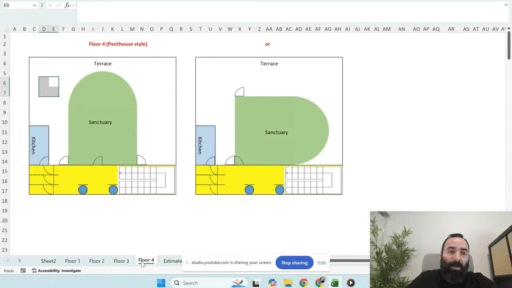
As you remember, I proposed a draft project about apartments for submitters which would include a sanctuary on top of it. Or we could have done it otherwise in a different case, maybe we do the sanctuary in the basement if it is in the US, because the building rules are different there. But I presented it as one version out of many versions because I wanted people to know what exactly I am proposing so that they could fill out the questionnaire in more detail and know exactly what we are talking about.

There is good news and bad news about it. The good news is that a lot of people were interested. The bad news is that they were interested only for investment, except for people who were already from Kosovo, almost none of the others were interested to actually go and live there.

Let me go into the details : 17 people filled out the questionnaire, but only 9 out of those 17 reported over a 60% chance of actually doing it or actually being interested. As you guys remember, I asked you how likely it is that the conditions are going to be fulfilled. I did not consider the ones which had less than a 60% chance of actually doing it, because it is not serious. It is okay if it is something that does not interest you, that is fine. However, I cannot move forward with a project with people who are less than 60% sure that they are actually going to do it. It is kind of like hiring someone for a job and asking him : “How sure are you that you are going to actually perform well?” and they say : “About 30%.” You probably would not hire him; it does not make sense to go forward with that. If they are not interested then they are not. Everyone has individual freedom but that depends also on his situation of course. Most people are not in a situation where they can afford to invest. What I am saying is that I could not seriously consider people who are not serious anyway.

Out of those 17, only 9 reported over a 60% chance of actually doing it, so I only considered those people seriously. Out of those 9 people, 5 of them wanted to use it as a primary home, and all 5 of them, except for one, were already from the same country, from Kosovo.

Feasibility and Regional Execution

What did I learn from this questionnaire?

I learned that the project which I proposed is a good project, but mostly only within countries for the most part. At least we know that the project is something people are interested in investing in and that it is doable. However, we know that it is probably a much better project within countries rather than across countries.

What do I mean by within countries? Let me explain. When there is about 50-60 submitters in France, then we can talk about it, so we can do the project only for French people in France. Or let me say there is about 50-60 submitters in the US; we can do it for people within the US. Or let’s say Canada, Lebanon, Bangladesh, or Turkey. By the way, what do I mean by 50 or 60 people? I do not mean children or submitters who are not independent or not officially in our group. I mean actually official submitters who can make their independent financial decisions.

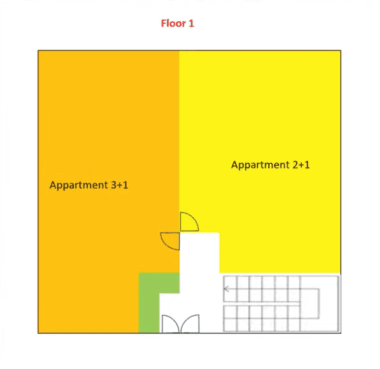
If any of these countries have 50 people, they can just write me a message and, God willing, we will revisit the project if it makes sense, meaning that people are interested to invest and willing to move into that apartment building, then probably out of those 50, about 9-10 would be interested. The way we sort of imagined the building was to have about 9 apartments, and then another 9 in another building.

I will probably not remove the video from YouTube, but what I am going to say is that even though we might not do it exactly the way we planned it, at least we know there are options to do it within countries. If there are enough people within Kosovo, we can still do it in Kosovo.

Actually, people were more interested to invest than I thought, in the sense that they are not that willing to move, but they want to invest so that other submitters can rent the place and live there. Unfortunately, there are not enough people who are willing to move and rent the place, so I would not want to invest in a project where you guys would invest and then there is no one to live there. We do not want an empty building, because the main purpose was so we can have a full building that we can use, so that the people who live there can use the sanctuary to do the contact prayers together. That is the general idea.

Financial Logic of the Project (“Triple Win” Analysis)

Before talking about that, let me talk about why I even proposed the project in the first place :

First of all, the main solution which it could bring if we did it soon is that it would give us a proper place to do our contact prayers together as submitters, what I called a sanctuary. But the business reasons were that I thought it would actually earn much more than stocks. The reason why it would win much more than stocks is because it sort of has three ways of winning.

This reminds me of a Charlie Sheen meme or joke. Most people probably don’t know who Charlie Sheen is. A journalist asked him once if he is bipolar, and he said : “I’m bi-winning—winning here, winning there.” The idea of this project was to win here and win there: double win, triple win. What do I mean by triple win?

  1. First Win (Standard Rental): The typical way people who buy apartments win is that they buy an apartment, the price of the apartment increases, and they rent it out to someone. On average, people win about 8% per year with this method. With stocks, you win about 9%. Only one reason to build the apartments is not good enough, it is probably better just to invest in stocks. So if it was just a typical project of buying an apartment and renting it out, I would not propose it, because it has a little bit less winning chances than stocks where you average 9% per year.
  1. Second Win (Build & Markup Savings): The second win comes because we would build it ourselves. We would not buy it from a construction company, we would build it ourselves. Then we could win from the markup price, which is about 10% to 20%. Let’s say we cannot do it as well as construction companies, so let’s say 10%. Now it is 80% of the original price if we build it ourselves as a group of submitters.
  1. Third Win (Geographic Savings): The additional win would come from buying cheaper apartments in a country where apartments are cheaper. This would enable people to invest and still have lots of money left over for stocks, for those who would have otherwise bought an apartment in their country.

So as you can see, this is a triple win. We could win in three different ways, and in total it would be an estimated 25% per year compared to stocks which is only 9%. We could win 25% per year, which is much more than 9% per year.

However, if we do it within countries, this third reason does not exist, which is winning from living in a cheaper place while investing your money somewhere else, this third reason would not exist. For example, if you live in France and you do this apartment project with other submitters in France, you still would have to buy an expensive apartment. You would run out of money basically if you only had money for one apartment, and you would not be able to invest elsewhere. So if we do it within countries, it’s only going to be an estimated 18% profit per year, and probably only within the first year because the markup price is not always there.

We can do it within countries, God willing. We can postpone this project to do it within each country. However, the win percentages are not going to be as big. They are still better than stocks, they are not going to as big as in a cheaper country. So do not expect big wins. At least the good part about it is that we can have sanctuaries in different parts of the world, in different countries.

Keep in mind that even though it looks hopeless sometimes, like : “How are we going to get together and build a place or mosques?” .This project is one very good option. Just by having 50 -60 people within a country, it is possible to do something about it and have a sanctuary where they can pray together. We will talk about the details when the time comes. If you are in Lebanon, and you work hard, and 50-60 people from Lebanon join us in our group, we have a plan for how to deal with that, how to move forward, and how to make it suitable for them so that they can worship God.

Future Options and Next Steps

How do we move forward from the actual project?

  1. Option One: We can postpone the project, meaning we will wait until more people are interested.
  1. Option Two: We can implement the project backwards : Initially, the idea was to build a building with a sanctuary on top, and then build another building when more people join. But we can do it backwards: build the building without the sanctuary first, and then build the building with the sanctuary later. Based on the questionnaire, there would be enough people interested to build the building without the sanctuary, because even if they do not live there, it is just a building and they can earn rent from it. However, that building would have to be rented to non-submitters.
  1. Option Three: We can hand over the project and make it a private idea. In that case, I would not talk about the details of it in the Friday Sermons. The Quran says that the disbelievers, when there is a business deal during the Friday Sermon, they rush to the business deal and leave you standing. The Friday sermons are meant for community and remembering God; they are not meant to do private business within them.

For the third option, this is not a very likely option, but it could happen. I am just going to mention that it exists, but I do not want to go into details because that would be a private business. The idea for the third option is that I could take the list of about 9 people who already showed interest and send it to my sister. She has experience making money through buildings, rents, and Airbnb. She started with her husband from half an apartment and by now she has built 10 apartments through this method. She has experience. If anyone has more experience, I would be willing to let that person deal with it. It is likely that I might just hand over the project to my sister, and she can do private business with it if people are interested and if there are good chances of profit. If it goes like that, I am not going to deal with it anymore in the sense that I do not want to talk about private business in online Friday Sermons. That would be through private chats or whatever.

By the way, these three options are not mutually exclusive.

The most important part we should remember is that it is still a good project, but within countries, especially with reliable and serious submitters within a country, let’s say in France, Lebanon, Bangladesh, or Turkey. This should give you an idea of the path forward.

What I have to do is focus more on spreading the message within France, within Turkey, or wherever. If there are 50 people, we have a plan for what to do with that in a way that benefits them, benefits the community, benefits everyone, and ultimately allows us to worship God together in a sanctuary or in a mosque. So let’s just think of this project as something that is better executed within countries, it would be even better within cities, but that is still far down the road.

Let’s repent.

Second Sermon: Recitation of Surah 64

Praise be to God, there is no other god except God.

Recently, I feel like I have talked too much about specific details, community stuff, and even scientific stuff about Adam and Noah. I feel like we have not mentioned God enough in our Friday Sermons. The main reason why we do the Friday sermons is so that we can mention God. The Quran says commemorate God and remember God.

I just want to spend some time to commemorate God. I asked AI to give me an average Surah of average length which mentions God a lot, so it gave me Surah 64. I am just going to read Surah 64 so we can remind ourselves why we are here.

In this second sermon, I’m just going to read the Surah. The purpose is so we can remember God more and more.

Let me share it :

[64:0] In the name of God, Most Gracious, Most Merciful

[64:1] Glorifying God is everything in the heavens and everything on earth. To Him belongs all kingship, and to Him belongs all praise, and He is Omnipotent.

[64:2] He is the One who created you, then among you there is the disbeliever, and the believer. God is fully Seer of everything you do.

[64:3] He created the heavens and the earth for a specific purpose, designed you and perfected your design, then to Him is the final destiny.

[64:4] He knows everything in the heavens and the earth, and He knows everything you conceal and everything you declare. God is fully aware of the innermost thoughts.

[64:5] Have you noted those who disbelieved in the past, then suffered the consequences of their decision? They incurred a painful retribution.

[64:6] This is because their messengers went to them with clear proofs, but they said, “Shall we follow humans like us?” They disbelieved and turned away. God does not need them; God is in no need, Praiseworthy.

[64:7] Those who disbelieved claim that they will not be resurrected! Yes indeed, by my Lord, you will be resurrected, and you will be held accountable for everything you have done. This is easy for God to do.

[64:8] Therefore, you shall believe in God and His messenger, and the light that we have revealed herein. God is fully Cognizant of everything you do.

[64:9] The day will come when He summons you to the Day of Summoning. That is the Day of Mutual Blaming. Anyone who believes in God and leads a righteous life, He will remit his sins, and will admit him into gardens with flowing streams. They abide therein forever. This is the greatest triumph.

[64:10] As for those who disbelieve and reject our revelations, they are the dwellers of the Hellfire; they abide therein forever. What a miserable destiny!

[64:11] Nothing happens to you except in accordance with God’s will. Anyone who believes in God, He will guide his heart. God is fully aware of all things.

[64:12] You shall obey God and you shall obey the messenger. If you turn away, then the sole mission of our messenger is to deliver the message.

[64:13] God: there is no other god besides Him. In God the believers shall trust.

[64:14] O you who believe, your spouses and your children can be your enemies; beware. If you pardon, forget, and forgive, then God is Forgiver, Most Merciful.

[64:15] Your money and children are a test, and God possesses a great recompense.

[64:16] Therefore, you shall reverence God as much as you can, and listen, and obey, and give (to charity) for your own good. Anyone who is protected from his own stinginess, these are the successful ones.

[64:17] If you lend God a loan of righteousness, He will multiply the reward for you manifold, and forgive you. God is Appreciative, Clement.

[64:18] The Knower of all secrets and declarations; the Almighty, Most Wise.


For those who have to do the contact prayer, do the contact prayer. To the rest of you, peace be upon you.
 
Friday Sermon by: Alban Fejza, Online Congregation Director
Submitters’ Apartment Project


Smart Believers as the Best Investors

Praise be to God. There is no other god except God.

One of the things believers and submitters quite often forget to appreciate is the fact that the believers—especially the smart believers, let’s qualify the smart believers—are the best investors. Better than the smart disbelievers and better than the non-smart believers. So basically, smart believers are the best investors. And this is because the same brain which managed to realize—and I’m talking in the long run, even in this earth, in the long run on this earth and the next world—of course one day someone might be a better investor, another day someone else, but in the long run submitters, especially the smart submitters are the best investors.

It’s the same attitude, the same beliefs, the same way of thinking, the same logic which they have applied and realized that the best investment is doing things in this world for huge returns on investment for the next world. Even if they don’t constantly think about that, when they think into something similar, it’s going to be more towards that rather than towards a really bad investment.

I think this is important for especially the non-smart submitters, but also for submitters in general, to realize that the smart believers are the best investors in the long run. I just want to go quickly over what I think are the best investments, but that’s not the topic of the project. I want to introduce something practical today. God willing, we can talk about that in more detail another day.

Of course, the best investment is what God tells us in the Quran, like giving up this life for the next life. There’s no better investment than that for the next world and this world.

Why Believers Don’t Always Appear Wealthy

Before I go on to list some good investments, let me first say: why doesn’t it always look like the smart believers are the best investors?

It doesn’t look like that because people don’t all start in the same place. Especially the believers in a non-believing community, start either from zero, from a very low budget, or from negative, from a loan. Basically, if their parents were bad—probably the parents were alcoholics, or maybe their parents took too many loans, or whatever the situation in which they found themselves—it was not a good start. They don’t have a good start typically, which looks like they are not good investors.

However, if you look at what they got from their parents and what in the end they left for their children, you’ll realize that actually in the long run, during the whole life, they had a much better return on investment than the disbelievers for less work. So let’s keep that in mind. Wealth is not important; it has never been important in this world except for the fools who think that it is. And despite the fact that they are not the most wealthy, they have the best return on investment. Basically, they produce the most out of what they were given.

Unfortunately, a lot of people actually look like they’re not good business people or good investors, especially because they start with negative. First, they have to learn how not to lose, which is not to lose through loans, not to lose there, not to lose there. So they might start thinking too conservatively, meaning how not to lose or how to save the money. Then eventually, if a disbeliever had that habit, he would probably do it even worse if he had to learn how not to lose. By the time they get enough money to start to win, it’s probably towards the end of their life.

Owning Cows: One of the Best investments

So I’ve given myself the liberty to say what I think the best investments are. Of course the best investment is working in this world for the next world. There’s no better return on investment ever. Like that’s a million percent, 100,000 percent, whatever number you want to give, a very big number, one trillion percent; those are really big investments. It’s not 10 percent, 5 percent. It’s huge, huge return on investment. But the next investment in this world—and this might surprise people—is just owning cows. Just if someone just owns cows, that’s probably the next best return on investment in this world. Of course, actually having children is the next best one, but it’s not culturally correct or politically correct to say that children are an investment in this world. So let’s kind of forget about that. But the next, let’s say, the best investment within what they categorize as investments today is just owning cows. However, that’s sort of not fully true anymore in the modern world. It used to be for thousands of years. Whoever had more cows, was a better investor. Especially if they knew how to multiply them.

The best investment in this world after that, is simply owning cows. It’s a very good investment because they multiply. You can own cars, you can own apartments, they don’t multiply themselves. Cows just multiply themselves, and they can be eaten and they can be used for milk, and so they just multiply. However, because in today’s world you cannot really own cows legally, you have to have lots of land, and much has been taken by the governments or by whatever, it has not made it as good of an investment. It probably has brought it back to being as good as the other investments. So, owning cows is not necessarily the best investment anymore. It is still up there, it’s still a good investment, but I am not sure. But I think it is probably average, a little bit more than average.

The reason for that is too many diseases have been introduced, too many requirements about how you should manage them, and there are lots of laws about farming and all of that, so that kind of makes it not as good of an investment. But it is still a very good investment. I don’t think any of us are going to really own cows, maybe someone wants to do it, it is fine—but it is really hard. It looks like it is a very good investment until you introduce the diseases, which are a modern problem. The way they raise the cows today, because they live so close together, the diseases can spread much easier, so it is not as good of an investment anymore.

Beat the Stocks: Introducing a Practical Project

The best one, I would say after that, is just stocks—just buying stocks. And you don’t really have to think a lot. If you don’t know stocks, you can just buy the Dow Jones or NASDAQ (Stock Indexes). It is a group of stocks of some of the best stocks; you don’t have to analyze so much. Just buy stocks. By the way, the word ‘stock’ and ‘cow’ (i.e. stocks of cows) were kind of similar in the past, just owning lots of cows. And the word ‘stock’ and ‘cow’ kind of stem from a similar environment.

In today’s world, it is really hard to beat stocks. So typically, if I have any money, I will just keep them in stocks. Bitcoin was for a short while, maybe AI was for a short while. Probably not anymore. But in the long run, it is just owning stocks—that is the best investment. Now, I am talking about the investment in the modern world—this world. Of course, we spoke about the two better ones, which are not really the topic of this day.

Now recently, I think I came up with an idea which can beat stocks by a little bit, maybe by much. I think this idea can beat stocks if there is enough interest from The Submitters. Now, I am not going to give any guarantees that this is going to beat the stocks, but I think I myself would put the money in here because I think it can beat the stocks as an investment.

What I’m introducing today is an idea for an investment. Don’t think of it as some sort of very religious topic. Of course, it’s connected with religion, but I want you to see it from the perspective of, “How is this a good investment for me? How am I going to win from it?” Which is fine; it’s fine to look at it like that.

So, I want to introduce what I think in the near future—not for all cases, but for people who participate, if we do it right—of course, we can sort of beat the stocks by a little bit. I don’t know how much ‘little bit’ means; does it mean like a lot? Let us say I believe it is going to beat stocks if we invest right and if enough people are interested. And of course, the time might not be right. It might be too early. We don’t have to do it now, we can do it later, whenever the time comes, but I think it is an investment which beats the stocks.

The Submitter’s Apartment Project: Floor Plans & Structure

I want to introduce a project which I call the Submitter’s Apartment Project. The idea is that we could build an apartment building. I don’t want to go too much into detail why this type—anyone can have different ideas. I’ve thought about this a long time, and I came up with something which meets a lot of criteria.

  • What is this project?

The idea is that we invest, or buy, or build—of course, we’re going to build them and then own them, but other submitters can buy them after they are built, depending on how they want to invest in it.

Let me introduce the starting idea, because it’s modifiable. We can change it a little bit. I’m open to that depending on how people are interested and things like that, but I’m just going to introduce the project as I see it right now. It’s probably going to change a little bit or maybe a lot, I don’t know.

Here’s the idea: we build an apartment building which submitters can share. Of course, we would have to employ architects and stuff like that to do the whole thing. I’m just representing it in its raw form, without engaging anyone else, just as I did it in Excel.

This is the plan, God willing, if people want to participate: we can build an apartment building which would be, in this case, about 15 meters by 14 meters. Here we have the stairs, and here we have one apartment which is 2+1. 2+1 means two bedrooms and a living room, and the living room includes the kitchen. Of course, every apartment has a bathroom.

Then we have another apartment here, which is 3+1, which means three bedrooms, one living room. Imagine this is the entrance area, stairs, one door, the other door.

Now, why did I come up with three floors versus four floors? Because the idea was to avoid elevators. Usually, once you build a building higher than that, you will have to build elevators, and that requires regulations, and it’s expensive and things like that. So I was trying to avoid elevators. Plus, it’s simple to manage; you don’t have to employ an external company and things like that.

This is the first floor. The second floor will be kind of similar. By the way, we can switch the floors. The first floor could have been the third floor. I’m flexible about this. Depending on the demand of what people want to do or what they are interested in, let’s say we can turn this 3+1 into a 2+1 and a studio; we can separate this. Of course, the architects would do this, but first I’m just presenting an initial draft.

Then here in the second floor, there’s another apartment. Once you climb to the third floor, we have some smaller apartments. These could also be on the first floor depending on how we decide in the end. Here’s another apartment, 1+1. Another apartment, 1+1. 1+1 means just one bedroom, which would be suitable for a couple who doesn’t have kids yet; they just have one bedroom and a living room. Here, another 0+1 is pretty much what they call a studio apartment, meaning that it’s all one area. It’s almost like a hotel room, a little bit bigger, but with a kitchen, and that’s it. And here’s another one like that.

Basically, this whole building has 1, 2, 3, 4, 5, 6, 7, 8—if we split one more here, maybe 9—eight or nine apartments, depending on how we want to do it.

Community Benefits & Building the Sanctuary

Why would we—what’s the benefit of having apartments together? Being closer to other submitters is better; that’s one benefit out of it. Of course, the biggest benefit which I’m introducing is the return on investment, but it has other benefits as well: being closer to other submitters.

The other benefit is that on the rooftop, we could build what I call the Sanctuary. Let me—I don’t want to discuss it religiously too much, because God willing, I’ll do a topic about that another day. But why did I call this a sanctuary?

The reason why I’m calling this a sanctuary is because—by the way, it’s a term which I’m sort of inventing in English. It’s fine; Rashad used it. I don’t know if it has the same meaning in relation to where Mary stayed and prayed and stuff like that, but I’m just using this term. Let’s decide this is what the sanctuary is.

What’s the difference between a mosque and a sanctuary? The difference is that the land is not totally dedicated to God because it’s an apartment building, but the walls are dedicated to God. The walls and the internal space are dedicated to God. The reason why this cannot be fully a mosque is because if someone destroys it, it gets lost. If someone destroys the whole building, you don’t have a mosque anymore. But if someone destroys a mosque—let’s say the Kaaba or something—you still have a mosque because the place, the land there, is a mosque. Once a mosque, always a mosque. Here, it’s only a mosque as long as the building stands, which doesn’t really matter that much anymore because we’re close to the end of the world. What are the chances that a building, if it’s built correctly, is going to be destroyed before the end of the world, because the end of the world is not that far anyway? 200 years—what is it, like about 200 and something years? So basically, we’ve achieved a time where a sanctuary and a mosque practically are very similar, if not the same.

Here’s the idea: in the fourth floor, these people who live in this building can just climb to the fourth floor. Here’s an ablution area, another ablution area, two bathrooms, two washrooms, a shower area, a kitchen, and this is all what they call a terrace, whatever they call it. It’s basically an open area with a nice view, obviously. It’s similar—if anyone knows what a penthouse is, it’s kind of a building which has a yard on top, like a nice home on top of a building.

The idea is that the sanctuary is paid by the penalty zakat, but the rest of it is owned by the submitters who own this building collectively. Of course, they’ll own the apartments separately, but they can own these other areas collectively. I live right now in Canada in a similar type of building. We have a gym which is shared by everyone. Of course, it’s a big building, not small like this. So it’s kind of a shared area, and then everyone has their own apartments.

Imagine this terrace being just like a gym which everyone can use, but it’s not dedicated to God. However, this green area here would be the sanctuary. We’ll talk about the shape another day; I’m just introducing it as an investment.

Sanctuary Layout and Living in Harmony

The idea is we invest in it, and it’s usable. Basically, we dedicate it to God, and it’s usable by the submitters who live there.

Plus, the additional benefit of it is—by the way, this is if Qibla is in this direction. If Qibla is in the other direction, we can do it like this other case here. If Qibla is in the other direction, we can also make the building face the Qibla. But sometimes it’s not easy, because the road might be in a certain direction and things like that, so it might not be as easy.

This is the general idea: you go here, you could enter the sanctuary. It’s fine even if we use the word mosque, because again, in practice they are almost the same these days. They are not in theory the same, but in practice they’re almost the same. You can enter here, and then you can go through this door, go in the outside area, or you can go straight to the outside area.

Basically, the people who live here could set up tables here and have common meals, or they could drink coffee here and use it as a balcony or whatever, and an opportunity.

By the way, this enables the submitters to keep their privacy in the apartment, so they don’t have to go in each other’s apartment, knocking on the door, “Hey, how are you doing today? How are you feeling?” Submitters respect each other’s privacy. They just don’t go unannounced and things like that. Typically, of course, it depends on how close they are, but typically they respect the boundaries and the privacy of others. That’s why a shared area helps to be in contact and communicate with others in that shared area.

It’s partly a shared area, partly dedicated to God—let’s call it owned by God—and the other floors are private apartments. Let’s repent.

Legal Advantages of a Residential Sanctuary

Praise be to God. There is no other god except God.

Okay, so this is the idea of the Submitter’s Apartment Project. Oh, by the way, this is just one idea; we can do it differently. We can do it on the first floor. It has its advantages; it has disadvantages.

By the way, some advantages it has is we can avoid some legal problems, not loopholes. In countries like the US, quite often if you build—they don’t allow you to build a mosque in a residential area. If you build it in a commercial area, like they build the churches sometimes, it really doesn’t suit you, because people who live in a residential area cannot go to a commercial area five times a day. This is meant to be used five times a day typically, not like churches, which are used once a week; that’s different.

They have designed the cities in the US and Canada especially—partly in Europe as well, but not as much—where it kind of suits you to build a church, but not a mosque. Mosques are really supposed to be really close to the people where they can visit them often, not just once a week, but more than that. Of course, once a week is obligatory, but what I’m saying is not like the Christians, who kind of do it once a week and that’s it, and the rest of the time it’s closed.

Anyway, what I’m saying is this kind of avoids those problems, because you can build an apartment building, and it has a prayer area. No one can stop a prayer area; it’s just a gym. Legally, from the legal perspective, you can think of it as a gym.

Rental Affordability and Site Planning

Anyway, let me talk about the estimated prices. This is probably why I think it’s a good investment, part of why it’s a good investment.

I think we can build this apartment building. For people not to buy the apartment, they might be interested to rent the apartment. They might be interested to live there, but they don’t have the money, or they have other investments and they just want to live there. This is how cheap it would be to rent:

  • Estimated monthly rent for the studio is €191.

  • €315 for a one-bedroom apartment.

  • €441 for a two-bedroom apartment.

  • €483 for a three-bedroom apartment.

So even the rents are quite cheap.

Let me go to the next sheet. And this is how it would look, let’s say, in a lot. By the way, the idea is to buy two lots so that we can build another apartment, but without the mosque, without the sanctuary. Imagine having another apartment exactly like that or similar, and then we build it later. This enables us to sort of start even with a few submitters and then increase the number of apartments later. Plus, it allows us to sort of make it suitable to many types of lots.

This is an idealized way of thinking of it. Of course, not all lots look like this, but this lot, for example, the one I talked about, would be 650 square meters. And this other lot would be about 650 square meters, then we can build another apartment here. These are, let’s say, cars. If we have eight apartments, imagine eight cars here being parked outside. They can be parked outside to save money on not building garages.

Location Analysis: Why Kosovo?

Now, which location would enable us to do this? Because as you can see, it’s really cheap, cheap by both standards. Let me talk about location.

I went to ChatGPT, and I put pretty much the locations where submitters live, and I asked what a typical apartment price in euros per square meter is.

  • If you build this apartment in Paris, it’s going to be $8,000 per square meter in Paris suburbs. Why suburbs? We don’t really want to be in the middle of people where we have to engage with disbelievers a lot. Plus, typically they might be cheaper in most regions of the world—suburbs are cheaper except for maybe some places in the US. So in Paris suburbs, we would have to have $8,000. This apartment, if we build it in Paris, it would cost eight times more.

  • Accra is, as you can see, apartments are quite expensive: €1,800.

  • Detroit: €1,600.

  • Pristina, which is the capital of Kosovo: €1,500.

  • Dhaka in Bangladesh: €1,300.

  • Lipjan, which is a small city close to Pristina: 950 only.

Now, why is it that cheap? Again, it’s cheap only—there’s three factors.

  1. There’s almost no immigrants because people don’t speak Albanian. But the submitters wouldn’t need to speak Albanian. We can live with one another, and if you want to go shopping once in a while, that’s probably all the English the other people need to know. So I think it’s doable. We’ve tried it with my wife; she came there for a few months. I think it’s doable. It requires some adjustment, but it’s doable.

  2. The three reasons why it’s cheap—it’s not cheap because it’s bad. I’ve been all over the world. The quality of life—let me give an example. I’ve been, let’s say, north of UK. The apartments look worse than in Kosovo, like the building quality, the amount of windows, the space you have. But because it’s an English country, everyone wants to go there and they have better salaries, so that’s why they are more expensive. It’s not because they are better; it’s just because there’s higher demand. That’s one reason. The other reason is the language.

  3. The third reason is the culture. In Kosovo, typically the dad will have a car, and the rest of the family doesn’t have a car—partly because they don’t have money, but partly the culture is just like that. Typically the head of the family, the dad, will have a car. Now, that pushes the rest of the family members to always want to live near the city where they can walk. So everyone wants to live, let’s say, in Pristina, in the capital, or in some big city, not in a smaller one.

However, living in a smaller city for submitters shouldn’t be a problem, because why? It’s not like we are going to meet non-submitters every day, or like we have to befriend them constantly or something like that. As long as we have each other, that’s kind of good enough. Yeah, we can befriend them for certain business things, but you get the point. Basically, what we want and what they want is different. So we can get more value for our money in a location where the disbelievers don’t want it as much.

Exploring Lipjan and Target Demographics

So who is this for? The idea is—let’s say this is a potential location. It’s just a thought; maybe I should go to Google Earth. Nothing special; I don’t have any memories from there. I don’t even know—I’ve been there once or twice, that’s all. Let’s go to Google Maps.

Okay, so the location is here, in Eastern Europe. It’s a place, by the way, there’s no wars right now, at least not right now. You can walk in the night and no one is going to say anything. It’s quite safe.

This is the capital of Kosovo; this is Lipjan. The airport is right here; it’s very close. That’s part of the idea, to have the airport close because people might want to travel back to their countries and things like that. The biggest mall in Kosovo is pretty much very close here: Pristina Mall. It has a few shops around, just a small town, a few apartment buildings.

If you visit it, I think you’ll see that life is reasonable. It’s not sanitary issues; I don’t think there’s big sanitary issues like sewage and stuff like that. Like in some countries, they have sewage, they have electricity, internet, all of that. So pretty much you get a Western life for a price which is three times cheaper, five times cheaper depending on where you live right now.

Who is it for? Who would be a suitable person to invest, or buy this apartment, or be part of constructing this apartment?

  • Submitters who work online / Digital nomads: Any submitter who can afford to change the location without a significant detriment to himself or herself. If you have a job online, you can probably do this.

  • Retired submitters: A lot of submitters today are young, but a lot of these people will eventually get old. They will quit their job, retire, have a pension. They can just go live with other submitters instead of staying alone somewhere where they have no real family.

  • Submitters who already have a job nearby: This is typically for people in Kosovo. It’s a specific case; let’s not pay too much attention to it.

  • Submitters buying a secondary vacation home: Some submitters actually do have money, a few of you, and they have more than one home. They can sell one of them and buy this.

  • Submitters between jobs: Let’s say someone is bored of their job and they want to switch their job, and they want a few months or a year off where they want to reflect, or study for a new job, or something. They can use the opportunity to go and live there, and then they can probably rent instead of buying.

  • Pure investors: Someone might buy it with their own money, likely build it, and then sell it to you 20% more expensive. It’s a good investment. Someone might want to invest like that. Let’s say someone cannot go and live there; they can build it for this price and sell it for that price if they have enough trust in the project.

Regarding payment: the second method is the post-construction payment method. You pay the post-construction price after the apartment is fully constructed and the keys are handed to you. Basically, you wait until it’s built and then you buy it, but again, it’s going to be more expensive like that.

Draft Ownership and Residency Rules

What else did I need to talk about? Okay, ownership. This is not that important at this stage, but I’m just going to go over so you sort of have an idea of how it’s going to happen.

Most apartments, especially in Western countries, have ownership rules because they want to know how the garbage rooms are going to be used, how the gym is going to be used. Here are the ownership rules for this apartment. This is a draft; it’s not the final version. We would have to do the final version with a lawyer.

  1. Submitters and Spouses Only: Apartments are meant to be owned by submitters and potentially their spouses only. The reason why we will have to allow the spouses as well very likely is because in Kosovo, like in many Western countries, you cannot buy an apartment if you don’t involve your spouse as well. If you buy an apartment, it belongs to your spouse as well. Even when you go to buy, you have to have your spouse there if you’re married so that they can sign the deal when they buy it. Basically, you cannot buy it alone if you’re married; you have to have your spouse with you as well. Those are the rules in Kosovo, and it’s hard to avoid. It’s part of what we call the global forced behavior. Basically, you just cannot avoid it; it’s forced on you, and it is what it is. So we will, unfortunately, have to allow the spouses of non-submitters as well. But you can avoid other family members; that’s not forced. You don’t have to bring your dad or your mom if they’re non-submitters.

  2. Reselling and Renting Constraints: You can sell or rent the apartment anytime you want, but you can sell or rent only to other submitters and their spouses. Basically, the apartment is dedicated to be used by submitters only and their spouses if they have a spouse, and it should stay like that for as long as almost all the people agree.

  3. Minimum Rental Period: For safety reasons, you can only rent it out to people who are willing to rent for at least a year. Maybe six months—maybe we should change it to six months. The reason for that is that, unfortunately, not just with us, with most of religions online, what happens is it attracts mentally unstable people because people don’t see who they really are, how they live, what they do, how they dress, how they behave. You cannot see their real life. This really makes the mentally unstable people be attracted to online things which make them feel like they are part of a community, but they really are not. Because there’s a risk that online people will be like, “Oh, I want to go there, I just want to try it for a month,” typically if they have to pay for a year, they might change their mind. They’ll probably go there only if they are serious. So for safety reasons, we have to limit it to more serious people, not to anyone, so people don’t just come explore and then leave. It benefits the investors, of course; either you should be serious, or you cannot just go there, make all the furniture dirty, and then leave after two weeks.

  4. Inheritance Procedures: If a submitter is open to non-submitters inheriting from them—let’s say someone dies or is about to die, and they are okay with their child who is not a submitter inheriting that apartment—the child cannot inherit the apartment, but they can inherit the money. The non-submitter can only get their inheritance in money after the sale of the apartment to a submitter. Now, because this is a forced sale, basically the person who owns the apartment says, “When I die, I want this apartment to be sold, and I want the money to be given to my son or daughter even if they are not submitters.” Some people might have that wish. It’s their wish. I probably wouldn’t do that, but some people might have that wish. It’s okay, it’s allowed, but I don’t think it’s a very good idea anyway. If people want to do that, what they can do is have it in their inheritance or in these rules when we buy it: where if someone inherits the apartment, they will have to sell it. Because it’s a forced sale, that means the price can be manipulated. People can be like, “Oh, if you want to buy it for this, otherwise I’m not going to sell it,” and things like that. That introduces an opportunity for unfairness. In that case, the price of the sale will be determined by an independent property evaluator who will try to estimate the market value of the apartment to the best of his or her ability—the market value at that time.

Exit Strategy, Voting Rules, and Selling the Property

Now, someone might say, “What if we build a building, we all go there, and we want to change our mind because the country is not as good as I thought? Maybe it’s kind of boring, we don’t want to live here anymore, I kind of want to leave. I’m still a submitter, but I want to go live in France or the UK.” It can happen like that.

Now, what if that happens? If there’s other submitters who can buy it, of course they would be interested to buy it. If there’s more submitters than today, they’d be very likely interested to buy it. However, let’s say we might build another building in another location, like Kazakhstan, or Canada, and maybe people don’t want to stay in Kosovo anymore. Whatever the reason is, there should be a solution for that.

In that case, if 85% of the people agree—let me explain why 85%. Submitters reach agreements with consensus, meaning everyone should agree. However, because of the global forced behavior, 30% of those decisions are basically just forced. Someone maybe is mentally not capable of deciding; someone is going to lose his job if he makes the right decision. About 30% of those decisions are forced. Because the democratic governments are always half good and half bad, that means that 30% is divided into 15% good and 15% bad, which means that we have to avoid that 15% which is bad. Basically, we don’t want that 15% of decisions to block all the other good decisions of the community. If we went with consensus, that all of us should agree, what could happen is one bad person can block the whole situation. They can say, “Oh, I don’t want to sell,” or maybe it doesn’t suit them, even though everyone is losing money. We want to avoid that situation. So with 85%, we can enable the rest of the people to move forward even if 15% of people don’t agree. It’s a practical way in today’s world of reaching consensus.

In the unlikely event that submitters want to sell the apartments to change location for any other reason and no other submitters are interested to buy them, they can sell all of them to non-submitters if 85% of the weighted votes agree.

What do I mean by weighted votes? Weighted votes means that if you own an apartment which is 100 square meters and the other person owns an apartment which is 50 square meters, your vote counts twice as much as the other vote. It’s not one person, one vote; the vote has as much value based on how much you own in that building. If you invested more, your vote should weigh more, like owning stocks in a company.

Voting should not be anonymous, first of all, because people should really speak their mind. If they don’t have the courage, then maybe they don’t deserve it. Voting should not be anonymous, and only the adult submitters have the right to vote, but not their non-submitter spouses or the children.

The submitters must follow the following procedure:

  1. They must inform the congregation director of all the votes and what they voted for.

  2. The congregation director sells the sanctuary and the terrace together. The sanctuary is the portion built by penalty zakat money—it was not built by the owners, it was built by the money which we collected as submitters. The terrace, however, is a shared area of the owners; it’s just a shared area. He would have to sell them together because no one would want to buy one without the other; they would want to build a restaurant there or make it a penthouse apartment.

  3. The proportion of money from the sanctuary is rededicated again as penalty zakat. That’s why it’s a sanctuary: it can be sold. It’s not a masjid, which cannot be sold. The proportion of money from the sanctuary is rededicated again as penalty zakat in the cause of God to build other sanctuaries or masjids. It can only go there; it cannot be used for something else. The proportion of money from the terrace and the kitchen is distributed proportionally to the apartment owners depending on how big the apartment is. The value of the terrace and kitchen per square meter is 25% of that of the sanctuary—this is a standard building thing. Usually terraces cost 25% compared to the inside.

  4. The submitters are then free to sell their own apartments to whomever they want at whatever price they can sell them for.

Basically, the idea is even if the idea doesn’t work, what we end up with is a building where we can sell apartments and we earn money. If it works, even better: people get a community, and then we can sort of replicate a similar idea in other places—in France, in the US, in Bangladesh.

One of the reasons why I thought we should continue with Kosovo is, first of all, it’s more in the saddle right now. However, the other reason is that actually that’s the only one we can afford to build. This sanctuary part here will cost about $50,000, which is going to be built by zakat money, God willing. We are approaching that amount of money the submitters have reported as a penalty zakat. That’s the only place we can afford; if we build it anywhere else, we cannot afford it. Either we build it soon and we can afford it, or we wait to do it in other places, which would mean we wait many more years.

Project Questionnaire and Closing Remarks

Now, to see whether people are interested, I prepared a questionnaire. I’m going to put this in the group chat, and only if you’re interested, you can go and fill it up at your own time.

If you’re interested in this idea to invest, or to rent, or to live, go and fill that questionnaire. Let me actually do mine first so that you know how it’s done.

Okay, so here’s the questionnaire: Submitters Apartment Project Questionnaire. If you’re not interested, don’t do it; you don’t have to do it.

  • Name and Last Name: Vesa.

  • Please choose which apartment type you are interested in: In this case, I’m interested in the two-bedroom or three-bedroom, because my wife is going to need an office to work online, and I might need an office as well.

  • Please choose what is your intended use of the apartment: Use it as a primary home. (The other options are: use it as a secondary vacation home, use it as an investment property to rent to other submitters, or rent—meaning you become a tenant for at least a year.)

  • What is your preferred method of payment? I would like to pay the pre-construction price. (Someone might like to pay the post-construction price; that’s also fine.)

  • Please describe in detail the conditions which need to be fulfilled for you to fully commit in your purchase or rental of the apartment: Here, you’re just showing interest; you’re not committing or buying it. But what would it take for you to fully commit? Please explain here in lots of detail. For you, it’s really important to put this in detail so we don’t start building an apartment building with non-serious intentions. In my case, I would say my wife has to finalize her transfer of working from partial online work to fully online work. Once she does that, we are able to move.

  • How likely is it that your conditions will be fulfilled before October 2027? Let’s set that as an ideal date. How likely is it that my wife will work fully online before this date? I would say 90%.

  • Then I submit it.

This is all you have to fill if you’re interested. If you’re not interested, don’t do anything; it’s fine. You’re still a submitter, we love you, and all submitters are the same whether they have apartments together or not. That’s the most important part.

However, it’s a great opportunity for investment. I think people can win more money. How can they win money? If you have a cheaper apartment where you live with submitters, what you can do is take the rest of your money, which you would have used to buy an expensive house or an expensive apartment, and invest it in stocks. So you can earn more money.

If you live in Germany right now and you’re renting, you’ll save money on rent if you change your location. Or if you were intending to buy something in Germany that would be expensive, you’d rather live in Kosovo and then use all that money in stocks and earn more.

There are so many ways we can win from this. We can win from the sales, we can win from the initial price increase when others want to come there with the other apartment. We will have to buy both plots together; that’s also going to be an increase because everything has more value when there’s apartment buildings around.

Of course, the benefits of sharing a mosque together—we can have the retreats there, not paid hotels. Just the hotel money which we will have to pay for the retreat, God willing, next year is going to be 10,000–20,000. We can build with two or three of those retreats, talking just for the hotel. We can save a lot of money if we do it like this.

We’ll see. Initially, I’m just interested to see how much you are interested and what you’re interested in. If not enough people are interested, we can postpone it or modify it.

For those who have to do the contact prayer, do the contact prayer. The rest of you, peace be upon you.

 
Friday Sermon by: Alban Fejza, Online Congregation Director