[search-in-place-form in_current_page="1"]

My Journey to Truth and Enlightenment


Autobiography by Alban Fejza, the Clarifying Messenger

Early Childhood

I was born in Macedonia, to Albanian parents with Muslim background, but like most of their generation, they were not religious at all. They considered it old-fashioned to be religious, and they raised us as non-religious. We moved to Kosovo, and I went to primary school there. One day, around the fifth or sixth grade, my math teacher laughed at one of the students who did not know how to construct the 30° angle. I considered it rude that she laughed at him, and I thought to myself, “What if I asked her to construct the 35° angle? She would not know how to do it either.” I had noticed that she would only teach us the main angles, like, 60°, 30°, 45°, 90° angles, and she was ignoring the other angles. But then I thought, “Wait a minute. Why should I judge her, when I myself don’t know how to do it either?” I spent several nights just thinking about how to find a method which works for all angles. There was no internet then to find the answer. About two weeks later, I found the answer, just by thinking about it. I was so happy I had discovered something new in mathematics. The next day, I said to my older sister, “You can ask me how to construct any angle, and I can construct it without using a protractor.” She said, “Yes, it’s called Sinus and Cosinus. It is already discovered.”

I had re-discovered trigonometry just by thinking, and I realized that it is possible to discover the truth about reality and existence without learning it somewhere else. So, this passion about discovering the truth emerged in me. I knew I had the determination, but I had doubts whether I was smart enough to at least have chances to discover it. These doubts mostly went away once I participated in math competitions at the municipal and national level and won. So, I knew that at least I had very small chances to discover the ultimate truth. That became my main goal in life. I wanted to find the ultimate truth. I was hoping that mathematics, astronomy and physics would be a good tool to understand the ultimate truth. To me, they looked like the best contenders which could help me find the ultimate truth. And I spent most of my youth thinking about these three subjects.


My First Encounter with the Quran and the Bible

My parents had a relatively large library of books, but we did not have a Quran or Bible in our house. When I was about 16, a relative had brought a Quran to our house. It was a poor translation, but I read it. From the first quick read, I did not know for sure if it was the truth, but it surely was an important book speaking about fundamental things, which I liked, because the truth is found easier in fundamental things.” I kept it at the back of my mind as a potential place where I could find the truth. Then, my father decided to send me as an exchange high-school student to the United States. The program required that I live with an American family for a year. They happened to be a Christian family in Iowa, and they gave me a Bible, which I read. I could see that both the Quran and the Bible were books with many good moral stories, but I wanted to know whether they are true, whether they are factually true.

I was not interested in myths and legends. So, I was determined to find out whether they are true.


Searching for the Truth

Most of the stories in the Bible and the Quran seemed like impossible to prove or disprove because they were ancient history about local events of people who did not necessarily leave archeological evidence. But there was one story which I thought could be proven or disproven scientifically – the story of Noah. The English translation of the Bible implied that all the land animals on earth today descended from a small group of animals which were saved in a ship by our ancestor Noah when a flood covered the whole earth. Since this was the only story which claimed a global event, I realized that it was a provable or disprovable event because you can not have a flood covering the whole earth without a major astronomical or geological event.

It just does not happen. All that additional water at once has to come from somewhere, either from above or from below. So, the claim which the English Bible was making was not just a historical claim like in the other stories, it was also an astronomical and geological claim, and astronomy and geology can be proven or disproven, even without written documents, unlike history. So I could use my knowledge in astronomy to prove or disprove this story. I spent my last year in high-school thinking about this problem, and how to solve it. I explored many ideas, and I especially focused on the Milankovitch Cycles, Meltwater Pulses, Magnetic Polarity Reversals, and comet tails, as potential explanations for a global flood.

However, there was a problem to the story. The bible also gives the dimensions of the ship with which Noah survived. So, it was easy to calculate whether six million species of land animals could fit within one ship to survive. Obviously, they do not fit. So, I thought, “Maybe this part of the Bible has been changed or mistranslated.” When I moved to New Jersey in the first year of college, I decided to see what the Quran has to say about this. So I found six English translations of the Quran on the internet. Five of them implied that Noah had taken all the animals in the ship with him, or at least left that option open, while one of them claimed that only Noah’s livestock were included, only the domesticated animals, and the flood was a local flood, not the whole world. This would explain why I did not find any scientific evidence for a global flood.


Finding the Truth

And, from the Quran we can see this from verse 11:40 that it is talking only about animals which lived together with Noah’s family, which means domesticated animals. It can be seen from the context of the verse which tells us how Noah was ordered not to include the people and the animals which go against Noah’s voice.

So, wild animals would run away from Noah’s voice, but domesticated animals would listen to Noah’s voice when he called them. So, only the people and animals which responded to Noah’s voice when he called them were included in the ship, which was only his family and his domesticated animals. But, at that time, I did not know this, and five of the six Quran translations which I was reading actually endorsed the wrong idea that all animal species of the world went with Noah, seemingly taking the idea from the Bible. And it seemed quite unlikely to me that five Quran translations would be translated wrong, while one of them would be right, so I decided to exclude this translation from my research anyway, but just to be on the safe side, I decided to read it one more time, before I exclude it.

The translation seemed to make a big claim. It claimed that it provided mathematical proof from God that the Quran is a revelation from God and not a human-made book. So I thought “Aha. This is my field of expertise. I can disqualify this translation simply by finding the methodological flaws of this mathematical claim. So, I analyze it, and analyze it, for several days, and I could not find any flaw in the methodology, and I surrendered. There clearly seemed to be a Mathematical Miracle in the Quran, and then I opened the Quran and started reading it and I reached chapter 7 where it tells the story of how the expert magicians tried to defeat Moses with their magic and they themselves got defeated, and then they fell prostrate. The subtitle in this section of the translation reads “The Truth Recognized by the Experts.”

Then it hit me. I am the expert in mathematics, and I just got defeated in my own field, just like the expert magicians were defeated in their own field. I realized the truth. I accepted that the Quran was indeed a book from God. I felt prostrate. I cried. I repented. I learned how to do the Contact Prayers. I submitted to God. I became a submitter and decided to live my life according to the Quran. I was 19 years old then, in 2004. I had no contact with any submitters or any other religious groups. I wished to meet them, but I did not know who they are, and where they live, and I did not believe in organized religion then anyway. To me, this was a personal journey, then. A few weeks after that, I came across verse 26:214 which says that you should preach to the people who are closest to you.


Preaching the Truth

So, I decided to tell my closest people, my family and people in my country the good news that the Quran is really from God, but it would be hard for me to share the truth with them, unless I had the information in Albanian, especially since they were not interested in religious topics, and the older generations do not understand English. So, I decided to translate the “Authorized English Translation of the Quran” in Albanian.

As soon as I started, I got stuck in the second word of the Quran. I could not decide how to translate the word “God” in Albanian, because in Albanian it has been completely replaced by the word “Lord”, and the original Albanian word for “God” has almost completely vanished from everyday use. And there is a difference between the word “God” and the word “Lord”. There can be many lords, just like there are many kings. Anyone who legally owns slaves is a lord. However, there is only one God. There are no other gods except God. And, of course, only God is the Lord of the heavens and earth. And if I could not express this clearly in Albanian, I would risk delivering the message of monotheism incorrectly.


The Struggle

I did not want to continue further unless I solved this issue. So, I wanted to read the ancient Albanian religious books, and see how these words evolved, and in what context were they used. I could not find Albanian books online during the early days of internet in 2004, so I decided to travel back to Kosovo and read the books which I needed, which were in my parent’s library. If I asked them to send them to me, they would ask me questions why I needed them instead of sending them, especially because they did not want me to become religious. So, to my parent’s surprise, I went back to Kosovo. My naive plan was to finish the translation in a few months and go back to USA. But God had other plans, and I ended up staying in Kosovo.

I attended an American University there, a branch of Rochester Institute of Technology, but in fact I spent most of my nights studying to improve my terminology to translate the Quran in Albanian. When the end of the academic year came in the summer of 2005, I was ready to translate the Quran. As soon as summer vacation started, I started translating the Quran. My Writing and Literature teacher had taught me to write in several drafts. So, I decided to translate it all as a first rough draft during the summer, and then revise it in many other drafts during several years, and then make it public. By the end of the summer in 2005, I finished the first draft, but I did not resolve one important issue yet. I still could not decide which name of God I should use in Albanian.

I was still torn between the correct but almost unused option, or the less correct but used option. I said to myself, “Maybe, if I find people using the correct name of God in other regions where Albanians live who speak slightly different dialects, that would justify my use of that name, even though it is not used daily in Kosovo. So, I set out on a journey to find the correct name of God being used among the people in Albania. It was my first time there. I did not have much money as a student, so I decided to go to the cheapest touristic place in Durres, Albania. When I went there, I found out that the beaches were overcrowded, full of young immodest women in swimsuits. That environment was unacceptable for me, especially then, so I decided to travel further south hopefully to find a more remote and less crowded beach. I reached a beach by a forest area. It was called “Mali i Robit” (The Mount of the Servant).


The Enlightenment

The hotel had the same name as well. Anyway, once there, I realized that my journey was quite unproductive since I felt shy to start random conversations with people, and even when we had a conversation, they would almost never use the name of God, and I did not hear the correct version. I could not travel further south, because I ran out of money, and I decided that I was going to use the correct ancient name of God in Albanian, even if I had no evidence that people still use it in their daily lives today, even if it makes the book sound weird, but I still had doubts whether I was making the correct choice.

So, before I went to sleep, I decided to pray to God. I said, “Please God show me a sign if I am doing the correct thing! If at any time I would expect you to talk to me, can you please talk to me now.” But then I thought, “This is an invalid prayer. The Quran is the final scripture revealed to Muhammad, and I should not expect God to talk to me directly.” So, I corrected my prayer, and I said, “OK God. You don’t have to talk to me, but at least show me how it would feel if You talked to me.”  I went to sleep that night, and when dawn came, a voice woke me up calling me “Alban Feja”. I heard it with my whole body, not just with my ears. The voice came from every direction from outside of my body, and even from inside my body. Time felt different, and I felt completely in peace and loved like never before.

Even after I felt the words, I continued feeling them during the whole day, as if though they had been absorbed by my whole body. And I have never heard voices in my life before that, or after that. I knew that something very important had just happened, but I did not know what it meant. Anyway, now 16 years later, I finally understood what it means and I tell you later in this video, but let me continue with my story first.


Being Chosen A Messenger

Anyway, I finished college, started working, gave manuscripts of the Quran to my family and relatives, but I still did not publish it. I decided not to publish the Quran, unless I am willing to obey every order it gives me. There is a verse in the Quran which says, “Do you ask the people to be righteous, while forgetting yourselves?”, and by translating the Quran I was by default asking the people to be righteous, and I did not feel qualified to do that unless I myself was ready to obey every order the Quran gives me. So, I entered into a self-improvement exercise to see whether I have the courage to obey every order the Quran gives me, and a lot of the orders which the Quran gives start with the word “Say”. It tells us what to say, and you need courage to say some of those things.

I had decided to say those things, no matter what people think of me, and only then I can consider myself worthy of publishing the translation. While I was doing this self-improvement exercise, one day in 2008, when I was reading the Quran, I came across verse 10 in Chapter 44 of the Quran. It says, “Therefore, watch for the day when the sky brings a profound smoke.” The word “watch” caught my attention. I thought, the Quran not only tells me what to say, but also what to watch. So, let me also obey this order, so I looked outside of the window and watched the sky, but I saw no smoke. I realized that God wants me to watch for it in the Quran, and within a few minutes I found it. God let me discover that the Smoke will come in the year 2052, and this automatically came with a new awareness that I was God’s messenger, and I later confirmed this based on verse 72:27, which says that “Only to a messenger that He chooses, does He reveal from the past and the future, specific news.”, and since God let me know a specific future event, it automatically meant that I was God’s messenger. So, I knew that I was God’s messenger, but I did not know which messenger I was. I could not understand why would God send a messenger soon after another messenger? What is my role in all this? I understood my role a few months later when I was preparing to travel to UK, after I had won a scholarship to continue my Master’s studies there. I found out online that there are other submitters who live in UK, and I had never met other submitters before, and I was eager to meet them, and I contacted them, and I received back several emails from different members among them asking me about explanations about specific issues in the Quran which they could not understand, and this made me realized what my role was. My role is to explain and clarify things from the Quran.


The Clarifying Messenger

I checked the Quran, and there it was. The same Sura which predicted the smoke which I had discovered, only three verses later (44:13), it also predicted me as the Clarifying Messenger. So, now I knew exactly which messenger I was. I was the Clarifying Messenger.


Insisting to Talk About the Message Instead of the Messengership

Anyway, I traveled to UK, and on my way there I realized something. I realized that the role of the messengers after the Quran is not exactly the same as the messengers before the Quran. Before the Quran, people had to believe the messengers, otherwise they would not be saved, since there was no other alternative channel of believing or communicating with God. However, after the Quran, people already have the Quran, and they do not necessarily need to believe in another messenger to be saved. They can be saved by believing the Quran directly, with or without a human messenger. So, the role of the messengers after the Quran is only to fix the mistakes of people, not to bring something new, and this means that knowing for sure whether someone is God’s messenger or not in the modern world is not a precondition for Heaven, which means that I will never start talking about my messengership unless the topic comes up, or unless people ask me. Even this video is a response to people’s questions about this.

Anyway, with this new realization, that the believers should never bring up the topic of who is a messenger and who is not, unless the disbelievers bring it first, I went to UK, and met about ten or fifteen people who were gathering monthly to study the Quran, and it happened that the two main leaders of that group started arguing with each other for something quite unimportant, and the negativity spread among all of us, and we exchanged careless emails for quite some time, and eventually the worst among them brought up the topic about whether I was God’s messenger or not, and I had to tell them, and I told them, and as I expected the unguided people wanted to talk about my messengership, while guided people wanted to talk about my message, and it’s always like that.


The Seven Pairs

Anyway, I also told my family, and all my family believed me, except for my father, which is why I am destined to be mostly rejected, but this connection is another topic for a more important video, since it applies to all people, and not only messengers. However, when I say that I will be mostly rejected, I mean that my expectation is that about a thousand people will believe me before the end of my life, but the world has seven billion people, which is mostly rejection. Anyway, a few other people outside of my family also believed me, who live in many different countries. In the meantime, I gradually worked on how I was going to structure the message, to make it as comprehensive as possible, while keeping it as short as possible. Fast forward to now, 2021, and I am making this video, and I have finally realized why I heard my name being called “Alban Feja” back in 2005. I finally realized what it means. Back in 2005, I had become someone who is mentioned in the Quran.

I fulfilled verse 15:87 which says, “We have given you the seven pairs, and the great Quran.”, and this verse applies to me in seven different ways, and let me tell you one by one how this verse applies to me:

First, God had put me in such a situation in 2005, where all I had in my life was seven pairs and the great Quran. I had no wife, no children, no house, no apartment, no car, not even a bicycle. Even a bicycle would classify as a pair of wheels, but I did not even have a bicycle. I was the only person in the world who had translated the Quran while owning nothing, nothing in my life, except for seven pairs. And those seven pairs are:

  • A pair of legs (24:45), so I can sit or stand when I read the Quran
  • A pair of hands, so I can hold the Quran
  • A pair of lips (90:9), so I can speak the Quran
  • A pair of eyes (90:8), so I can read the Quran
  • A pair of ears, so I can listen to the Quran
  • A pair of brains, left and right hemisphere so I can understand and feel the Quran
  • And a pair of clothes. Actually, the Quran is talking about another pair here, which is connected to the fact that it is directed mostly to men, even though women also benefit from it. And this is partly why God left this verse seemingly vague, not to embarrass myself and all men by pointing out what the seventh pair is, so let me just say, “a pair of clothes” instead.

So, if we have these seven pairs, the next thing we should want is the Quran. I know that a lot of people in the world are in situations where they have no wealth and are completely isolated from the society, but they are always longing for something else, other than the Quran. The next thing they want is something else after the seven pairs, but the verse says, “the seven pairs, AND THE QURAN.”, and can you find me any person in the world where the first thing he ever owned after his body is the Quran? Before having a house, before partners, before children, before cars, before jewelry, and all these are also pairs. So, all the other believers of the world had either eight pairs and then the Quran, or nine pairs and then the Quran, or maybe 10 pairs and then the Quran, or maybe 11 pairs and then the Quran, or maybe five pairs and then the Quran (for example a disabled or a blind person),

or maybe six pairs and then the Quran, if they are a single woman, or maybe at least eight pairs and then the Quran, if they have a husband which automatically comes with dowry, so they jump from six to eight pairs and more, or maybe 0 pairs and then the Quran, in cases when someone is a young child who memorized the whole Quran, but they are still owned by their parents, but as you can see, it is almost impossible to find a person who was given exactly seven pairs and then the Quran. This can happen only to a healthy man who has no wife or partners or children with him, and has been guided completely independently from his parents or other relatives or friends, and does not own anything except the Quran, while at the same time not being owned by anyone except God, and these cases are so rare in this world that it happened only to Muhammad and me.

In the case of Muhammad, it happened in the year 622 when he migrated from Mecca to Medina. His family had escaped earlier to Medina. Then Muhammad was threatened and forced to leave Mecca. He left all his wealth, his house, his livestock, his equipment. Everything. He lost everything. He only took his clothes and left. Even the camel which he used to escape did not belong to him. Abu Baker had brought two camels, one for Muhammad and one for himself. So, as Muhammad traveled from Mecca to Medina, he was left with nothing, except for the seven pairs and the great Quran . So, all he had at that moment was, his body, his clothes outside of his body, and the Quran inside of his body.

This happened to him so that verse 15:87 could apply to him, and later God gave the wealth back to him again at the battle of Badr, but at this moment Muhammad did not have anything else. And this is why the Hijri years are counted from that moment in history. This is why all of Sura 15 was revealed to Muhammad before he left Mecca, except for verse 87 which talks about the seven pairs which was revealed to Muhammad just after he left Mecca.

Anyway, there is something pure about having nothing except the seven pairs and the Quran. This is why when I make predictions using the Quranic Initials, I use the year 2005 as benchmark for my predictions, since that is the only time when I had only the seven pairs, and the Quran, and nothing else. A new beginning. This is why the Quran says, “We have given you the seven pairs, and the great Quran.” (15:87), and then immediately after that it says, “Do not even be jealous towards those who have been coupled (with someone else or something else)” basically those who have more than the seven pairs, and God says this because having eyes to read the Quran, hands to hold the Quran, ears to listen to the Quran, and so on, if you use them for the Quran, it is a much bigger blessing than the additional pairs which God gave to the other people.

And, immediately, the next verse after that says to me, “And say, “I am the clarifying warner.“ In this case, it calls me “the clarifying warner”, instead of “the clarifying messenger”, because back in 2005, I was not a messenger yet. I was chosen later in 2008, but in 2005 I had only fulfilled the verse about the seven pairs. I fulfilled the verse about the seven pairs before I was chosen a messenger, unlike Muhammad who fulfilled the verse about the seven pairs after he was chosen a Messenger, and this is because I had the Quran before I was chosen a messenger, while Muhammad had the Quran only after he was chosen a messenger.


The Second Meaning of “Seven Pairs”

The second way how the verse about the seven pairs applies to me is this: At that time in 2005 when I heard my name being called, I had completed fourteen years of school – Seven academic years in primary school, and then the war happened in my country and we relocated and changed the school, and then I attended seven other years in different schools. So, exactly, after fourteen years of school, I used the summer vacation to translate the first rough draft of the Quran. The knowledge which I received in those fourteen years of school was a precondition for being wise enough to understand and explain the Quran in this modern age. So, fourteen years of school and then the great Quran.


The Third Meaning of “Seven Pairs”

Now, the third way how the verse about the seven pairs applies to me is this: I was given the meaning of the 14 mysterious Quranic initials. Since the revelation of the Quran, no person on Earth knew their meaning until I finally explained their meaning. It’s in my other video titled, “Explaining Quranic Initials: Predicting the Future”. Some people would like to think that the verse about seven pairs only applies to Muhammad, because the 14 mysterious Quranic Initials were revealed to Muhammad. Yes, they were revealed to Muhammad, but Muhammad never understood what they mean. Muhammad was given the letters, but I was given their meaning. So, we were both given the seven pairs. He was given the fourteen letters without understanding their meaning, and I was given the fourteen meanings of those letters.


The Fourth Meaning of “Seven Pairs”

This brings me to the fourth way of how the verse about the seven pairs applied to me. When I heard my name being called “ALBAN FEJA” back in 2005, I was not just being called my name. I was being told my future. As I told you, God enabled me to discover the meaning of the 14 mysterious letters of the Quran which tell the future of the world, and 7 of those letters (Quranic Initials) were used when my name was called, which actually told my future.

Here they are listed in chronological order:

  • A
  • A
  • A
  • J
  • L
  • E
  • N

As I explain in that other video, each of these letters represents a meaning and a number. A is 1, and it means ox, J is 10 and it means arm, L is 30, and it means goad (a piece of stick to drive the ox), E is 5 and it means jubilation (raised happy arms), and N is 50 and it means fish. And here is the interpretation of these symbols and numbers for my case only. Three years of hard work and spiritual growth like an ox, from 2005 until 2008 when God was testing and preparing me to choose me as His messenger. The three hardest years of my life. I would spend the nights editing the Quran and during the day try to catch up with my studies. At the end of these three years, God chose me as His messenger. Then, 10 years came, when I was preaching, but it was an individual unorganized struggle without much support from anyone, like manual labor. Even those who wanted to support me, they had their own bigger challenges.

Now, since 2018, I am in a period of thirty lunar years of organized struggle, where others are also supporting me in the cause of God. After that from 2047 until 2052, a period of five years will come for me where I will lift up my hands and glorify God for the success, and the submitters will strive on their own without me having to tell them how to do it. And the fish and the fifty lunar years represents the whole period of fifty lunar years during which I extract information from the Quran to put it on the internet – so from 2005 until 2054 are my fifty lunar years of constant new information.

By the way, when I heard my name being called back in 2005, I heard my last name being pronounced as “FEJA” instead of “FEJZA”. The letter “Z” was dropped from my last name, and in the original alphabet the letter “Z” means “armed struggle”. So God took armed struggle away from my life, similar to Moses who did not engage in armed struggle against Pharaoh, because God had a better plan. So, 50 years of striving in the cause of God, but no years of armed struggle.


The Fifth Meaning of “Seven Pairs”

Now the fifth way how the verse about the seven pairs applies to me is the H.M. initials. The H.M. initials appear as a separate verse in the Quran exactly seven times. This is the only verse in the Quran which is repeated exactly seven times, and it has a pair of letters – H and M. Seven pairs. This pair of initials was actually the one which I used for my first discovery about the future, which is when I became a messenger. Back in 2008, I realized that the prophecy about the smoke which was expected to come in the future is found in the Sura which starts with the H.M. initials and I used the value of these letters, in combination with other Quranic facts to predict that the Smoke will come in the year 2052. Then many years later, I discovered the meanings of all the other initials. So, the H.M. initials are seven pairs within seven pairs.


The Sixth Meaning of “Seven Pairs”

Now, the sixth way of how the verse about the seven pairs applies to me: The seven pairs are the seven pairs of personal characteristics which a person should have to prequalify as a potential messenger, like courage, belief, wisdom, submission, and so on. I list them in my other video titled, “The Clarifying Messenger.”


The Seventh Meaning of “Seven Pairs”

Now let me tell you the seventh way and the most important way how the verse about the seven pairs applies to me: Ok, there is only one Quran but it has seven meanings. In some verses of the Quran all those seven meanings are the same, in which case the verse seems clear and easy to understand, but in other verses some of the meanings or all the seven meanings are different, in which case the verse might feel unclear. Now, when it comes to these verses with multiple meanings, you can search for the most knowledgably scholars of the Quran, during all of history since the revelation of the Quran, and you will find that usually they are only able to tell you one or two or at the most three meanings, but I can tell you all the seven meanings. I am the first human being ever to understand all the seven meanings of the Quran. This shows that God gave me all the seven meanings of the Quran, and I tell you those meanings in my video titled “Multiple Meaning Verses”.

So, the most important way to understand God’s statement when He says, “We have given thee the seven pairs, and the great Quran” is to understand that God has given me the seven meanings which are paired to the Quran, and the great Quran which contains the actual words and letters which is available for everybody. And then God continues by saying, “Do not be jealous of what we given the others with partners, and do not be saddened, and lower your wing for the believers, and say “I am the clarifying warner.” We will deal with the dividers.” So, God is identifying my opponents here by calling them “the dividers”, and then He tells me why they are the dividers by saying “They accept the Quran only partially” by accepting only one meaning and rejecting the other meanings. They will all be questioned about everything they have done.


By: Alban Fejza, the Clarifying Messenger


For more information:

The Clarifying Messenger

The Smoke Prophecy

The End Times

Join us to listen to our online Friday meetings every Friday.

The Clarifying Messenger


Who is Alban Fejza?

Alban Fejza (seen in the video above) is called the Clarifying Messenger in the Quran (44:13). People know him as a sane truthful person (10:16, 7:184). He is nothing more than a human like you (18:110, 17:93). And, obviously, he is not an angel, and he does not know the future, except what has already been revealed in the Quran (6:50). He does not possess the treasures of God (6:50). He does not ask any kind of payment for himself (25:57, 6:90, 38:86, 42:23, 34:47). He simply tries to help you find the right path to your Lord, if this is what you choose (25:57). You do not have to report to him (6:66, 10:108). It’s between you and God (10:108, 25:77). He has no power to harm you, nor to guide you (72:21), or to benefit himself or harm himself (7:188). No one can protect him from God (72:22). Only what God wills happens to him (7:188). He is no more than a warner, and a bearer of good news for those who believe (7:188). He is the clear warner (15:89, 22:49, 20:50, 46:9, 7:184, 29:50). He is no more than a human messenger (17:93). His mission is to explain the Quran (75:19), as predicted by the Quran itself (44:13, 75:19). He does not bring another Quran (10:15, 17:88). He does not change the Quran (10:15). He can not change the Quran (10:15). He simply follows and says what is already there in the Quran (10:15, 3:81).


Limits and Responsibilities of the Clarifying Messenger

As God’s messenger, Alban Fejza only produce videos (5:92), and he only produce them in English (14:4). This is the most suitable for the internet generation (26:214), because his videos are there available, even when Alban is not on duty as God’s messenger (27:82). So, Alban is not God’s messenger when he is sleeping (39:42). He is not God’s messenger when he sends thousands of e-mails or social media messages, or when he talks on the phone (49:4), or when he gives Friday sermons, which are only intended for his current local congregation, or when he chats with his friends and colleagues. He is not God’s messenger when he co-authors scientific papers or speaks in scientific conferences (4:114), or when he teaches statistics (93:11, 25:20), or whatever he does to make a living (2:198, 23:51).

But, when he addresses you directly in his clarifying videos, then that is the Clarifying Messenger. His clarifying videos are clarifications from God (75:19) through Gabriel (2:97) through the Quran (2:97) through Alban Fejza (75:19) through his clarifying videos (27:82) to you (81:27).


Why Alban Fejza exactly? Why not someone else?

Well, GOD knows exactly who is best qualified to deliver His message (6:124), and when He sends a messenger, he gives him the seven pairs of qualities (15:87), which are:

  1. A human being (41:6)
  2. Male (16:43, 21:7)
  3. Not with mental or physical disabilities (7:184, 25:20)
  4. Not a dependent (financially and otherwise) (26:109, 34:47, 25:20)
  5. Submitter (6:14)
  6. Believer (2:285)
  7. Persevering (6:34)
  8. Courageous (33:39)
  9. Very smart (12:22, 16:125, 19:12, 21:79)
  10. Effectively, socially isolated from those opposing God and the Quran (58:22, 2:143, 19:11, 19:17, 9:40, 7:142)
  11. With a higher proportion of believing family members (58:22, 26:214)
  12. Eventually married and with children (13:38)
  13. Speaking in the language of his generation (Internet and English) (14:4)
  14. & from a specific community (usually destined to end soon) (28:59, 17:15, 20:1, 15:87)

So, these are the fourteen qualities which a messenger should have (15:87), and the fifteenth one is great knowledge of the Quran (15:87), and God gave all of them to Alban (15:87).

You still might be fixated to know whether I am God’s messenger or not, and you might be expecting a miracle. Let’s make it clear: Alban Fejza does not bring miracles (29:50, 10:20). Miracles come only from God (6:109, 29:50). But, like all the other messengers (57:25), Alban Fejza is supported with a miracle. With a perpetual miracle (15:9). He is supported by the Quran (29:51). Everything he says as God’s messenger is supported by the Quran (17:46, 43:43). Everything (69:44,46). Can you find one statement in his clarifying videos which has no reference in the Quran? Every statement he makes comes from the Quran, and therefore every statement he makes is already proven (16:89). So, you do not need new proof from him, because every statement he makes is proven, and so his message is proven (7:75, 74:35). Alban Fejza’s proven message is proof of his messengership (7:75). The Quran says that Alban Fejza’s explanations are enough proof that he has received knowledge from God (6:105).


Reminder from the Previous Messengers

Here is a reminder about the previous messengers: Abraham was supported with four physical proofs (21:69, 2:260, 11:72, 37:107), Moses was supported with nine chemical and environmental proofs (17:101), Jesus was supported with about thirty biological proofs (3:49, 5:110, 3:55, 5:114), Muhammad was supported with an audio proof, the revelation of the Quran (11:13), Rashad Khalifa was supported with a perpetual mathematical proof (74:35), and because it is perpetual, it keeps the verses of the Quran continuously proven (15:9), and as a result Alban Fejza is now supported with 6346 logical proofs (1:1-114:6). He is supported with 6346 verses (ayats) of the Quran. As long as he sticks to those 6346 proofs (verses) logically, which he does in his videos, then he is supported with more proofs than any other messenger in the past. And by the time he is done, I will explain them all (75:19).


The Smoke Prophecy

Besides, there is a way to unquestionably know that Alban Fejza is the Clarifying Messenger, but you have to wait for it (10:20, 52:31). He made a precise astronomical future prediction, which no other human being can do (72:27). God says in the Quran that no human being can reveal the future (72:26), except a messenger to whom God reveals specific news from the future (72:27). And Alban Fejza gave specific news from the future, which is: In the year 2052, the Smoke which is predicted in Chapter 44 of the Quran will come. He gives the details in another video titled “The Smoke Prophecy”. This should unquestionably prove that Alban Fejza is God’s messenger (3:179, 72:27), and that he has delivered his Lord’s messages (72:28). It is his certificate of messengership (72:28). Only God knows the future (72:26), and He reveals precise parts of it ONLY to a messenger that He chooses (72:27). So, Alban Fejza could not possibly be able to predict the time of the Smoke (72:26), unless he is truly God’s messenger (72:27, 3:179). And because he is God’s messenger, he is not a liar (7:53, 4:170). And because he is not a liar, when he tells us which messenger he is, then it is true. He is the Clarifying Messenger (44:13, 43:29). And you can find him predicted in the Quran:

Therefore, watch for the day when the sky brings a CLEAR SMOKE. It will envelop the people; this is a painful retribution. “Our Lord, relieve this retribution for us; we are believers.” Now that it is too late, they remember! A CLARIFYING MESSENGER had come to them. But they turned away from him, saying, “Well educated, but crazy!” (44:10-14)

Some people might say that verse 44:13 which mentions the Clarifying Messenger refers to Muhammad. Well, not today (39:30). The clarifying messenger comes just before the advent of a terrible retribution (34:46), and 14 centuries have passed since Muhammad. Other people might say that it refers to Rashad Khalifa. Well, not really. Rashad Khalifa called himself God’s Messenger of the Covenant, not the Clarifying Messenger. He decoded the time of End of the World, but when he tried to predict the Smoke, he just could not do it, because this information was reserved for Alban Fejza. The Smoke is an event which is reserved for Alban’s generation, and it is astronomical proof that he is the Clarifying Messenger.


His Message

Now, whether you believe that Alban is God’s messenger or not, he is not asking you to worship him, but to worship God (21:25), according to the scripture you preach and the teachings you learn (3:79, 11:2). He follows the religion of Abraham – monotheism (2:135, 3:95, 6:161). He is not an idol worshiper (6:14, 13:36, 72:20), and he am from the most devoted submitters (6:14, 3:20, 39:12). We (together with Alban) believe in God, and in what was sent down to us, and in what was sent down to Abraham, Ismail, Isaac, Jacob, and the Patriarchs; and in what was given to Moses and Jesus, and all the prophets from their Lord. We make no distinction among any of them. To Him alone we are submitters (2:136, 29:46). Our contact prayers, worship practices, life and my death, are all devoted to God alone, the Lord of the universe (6:162, 39:14). God is our Lord. There is no god except He. We put our trust in Him alone, and to Him is our ultimate destiny (13:30, 72:20).


By: Alban Fejza, the Clarifying Messenger


For more information:

The Smoke Prophecy

Three Messengers, One Mahdi

The End Times

Join us to listen to our online Friday meetings every Friday.

The Smoke Prophecy


“WATCH FOR THE DAY WHEN THE SKY BRINGS A PROFOUND SMOKE.”  (Quran 44:10)

The Quran is proven by its Mathematical Miracle that it is authored by God (17:88, 74:30, 74:35). So, every statement in it is a proven fact and every prophecy in it is an inevitable event. One such event is the Smoke. It is prophesied in the Quran, in sura 44 titled “The Smoke”, and more specifically in verse 10 of the same sura, where it says, “watch for the day when the sky brings a clear smoke”. This means that the believers will know when the smoke will come because they will be watching for it.

The Smoke will come in the year 2052.


The Evidence

Here are the two most important pieces of evidence for this:

  1. The Seven ‘H.M.’ initials (the seven pairs).
  2. The Seven Sleepers of the Cave

OK, let’s start with the seven H.M. initials: The H.M. initial is found in the Sura titled “The Smoke”, in the first verse, and this pair of initials is found exactly seven times in the whole Quran:

Here:

  1. M. (40:1)
  2. M. (41:1)
  3. M. (42:1)
  4. M. (43:1)
  5. M. (44:1)
  6. M. (45:1)
  7. M. (46:1)

It is the only verse in the Quran which is repeated exactly seven times. So, this is “the seven pairs” mentioned in the Quran, in Sura 15 (15:87). As it is shown in another video where Alban Fejza explain the Quranic initials, these initials represent the time between the time when Alban Fejza was given these initials, and the time of the event. So, they represent the period of time between two events. The H.M. initials have the numerical value of 48. This means that there will be 48 full (lunar) years between the time when Alban Fejza was given these initials and the time when the Smoke will come, which means that from 1425 A.H., there will be 48 years before the Smoke comes, which means that the year will be 1474 A.H., or 2052 A.D.

God allowed Alban Fejza to discover this future event 44 years before it comes, and it is not a coincidence that the Sura titled “the Smoke” is Sura 44, which brings us to the next piece of evidence – the seven sleepers of the cave.

The story of the seven sleepers of the cave is mentioned in Sura 18 in the Quran, and it is connected with future events (18:24). Here are the important verses:

“Why else do you think we are telling you about the people of the cave, and the digits connected with them? They are among our wondrous signs.”  (18:9)

“Then we resurrected them to see which of the two parties could count the duration of their stay therein.”  (18:12)

“Some would say, “They were three; their dog being the fourth,” while others would say, “Five; the sixth being their dog,” as they guessed. Others said, “Seven,” and the eighth was their dog. Say, “My Lord is the best knower of their number.” Only a few knew the correct number. Therefore, do not argue with them; just go along with them. You need not consult anyone about this.”  (18:22)

“They stayed in their cave three hundred years, and they added nine.”  (18:25)

“We caused them to be discovered, to let everyone know that GOD’s promise (the Smoke) is true…“  (18:21)

So, as you can see, the digits connected with the People of the Cave are 2 + 3 + 4 + 5 + 6 + 7 + 8 + 9. These digits add up to 44. This means that there are 44 years between the time when Alban Fejza discovered this and the time of the Smoke, and again Sura 44 is titled “the Smoke” and this gives us the year when the Smoke will come, which is 1474 A.H., or 2052 A.D.


The Nature of the Smoke

The nature of the Smoke, whatever it is, it is going to be a clear Smoke (44:10). Alban Fejza did not have any visions of it, or dreams or premonitions about it. He does not see the future (6:50). God knows the future (72:26), and He has decided to reveal specific aspects of it in the Quran (72:27). So, all Alban Fejza knows about it is directly extracted from the Quran (17:85). And, he does not need to define the nature of the Smoke because when it comes, the Quran tells us, that the people will agree that it did come (44:12). They will say, “Our Lord, relieve this retribution from us; we are now believers” (44:12). Obviously, later on, they will find an excuse to reject it (44:15), but initially when it comes, they will agree that it did come (44:12), which means that we do not need to define whether it is going to be like this or like that, how it is going to look – there is no need for it, because people will agree that it did come (44:12).

However, we can make an educated guess of what the nature of the smoke will be (4:83). The word ‘smoke (dukhan)’ in Arabic is mentioned twice in the Quran. Once obviously, it is mentioned when the Smoke is predicted, and another time is mentioned in Sura 41, where it is mentioned as a primordial gas which existed towards the beginning of the universe (41:11). This primordial gas, we now know from science that it is plasma, or plasma gas, which is simply a state of matter where the atoms are not fully structured, where electrons and protons flow freely without being attaching to one another.

So, this means that the Smoke is going to be a plasma state. Examples of plasma states today are geomagnetic storms, or solar winds, or auroras, or the tails of comets, or events in ionosphere, upper atmosphere. So, this means that the Smoke will be an event which will happen in the upper atmosphere. We can guess that such an event would cause problems here on Earth, with phones, electricity, internet and things connected with them.

Anyway, one thing is for sure: The Smoke will come from the sky (44:10), and the disbelievers will be damaged more than the believers (44:13).

Why Smoke?

Each community of the past which vanished had their own preferred sin. For example, Sodom and Gomorrah preferred homosexuality (26:165), Midyan preferred to cheat while trading (7:85), Pharaoh enslaved the people (26:22), and the people today have a preferred sin of theirs, and their preferred sin is immodesty and staring at the opposite gender (24:30-31). So, the smoke is an event which will be tailored specifically for this type of people because this type of sin is not a sin which is punishable by death, like the people before, but it is a sin which deserves mild punishment. This means that the Smoke is simply going to be a mild punishment. It’s more like a warning, rather than a harsh punishment where the people die. In addition, this type of retribution is a retribution which can be seen from all corners of the Earth, because it is going to be in the sky, which means that all the people would have deserved it (28:59, 4:79).


Why Should You Believe Me?

People from different parts of the world have said to Alban Fejza, “We do not believe you, because you have not proven the year of the Smoke to us.” Well, the role of Alban Fejza is not to prove the Smoke (40:78). The role of the Smoke is to prove Alban Fejza (72:27, 44:13, 7:75).


By: Alban Fejza, the Clarifying Messenger


For more information:

The Clarifying Messenger

The End Times

Explaining Quranic Initials, Predicting the Future

Join us to listen to our online Friday meetings every Friday.

Should Messengers Bring Proof


Jesus walks into bar. People are amazed, so he tries to be polite, and goes to shake the first person’s hand. The first person goes, “Praise the Lord! my arthritis is gone.” He goes and shakes the second person’s hand, and the person yells, “Praise the Lord. My back pain is gone.” Jesus approaches the third person, and the third person goes, “Back off man. Don’t touch me. I’m on disability benefits.” So, even Jesus is not allowed to perform miracles in some cases (40:78).

Now, seriously, there are cases when God’s messengers should bring a miracle, and there are cases when they should not. And when they should, they will. And when they should not, they will not. So, should they, or should they not? Well, some of them did, and some of them did not. But not anymore. The devil is in the details, so let me explain:

Nowhere in the Quran do we find that God’s messengers should bring proof of their messengership. On the contrary, here is what the Quran says:

“…It is not for a messenger to produce a proof (ayat, miracle), except when God issues (a new) commandment…” (13:38)

God explains it even further in the Quran by telling us that THE ONLY – I repeat – THE ONLY duty of a messenger is to deliver the message clearly (5:92, 18:56). There is nothing there in the Quran about messengers being obliged to bring proof.

So then, why did some of God’s messengers bring new proof anyway, even though it was not their duty? Let me tell you why: It is because those messengers brought new commandments, or new agreements with God, or what religious people call new covenants, new testaments. See, proofs are God’s signature, and He signs agreements – He does not sign messengers. It makes sense, that if a king brings a new law, he would sign the law, but he would not sign the messenger who delivers that law to the people. So messengers have to bring new proof only if they bring new laws, which is exactly what verse 13:38 says, that messengers are obliged to bring proofs only when God issues a new commandment.

So, this means that if a messenger enters into a new covenant with God – which would obviously would make him a messenger of the covenant – in that case he would have to bring new proof. For example, Moses brought nine new commandments, and he was also supported by nine miracles (17:101). I am aware that people say that Moses brought ten commandments, but the first commandment was already in existence at the time of Moses, which was in existence from the time of Adam, which was “You shall worship God alone.” So, Moses brought only nine new commandments, and this is why he was supported with exactly nine miracles or proofs (17:101, 27:12).

Also, Abraham was supported with four new proofs (21:69, 2:260, 11:72, 37:107), because he brought four new commandments – which we today call Abraham’s religious practices – namely (1) the Contact Prayers, (2) the Obligatory Charity, (3) Fasting, and (4) Pilgrimage – four of them.

On the other hand, Noah did not bring any new laws, and this is why he did not bring any new miracles to his people. He simply repeated what was in existence from the time of Adam (11:26). Also, God’s messenger, Hud, did not bring any miracles, or new proofs (11:53), because brought no new laws.

So then, how are we supposed to believe God’s messengers, if they do not bring proof? Are we supposed to have blind faith in them? No. That’s not what I am saying. What I am saying is that God’s messengers are not obliged TO BRING new proof. However, all of God’s messengers are supported by proof (57:25). And the word “SUPPORTED” is a different thing, because we can be supported with OLD PROOF or new proof, and you don’t have to bring any, because if there is old proof in existence, it’s already there, and you do not need to bring proof (2:106, 6:115). For example, Aaron did not need to turn his staff into a snake, because Moses already did it, and it worked simply like this:

Moses brought proof (17:101). This means that people must trust him (2:118). So, Moses said to people, “Trust me, Aaron is also God’s messenger.” (20:29-36), and that’s also proof for Aaron (10:75). This means that any messenger today would also have to be supported by proof, and in this case they would have to be by the Quranic verses, because they are proof – they are the ultimate proof (10:1, 12:1, 13:1, 15:1). Ultimate proof is enough proof (29:51). This means that if I say what the Quran says, then I am supported by proof – I am supported by the Quran – the ultimate proof.

So, the rule is simple: Messengers do not bring proof, except when God issues a new commandment (13:38, 40:78). And, because the Quran is complete (6:115), perfect (2:2, 10:37), and fully detailed (10:37, 6:114), no new commandments are needed (5:3), which means, “no proof is needed” (13:38), which means “messengers do not need to bring proof”, which means “they must be supported by old proof”, which means, “they must be supported by the Quran”, which means, “they must be supported by the Quranic verses”, and I’m talking of being supported with clear Quranic verses, not with vague statements (3:7).

Let me explain this even further: proofs are given to saints (2:118), and not necessarily to messengers (13:38), because proofs are connected with sainthood, not with messengership. For example, we have the case of Mary (19:16). She was not God’s messenger, because she was a female (16:43, 21:7), yet she was supported with proof (23:50, 21:91), with her virgin birth (21:91), and this was because she was a saint (5:75).

Also, we have the case of the Seven Sleepers of the Cave (18:9-25) – they were resurrected after three hundred years (18:25), and this is proof (18:9), but they were not God’s messengers (13:38). They were simply saints (18:13-14).

As you can see clearly from the examples which I gave you, and also from the direct verses in the Quran, there are cases of messengers without proof, and there are also cases of non-messengers with proof.

And this is what you need to remember from this:

  • New information is given to messengers (72:27);
  • New proof is given to saints (2:118);
  • New scripture is given to prophets (3:81).

This means that since there will be no new scriptures – the Quran is the final scripture (5:48) – this means that there will be no more prophets (33:40). And since the Quran has the final proof in it – the Mathematical Miracle of the Quran – this means that there will also be no new saints (42:14). But, there will still be messengers (7:35, 33:40), because there is still information to be revealed (16:101).

So being a messenger, does not mean that you have to bring new proof (5:99). It simply means that God has revealed you specific information, specific hidden information (72:27), which no other human being on earth knows (72:26). And, this information is usually information from the future, because it’s the future that no other human being on earth knows (72:26).

So, today messengers do not need to bring new proof, because now the Quran is a proven messenger (11:1-2), and if the Quran prophecies a specific messenger, and the person fulfills all the criteria, then he is God’s messenger. There is no need to bring new proof. Actually, asking for more proof from that person, reflects disbelief in the old proof, reflects disbelief in the proof which was given in the Quran, because the Quran has all the proof, all the information you need.

It is actually the disbelievers who ask for proof from God’s messengers, even though they already have proof (2:118, 7:203, 10:20, 13:7, 13:27, 18:55, 20:133, 26:154, 29:50). Let me explain this with two examples, the example of Abraham and Zachariah: Messengers went to both Abraham and Zachariah, informing them that they would have children despite their old age (11:09, 19:7-8). And here is what happened: Zacharia asked for proof (19:10), while Abraham did not. The question is, “Why did Zachariah ask, and Abraham did not ask?” (and both were exemplary believers). The difference is that Abraham already had proof (2:260), so he had no reason to ask for more, while Zachariah had none, so he was excused to ask once. So, basically, if you have no miracles right now which have been shown to you, then you might ask for one, but, if there is a miracle which already exists, and which is verifiable, perpetual, always existing, then you have no more reasons to ask for proof, and this is the case today (after the Mathematical Miracle of the Quran). There are no more reasons to ask for proof from God’s messengers.

It’s only the disbelievers who ask for proof from God’s messengers, from now on (2:118, 7:203, 10:20, 13:7, 13:27, 18:55, 20:133, 26:154, 29:50).


DISBELIEVERS ASK FOR PROOF FROM GOD’S MESSENGERS

“Those who disbelieved say, “Why no proof comes down to him from his Lord?” You are simply a warner – every community receives a guiding teacher.”” (13:7)

“They (the disbelievers) said, “Why does he not show us proof from his Lord?” Did they not receive sufficient evidence with the previous messages?” (20:133)

“They (the disbelievers) say “How come no miracle came down to him from his Lord?” Say, “The future belongs to God; so wait, and I am waiting along with you.” (10:20)

Those who disbelieve would say, “Why no proof comes down to him from his Lord?”…” (13:27)

“They (the disbelievers) said, “If only miracles could come down to him from his Lord!” Say, “All miracles come only from God; I am no more than a clear warner.” (29:50)


SUMMARY

  • Not all messengers BRING new proof.
  • ALL messengers are SUPPORTED by proof.
  • Disbelievers demand proof from messengers.
  • Mathematical Miracle of the Quran is enough proof.


By: Alban Fejza, the Clarifying Messenger


For more information:

The Mathematical Miracle of the Quran

No More Miracles

Three Messengers, One Mahdi

Join us to listen to our online Friday meetings every Friday.
No More Miracles


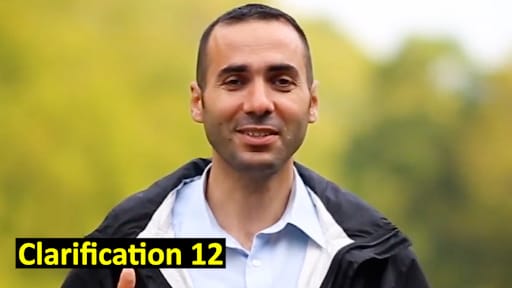
Here is a quick logical conclusion why the Mathematical Miracle of the Quran is the last miracle until the End of the World:

The Quran actually says the conclusion directly. It says, “…we stopped sending miracles…”. (17:59)


Since the Mathematical Miracle of the Quran is based on multiples of 19, it is interesting to notice that this logical flow also has multiples of 19 embedded in it. The logical flow uses three separate facts to reach two conclusions from which a final conclusion emerges. The facts are sura 38 verse1, and sura 15 verse 9, and sura 2 verse 106. Adding all these numbers of suras and verses gives us 171, which is a multiple of 19, or 19×9, and it is also the gematrical value of the name of Alban Fejza who discovered that the Mathematical Miracle of the Quran is the last miracle until the End of the World.

Those three Quranic facts, whose suras and verse numbers total to a multiple of 19, give rise to a conclusion which is stated directly in sura 17 verse 59. Adding the sura and verse number of the direct conclusion gives again a multiple of 19, or 19×4.

So, both the logical flow and the final conclusion are multiples of 19, and it follows logically that adding all the sura and verse numbers in the diagram should again give a multiple of 19. Adding all the sura and verse numbers in the diagram gives 247, which is 19×13.


By: Alban Fejza, the Clarifying Messenger


For more information:

The Mathematical Miracle of the Quran

Witness a Miracle

The End of the World

Join us to listen to our online Friday meetings every Friday.
Witness a Miracle

In the name of God, The Most Gracious, The Most Merciful. We are recording this program in January of 1986. A couple of months ago around November 1985, a book appeared in bookstores across the nation that soon became a bestseller. The book is a fictitious novel narrating the arrival, monitoring of a coded message from outer space that proved the existence of a super intelligence out there trying to contact us on earth. The message was decoded by computers. And the novel, this fictitious novel, even supports all-time religions belief in God.

The novel is Contact by Carl Sagan, and there are only four quotations that I would like to share with you in this book.

The first quotation appears on the front flap of the book, and it says:

“In Contact, Carl Sagan, whose Cosmos enthralled millions of readers and television viewers, has brilliantly employed the freedom of fiction to imagine the greatest adventure of all, humanity’s first encounter with other intelligent beings.”

The second quotation appears on page 219, and it describes the computer decoding of this message as:

“This is only the most amazing discovery in the history of the world.”

Let me repeat this quotation. It describes the computer decoding of this message like this:

“This is only the most amazing discovery in the history of the world.”

The third quotation appears at the end of the novel page 430, where we find the conclusion of the whole novel:

“There is an intelligence that antedates the universe.”

In other words, the novel is trying to say that there is God out there.

The last quotation that I wish to share with you is not fictitious. There’s no fiction at all; it is Carl Sagan’s notes at the end of the book. Carl Sagan says in his author’s note:

“My fondest hope for this book is that it will be made obsolete by the pace of real scientific discovery.”


The Mathematically Encoded Message

Well ladies and gentlemen, Carl Sagan’s fondest hope has just come true. In the next 50 minutes or so I will share with you the real scientific discovery of a coded message from outer space, from deep space, and the message will represent the first physical evidence ever for the existence of God. We have been talking about God, and those who believe in God have been presenting circumstantial evidence. But now we are going to witness a miracle; we are going to witness physical evidence, the first incontrovertible evidence that God exists. And we are going to see this proof through the real scientific discovery of a coded message that came to us and could never be human-made. Before I get to the historical development of this message and the monitoring and decoding of it, I would like to make a couple of statements that I consider very important. The first statement is that every utterance you are going to hear in this program is a proven scientific fact. Every statement you are going to hear is proven by means of a mathematical code that gives us/provides us, with physical evidence, that every statement is correct. It is very important that you have full confidence that every statement here is proven by physical evidence. The reason I’m saying this is that some of the statements you are going to hear had in the past provoked ridicule or snickering or some laughter, this will no longer be the case.

The development of the message

The message came to this world in many parts, and the first part came to us through the first man, Adam. Adam was created by God, and he knew about God, and when he came to this world, he transmitted the first portion of the message. The purpose of the message as you will see is to tell us where we came from, why we are here, where we are going, and the purpose of our existence. So, Adam taught his children and grandchildren about God and everything he knew about the creation of Adam, the creation of the human being, the creation of his wife Eve, and how he came from up there to the planet Earth. That is a very important part of the message. The message afterwards came to us through every messenger of God, Noah, Abraham, Moses, Jesus, Muhammad, and I will go through the stages of development of the message and show you the mathematical code that was embedded in these messages.

What happened was that God picked out from every generation a human being through whom God sent part of the message, we are talking about one and the same message. Abraham, Moses, David, Solomon, Jesus, Muhammad, all these people received parts of one and the same message, and as a proof of authenticity, as it turns out and as you will witness in this program, God incorporated in his message to us an intricate mathematical code, intricate beyond human ability, just to prove that this message is not fabricated by any human being. Abraham contributed a good portion of that message. And you know, you probably watched the movie the Ten Commandments, you know that Moses was walking in the desert when he saw the burning bush, and God communicated with Moses. God communicated part of that message, it was a very significant part, part that we call today the Torah. You saw in the movie and you read in the Bible how the tablets were written, were recorded, that the scripture was recorded on the tablets, that scripture in the language of Moses was mathematically coded, beyond the human ability, and this is what this program is all about, the discovery of a mathematical code embedded within God’s message to us through his messengers. The first hint, let me go back to Moses, when he carried the tablet with the message on them, the letters on those tablets were counted according to an intricate mathematical code, the same mathematical code that was discovered in all the scriptures. The message given to Jesus in his language, Aramaic, was also mathematically coded in that language. The alphabet letters of that message were counted and carefully placed. The whole message in Aramaic was composed according to a mathematical pattern, and this is the pattern that was consistent through every part of the message from Adam to Abraham, Noah before that, Moses, David, Solomon, Jesus, Muhammad. The same mathematical code, the letters, the words, the verses, everything was calculated and carefully placed to prove that the message is from God. The first hint of the discovery of a mathematical code was at least what we know of, was announced about a thousand years ago. And this was printed recently in a book called studies in Jewish mysticism. Studies in Jewish mysticism. And I’m going to read for you a quotation from that book:

“No change can be tolerated in the text of the prayers; not even a minute one. Because every change even of one letter would destroy the numerical harmony inherent in the text.”


That was the first hint of a mathematical code in God’s message to the world. Here’s another quotation from the same book and this quotation also was written about 900 years ago:

“According to Rabbi Judah and the Ashkenazi Hasidic school in general, there can be nothing accidental in the Bible, not even the forms of letters, the punctuation, the vocalization, and especially in the numerical structures.”


How do you like that? 900 years ago, marks the first discovery of a mathematical code in the scriptures. I will go through the details of this amazing mathematical code and how it penetrates and encodes the complete scripture of God. Of course I’m talking about the original scripture, not any translation, we are talking about the original words of God in the languages of God’s messengers, Adam, Abraham, Moses, David, Solomon, many others, Jesus, Muhammad, and the original scripture was coded according to this very intricate miraculous system.


The Quran

How in the world are we going to study the original scriptures given to Abraham, Moses, David, Jesus, and Muhammad? The mathematical code that God put in his message to the world is in the original scripture, the original words, letters, verses, that were written by God Almighty in those scriptures, in Abraham’s scripture in his original language, Moses’ scripture in his original language and so on. How are we going to study the original scripture given to Jesus in Aramaic, his language? Well, there is only one scripture in the world today that is original and still intact, and that is the Quran. Back in the year 610 AD, God picked out a man named Muhammad and communicated with us through him by giving him the Quran. And Quran today is the only original intact scripture in the original language as written by God Almighty.

The Quran represents the latest edition of the scripture, remember we are talking about one and the same message, and the mathematical code that I will share with you today was throughout the whole message, in the Torah, in the gospel of Jesus, in the Quran, in the Psalms, and as I mentioned to you, glimpses of the mathematical code that were written about a thousand years ago.

Back in 1968 I noticed that the Quran had mysterious letters at the beginning of certain chapters. For example, chapter 2 begins the first verse is only three letters A L M, what is A-L-M? I wondered. 29 chapters in Quran have these mysterious letters; chapter 50 is entitled Q, that’s it, Q!, And it’s prefixed with the letter Q, nothing else, Q. Chapter 68 is prefixed with the letter N. Chapter 36 is prefixed with the letters YS, and so on. These letters remained mysterious for 1400 years, since 610 AD. Well, curiosity led me to put the Quran in the computer just to find out what these letters represent. So, I wrote the Quran in the computer, of course the Quran in the original language is Arabic remember? And the computers back in 1968 didn’t have Arabic computers, so I took every Arabic letter in the Quran and I used an English letter to represent the Arabic letter, and I put the whole scripture, the final edition of God’s message to the world in the computer, then I asked the computer for a number of mathematical characteristics, the number of every letter in every chapter, the number of numbers of words, and all kinds of questions, I had no idea what to expect, and when the computer was through and answering my questions, a very intricate mathematical pattern emerged and fit with the older findings of mathematical codes in the original scriptures of Moses, Jesus, David, and so on. The mathematical code that emerged provides the first physical evidence for the existence of God. In fact, once you study this mathematical pattern in detail and understand it, you will no longer believe in God, you will know that God exists, you will need faith no longer. So that’s how intricate and how miraculous this mathematical code is.

Miraculous Composition

As it turns out these mysterious letters have specific counts in their chapters and there was one common denominator in the whole scripture that is common to all these letters, we’re talking about exactly half the Quran, the Quran is about 500 pages of the regular size pages, and the mysterious letters prefix 29 chapters that represent in size about half the Quran, the Quran consists of 114 chapters, many of them are short chapters, but these mysterious letters prefix about half the Quran, and it turned out that every single set of these mysterious letters is found in its chapter in multiples of 19, without a single exception, in other words the letters are distributed within Quran according to this intricate mathematical pattern that is way beyond the human ability. When you study it in detail you will have no doubt whatsoever that there is a mathematical system proving the authenticity of Quran as God’s message to the world, to be more accurate as God’s final edition of the scripture, His message to the world.

Initial Q

So now let me give you a few examples to demonstrate the miraculous nature of this mathematical code. Chapter 50 for example in Quran is entitled Q as I mentioned before and is prefixed with the letter Q, when you count the letter Q in that chapter you will find 57 Q’s in the whole chapter, that is 19 x 3, it’s a multiple of 19, and as I said every single one of these mysterious letters is found in its chapter in multiples of 19.

There is another chapter in Quran, one other chapter that is also prefixed with the letter Q, and that is chapter 42, and guess what? even though chapter 42 of Quran is more than twice as long as chapter 50, it has the same number of Q in it, 57. So 57 is 19 x 3, so the only two chapters in Quran that are prefixed with the letter Q have exactly the same number 57 and 57.

And Q we are told in chapter 50 represents Quran, Quran is spelled with the heavy K in the Arabic language which is represented by the letter Q. Only two chapters 57 and 57, the total is 114, and guess what? This is the number of chapters in Quran, 114, 19 x 6.

Initial N

The letter N prefixes chapter 68, and when we count the letter N in that chapter, we find 133. These as you notice are physical facts, it is not guesswork, I’m not saying in my opinion chapter 68 contains 133 N’s, this is a physical fact, the chapter is initialed with the letter N, prefixed with the initial N, and it contains 133 N’s, 133 is a multiple of 19, it equals 19 x 7.

Initial YS

Chapter 36 for example is prefixed with the letters Y S, and when you count the letters Y and S in this chapter, the total is 285, or 19 x 15. How do you like that? This means every letter Y, every letter S in this chapter is counted, calculated, and harmonized with the other initial chapters. There is also an interlocking relationship between these letters, because you find these letters in a number of chapters, and they interlock with each other, and all of them give you totals that are multiples of 19. We will find out why 19 before the end of this program.


19 Common Denominator

But at this point I would like to quote for you from Rabbi Judah the pious, his writings of about a thousand years ago, and it demonstrates the common denominator in all the scriptures, one and the same message, the Quran, the Gospel of Jesus, the Torah of Moses, the Psalms of David. Let me quote for you from Rabbi Judah the Pious, where we find that the number 19 is the common denominator in all the scriptures. Here is what Rabbi Judah said:

“900 years ago, the people, the Jews in France, made it a custom to add in the morning prayer the words “Ashrei Temimei Derech”, which means blessed are those who walk the righteous way. And our rabbi, the pious, of blessed memory, wrote that they were completely and utterly wrong, it is all gross falsehood, because there are only 19 times that the Holy Name is mentioned in that portion of the morning prayer. And similarly, you find the word “Elohim” 19 times, similarly you find that Israel were called sons 19 times, and there are many other examples. All these sets of 19 are intricately intertwined and they contain many secrets and esoteric meanings which are contained in more than eight large volumes.”


So, this just to give you an idea that the number 19 is the common denominator in all portions of the message, God’s message to the world.


It’s a Miracle

Ladies and gentlemen, it is impossible, statistically impossible, to write a book with this kind of mathematical composition, where every letter, every word is calculated and carefully placed according to a mathematical pattern that is clearly beyond human ability. We find this mathematical pattern in God’s scripture, the one and the same message in Quran and in previous scriptures. I just gave you the example from the Torah as written by Rabbi Judah the Pious.


Why 19?

And now we come to the big question, why 19 in the older scripture as well as in the Quran, why is 19 the common denominator of God’s message to the world from the time of Adam until now? And why did it have to wait? You see when Rabbi Judah discovered the number 19 in the older scriptures, he didn’t know why 19. As you recall when I quoted him, he said there is a secret and the great esoteric meaning to the number 19, but he didn’t know why, because this question had to wait until the completion of God’s message to the world by revealing the final edition, the Quran, in the Arabic language. You see 19 is the numerical value of the word “One” in Arabic, and this is the whole essence of the scripture, that there is One God, that we shall worship only The One God. In Arabic the word one is written like this: واحد. it is pronounced “Wahid”, and at the time of revelation of Quran, there were no numbers as we know them today. They used the alphabet letters as numbers. So, the numbers were non-existent, this is a relatively recent invention, the numbers.

The Gematrical value of the word Wahid

So let us go to this word in Arabic, the word one, or Wahid, and see how the numerical value equals 19. واحد

  • The first letter in this word (و), was 6 in those days,
  • This is the letter (ا), and it represents the numeral 1,
  • This is the letter (ح), which represents the numeral 8,
  • Finally, the letter (د), the letter dal was 4.

And if you add the total 6 + 1 + 8 + 4 = 19, so there is the total; the numerical value of the word One in Arabic. And now with the completion of the scriptures through the revelation of Quran, we know why 19. 19 is the common denominator of the mathematical code throughout the scriptures, means one, God is one.

The content of the message is more important than the composition of the message

What is more important than the mathematical code is the content of the message itself. Because the message being from our Creator tells us who we are, where we came from, where we are going, and why we are here, what is the purpose of our life. These are the most important questions as far as any human being is concerned. And now we have the answers from the most authoritative source, the Creator himself. Naturally we cannot discuss all the contents of the message in one program, hopefully in a series of programs we will present to you the contents of the message, but for now let me deal with just one question,

Who is God? Who is The One who created you and me?

There is a specific One who created you and me and the whole universe, there is a certain One that we should know, who is The Omnipotent, Omnipresent, Omniscient, God, who runs this universe, who is He? The Quran describes God as following.

You see this planet Earth is part of the Milky Way galaxy, and the Milky Way galaxy is so huge that it takes 30,000 light years, if you travel at the speed of light, it will take you 30,000 years to reach the outer limit of the Milky Way galaxy, our galaxy. And our universe contains 1 billion galaxies like the Milky Way, a billion trillion stars. These numbers are actual scientific numbers, the astronomers, the scientists stopped counting at 1 billion galaxies in our universe, and a billion trillion stars, that’s how big our universe is. We now measured 26 billion light-years within our universe, 26,000 million of light-years within our universe. And God tells us in Quran that there are seven universes. The billion trillion stars, the 1 billion galaxies, the 26 billion light-years are only within the smallest and innermost of seven universes. This is how God describes the universes. You can imagine seven balls inside each other, and we live in the smallest and innermost of the seven universes. Can you imagine the size of the second universe? How about the third universe? The fourth? the fifth? the sixth? and the seventh universe? How can we describe the circumference of the seventh universe? Infinity will be the most accurate description of the length of the circumference of the seventh universe. And you know what? Quran describes God as holding the seven universes in his right hand, that’s who God is. God is holding the seven universes in one hand, it makes a difference whether you are holding something in both hands, or within the fist of one hand. And in chapter 39 of Quran, God describes himself as holding the seven universes in his right hand. And this tells you who God is. God is the one who created the sun, the moon, the stars, the galaxies, in the extreme accuracy that you see. The sun will rise tomorrow exactly at the specific time from the specific place, because God designed it this way, and He is the Only One who controls it. No other entity, human or non-human, designed this universe. So, this is just an example of the contents of the message.

The message goes on and tells you exactly why you are here and how to fulfill the purpose of your life. But we will get into these topics in the future, God willing, and I hope you will follow this series of programs. Meanwhile, if you have any questions, please write to us or call.

By: Rashad Khalifa, the Messenger of the Covenant


For more information:

The Mathematical Miracle of the Quran

No More Miracles

The End Times

Join us to listen to our online Friday meetings every Friday.

Principles of Friday Prayer

In the name of God, Most Gracious, Most Merciful. Brothers and sisters, Assalamu Alaikum (Peace be upon you). The Friday Congregational Prayer is an obligatory duty upon every Muslim man and woman. This is a social function decreed by God Almighty for the Muslims to get together and to know each other and to be familiar with their problems and their joys.

And we find in surah number 62 verse number 9 the commandment from God says,

“O you who believe, when The Contact Prayers; The Salat for Friday is announced, you shall go to the mosque and observe The Salat Prayer and drop all business. This is better for you if you only knew”.

So if anyone is afraid that he or she may lose some business during the Friday prayer, God is saying this would be better for you, God will make it up to you. God runs the world and he’s the only provider and he guarantees you doing better if you go to the Friday prayer. And notice that the commandment said, “O you who believe.” It didn’t say, “O you believing men or O you believing women.” It says, “O you who believe, when the contact prayer on Friday is called for, you shall go and drop all business”. It is very important; I’m emphasizing the role of the women because this is also an educational meeting where people sit down and listen to a sermon and the Muslim woman must be the best educated because she teaches the children. The women are our mothers, and they teach us as we grow up and it is essential that they are educated not ignorant. The traditional customary Muslims of the Middle East kept the women away from the mosque and this kept the children ignorant because the mothers are ignorant as far as the religion is concerned. So, it is very important to emphasize this fact that Muslim men and women are required, it is an obligatory duty for them to go for the Friday prayer.


Features and conditions of the Friday Congregational Prayer

There are certain conditions for the Friday Prayer: The people dress nicely, as commanded in the Quran, and they go for the noon prayer on Friday to the mosque, and the imam, or the person who gives the sermon, is required to follow certain traditions. These are religious traditions or duties that came to us all the way from Abraham. And it is universal. This is the way it is happening all over the world.

  • The first condition is that throughout the prayer, from the beginning to the end, you mention only the name of God. Allah Subhanahu wa Ta’ala (God, Glory to Him, and Exalted He is).
  • The adhan should be Allahu Akbar, Allahu Akbar, Allahu Akbar, Allahu Akbar, La Elaha Ella Allah (God is Great 4x, There is no god but God). This is Adhan. So, the Adhan, or the call for contact prayer is delivered,
  • Then the Imam stands up in front of the congregation and he starts the first sermon by saying Alhamdulillah (Praise God). This is the first requirement. The Khutba or Sermon on Friday consists of two sections or two sermons. The prayer itself consists of two Rak’ahs instead of four. The customary noon prayer consists of four Rak’ahs or four units, but on Friday it is only two Rak’ahs or two units, and this is because the two sermons compensate for two Rak’ats or two units. So, the first sermon and also the second sermon, they must begin by stating Alhamdulillah, (Praise be to God), followed by the Shahada. And the Shahada as dictated in the Quran, in surah 3 verse 81, is: “La Elaha Illa Allah” (There is no god but God), that’s it. So, the Imam stands up and he begins each sermon, the first one and the second one, by saying Alhamdulillah, La Elaha Ella Allah.
  • Then he goes into the sermon, the subject, in any language that he wishes. Of course, in this country, in the United States, it will be English, so the people will understand.
  • If the imam during the sermon uses Quran in Arabic, he must translate it, so the people will understand. This is the whole idea of a sermon.
  • The sermon also deals with the local conditions of the local community. Or it can deal with a general lesson from the Quran or a general religious lesson.

So let me write for you the first requirement, which is stating, Alhamdulillah, La Elaha Ella Allah, at the beginning of each sermon.

The Imam stands up for the sermon and the first thing he says in the first sermon and the second sermon is, Alhamdulillah. Which means, Praise be to God.

La Elaha Ella Allah. “La” means no. “Elaha” means god. “Ella” means except, “Allah” means God. La Elaha Ella Allah. There is no god except Allah. This is the required utterance at the beginning of the first sermon and the second sermon. After this you go into the subject of your sermon.

Now you notice I didn’t say anything else. This is what you start with. Alhamdulillah, La Elaha Ella Allah. You don’t start with Bismillah ar-Rahman ar-Rahim, or dear brothers and sisters, or Assalamu Alaikum, or anything else. The minute you stand up for the sermon, you say Alhamdulillah, La Elaha Ella Allah. Then you can say, dear brothers and sisters, Assalamu Alaikum, I want to talk to you today about the contact prayers, the salat, for example, or whatever your subject is.


Repentance + Ending the Sermon


After you finish the subject of the first sermon, how do you finish the first sermon? You finish it by asking the people to repent. You can ask them in Arabic and then translate it to English. And the Arabic is, “Tooboo Ela Allah”, repent. This is how you end the first sermon.

Now, as soon as you say “Tooboo Ila Allah”, repent, you sit down, and you repent yourself. You sit down and you pray to God, please God forgive me, I repent to you, I will never commit a sin after now. And you mean it. So here is how you end the first sermon.

  1. You finish your subject,
  2. Then you say to the people, Tooboo Ila Allah, repent.
  3. And then you sit down, and you ask God to forgive you and you declare your repentance.

You say, “please God forgive me, I repent, I will never commit a sin after now.” And you mean it. Of course you are going to fall in sin again. But God says he loves those who continuously repent. So, you sit down for about a minute, no more, just one minute, and everybody in the mosque will be asking God for forgiveness, and everyone in the mosque will be repenting,

  1. Then you stand up for the second sermon. And you start the second sermon by, Alhamdulillah, La Elaha Ella Allah. This is how you start the second sermon. Exactly the same way as the first sermon.
  2. Then, you either continue the subject you were talking about in the first sermon, or you talk about a new subject. You can have two different subjects for the two sermons.
  3. And after you finish talking in the second sermon, you end this last sermon by saying Aqem Al-Salah. And this is assigned to someone in the congregation to declare that the Salah, the contact prayer for Friday, is ready to be observed, and everybody stands up. You end the sermon by saying “Aqem Al-Salah.”


Now, the minute you say Aqem Al-Salah, the second sermon is over, and a person in the congregation will say Allahu Akbar, Allahu Akbar, Allahu Akbar, Allahu Akbar, La Elaha Ella Allah. And this means everybody stand up and let us pray. Then as the imam who gave the two sermons, you stand up in front of the congregation and you pray two Rak’ahs as usual.


1. The Adhan: Allahu Akbar, Allahu Akbar, Allahu Akbar, Allahu Akbar, La Elaha Ella Allah.

2. The statement: AL-HAMDU LILLAH. LA ELAHA ELLA ALLAH

3. First sermon

4. The statement: TOOBOO ELA ALLAH

5. The Repentance (Silent)

6. The statement: AL-HAMDU LILLAH. LA ELAHA ELLA ALLAH

7. The second sermon

8. The statement: AQEM AL-SALAH

9. The Adhan: Allahu Akbar, Allahu Akbar, Allahu Akbar, Allahu Akbar, La Elaha Ella Allah.

10. The two units of Contact Prayer

Click here for more information

Video tape consists of live examples of the Friday Sermon being conducted during the congregation


By: Rashad Khalifa, the Messenger of the Covenant


For more information:

Understanding the Friday Prayer

Can We Do Friday Sermons Online?

Principles of Muslim Prayer

Join us to listen to our online Friday meetings every Friday.

Places of Worship


Which Places of Worship Are we Allowed and Not Allowed to Visit?

In which places of worship are we allowed and not allowed to go to worship God? This is a very important question, because according to the Quran, people who stop themselves from the permissible places of worship are evil (2:114), but at the same time, people who visit the prohibited places of worship are transgressors and liars (9:107-109). So having a very detailed and clear answer to this question is of vital importance.

So, let’s find out from the Quran exactly which places of worship are permissible and which of them are prohibited. To understand this, first we need to understand how the places of worship are established. Places of worship are established through spending, by giving or dedicating the property to God. However, God only accepts the spending from those who:

  1. Believe in God (9:54),
  2. Believe in God’s messenger (9:54,107,108),
  3. Do not observe Contact Prayers lazily (9:54),
  4. Do not do the spending stingily (9:54),

Obviously, point 3 and 4 are automatically fulfilled when the spending is done for places of worship, because the very fact that a certain spending is done for a place of worship shows that those people were not stingy and not lazy. So, we may ignore these two points for the purposes of this study.

So, for a place of worship to be accepted by God, it must be established by people who

  1. Believe in God (9:54),
  2. Believe in God’s messenger (9:54,107,108),

Additionally, when establishing a place of worship, it should:

  1. Not harm the believers (9:107-108),
  2. Not divide the believers (9:107-108),
  3. Not cause disbelief (9:107-108),
  4. Not in an unsafe plot of land (9:109),
  5. Be dedicated to God alone (72:18).

So, a place of worship was not accepted by God unless all of these seven criteria above were fulfilled when it was initially established (9:108, 2:127, 72:18). We are emphasizing, “when it was established”, because it does not matter whether the people who maintain it now are believers or not. They can not change the fact that it was accepted by God. Once a piece of land or property is dedicated to God, and God accepts it, it can not be rededicated to the idols, no matter how hard the idol worshipers may try. It’s like when a sheep is sacrificed to God. No one can bring the sheep back, and rededicate it to the idols. It’s impossible. And also once a sheep or a piece of property is dedicated to idols, it can never be rededicated to God. So, an initially prohibited place of worship can never become a permissible place of worship, and an initially permissible place of worship can never become a prohibited place of worship. So, the circumstance in which it was initially established is what matters (9:108), and at that moment they must have fulfilled all these seven criteria.

So, according to these seven criteria, all the religious buildings which are established by the Hindus, Buddhists, Sikhs, other Dharmic religions, Taoists, Confucianists, and other Eastern Religions, all the religious buildings established by them are prohibited for us to visit, because they do not fulfill criterion 2 at least. They do not believe in God’s messengers mentioned in the Quran. Also, the religious buildings established by the “Nation of Islam” in America, and the Bahai go against criterion 1, because they believe in human beings as God or as a Manifestation of God. Also, together with the Ahmadiyya, they go against criterion 2 and 4, by believing in false messengers. Also any religious building established on top of a grave does not fulfill criterion 7, because that piece of land was intended for the dead person, and you can not dedicate the same piece of land twice, by dedicating it to God also. God does not accept double dedications (6:136). So, all these religious buildings are prohibited.

Now, let’s look at the potentially permissible places of worship.

Let’s start with synagogues first. The ancestors of Jews who established the synagogues fulfilled all these seven criteria before Jesus came. After Jesus came, they reject him (4:156-157), and as a result they cause division in religion. So, they do not fulfill criterion 2 and 4 after Jesus. So, from year 0, none of the new synagogues which they established were accepted by God.

Now, let’s look at the churches. The ancestors of Christians who established the churches fulfilled all these criteria until the time when they rejected Prophet Muhammad (2:120), and as a result they caused religious division. So, they did not fulfill criterion 2 and 4 after Muhammad. So, from the year 610 when God chose Muhammad to be His messenger, none of their new churches were accepted by God.

Now, let’s look at the masjids (mosques). The ancestors of Muslims who established the masjids fulfilled all these criteria until 1980 when God sent the Messenger of the Covenant. From 1980, those who rejected him did not fulfill criterion 2 and 4, and their newly established buildings were not accepted by God. So, after 1980, God only accepted the new masjids established by people who believed in God’s Messenger of the Covenant. This condition continued until 2008 when God sent the Clarifying Messenger. After that, God only accepts new masjids established by people who believe in the Clarifying Messenger. Otherwise, they will not fulfill criterion 2 and 4. Although God will send two more messengers after the Clarifying Messenger, belief in them is not a deciding factor for masjids, because anyone who believes in the Clarifying Messenger will also believe in the Strengthening Messenger. There will be groups of people who believe in the Clarifying Messenger, but not in the Guide Messenger (the Mahdi), shame on them, but even that will not be a deciding factor for masjids, because people should stop establishing new masjids anyway after the year 2260, way before the Guide Messenger, because after 2260 there is no point in building masjids, since they will not fulfill criterion 6, because soon all the masjids will be destroyed. What’s the point of establishing buildings which will be destroyed soon (9:109-111)? Instead, the believers should set aside that same money to eventually support the Guide Messenger (the Mahdi) in the cause of God (8:1, 8:41, 9:111), when he comes. So, the Clarifying Messenger is the last messenger who is a deciding factor on weather God accepts new places of worship or not, which is why one of his main duties is to clearly establish once and for all how to establish new places of worship owned by God alone; not places of worship owned by our communities, not places of worship owned by leaders, not places of worship owned by God’s messengers, but places of worship owned by God alone (72:18).

So, here is the conclusion. We, the true believers are allowed to visit these graveless places of worship only:

  1. Synagogues established before the year 0, (which includes only 1 out of about 20,000 existing synagogues (17:1)),
  2. Church buildings established before the year 610, (which includes about 100 out of about 3 million existing church buildings),
  3. Masjids established before 1980, (which includes about 1 million out of about 3 million existing masjids),
  4. Masjids established between 1980 and 2008, only if they were established by people who also believed in God’s Messenger of the Covenant,
  5. Masjids established between 2008 and 2260, only if they are established by people who also believed in the Clarifying Messenger.

This is why only synagogues, churches, and masjids are mentioned in the Quran (22:40).

However, the permissibility to visit those places of worship does not automatically apply to the Friday Congregational Prayers. The Friday Congregational Prayer can be done only behind a preacher or leader who believes in all of God’s messengers (14:21, 62:9, 21:92, 4:144, 58:22, 5:56). We are not allowed to do it behind a preacher or leader who does not believe in all of God’s messengers, even if he does it in the permissible places of worship (58:22, 4:144).

But outside of the Friday Congregational Prayer, you may visit the permissible places of worship, even if they are maintained by disbelievers. Their present domination does not change the fact that those places still belong to God. If you own a house, for example, and mobs take it over, that does not change the ownership of the house. You are still the owner of the house. So, God is still the owner of those places (72:18). People are just visitors there. And we can see examples in the Quran of believers worshiping God in places of worship which were managed or dominated by disbelievers, as long as that place of worship was initially established by the believers. For example, Zachariah, Mary, Jesus worshiped God in the synagogue established by Solomon in Jerusalem (3:37, 3:39, 19:11), despite the fact that it was being managed by the evil Jews at that time (4:156). Also Muhammad worshiped God there (17:1-2), despite the fact that during his time it was being used partly as a synagogue, partly as a ruined church, and partly as a temple for idols (17:7). Also, before migrating to Medina, Muhammad worshiped God at the Sacred Masjid (8:33), at a time when it was being used and managed by idol-worshipers (8:34-35). He was kicked out of there eventually, but he never boycotted it (2:114). Also, God asks us to perform Hajj at the Sacred Masjid (3:97), and use it as a prayer house (2:125), without taking into account the belief or disbelief of those who dominate it now (3:97), because it is a masjid which was established by Abraham (2:127), and God accepted it from him (2:127, 14:39). It would not make sense to find the obligations to visit the Sacred Masjid in the Quran, and on the other hand make it impermissible for believers. God fully knew who was going to maintain it (22:25). We do not go there to visit the people. We go there because God says so (3:97, 22:27, 22:29), and because it is the right thing to do (22:32). In the same way, God orders us not to boycott the permissible places of worship (2:114), and we should feel free to visit them (2:150, 9:18). Alban Fejza shows you in practice in the video how we can visit them.


Requirements to Fulfill to Visiting a Permissible Place of Worship

Before we enter a permissible masjid, we should fulfill seven requirements:

  1. Believe in God (9:18)
  2. Believe in the Last Day (9:18)
  3. Not fear anyone except God (9:18, 2:150)
  4. Having given the Obligatory Charity (9:18)
  5. We should not enter and leave without having performed the Contact Prayer (9:18, 7:29), whichever of the five Contact Prayers applies at this time. If we have already done the Contact Prayer outside of the masjid, or we go in the masjid in the forenoon when no prayer time is applicable, we should still do two Rakats of Contact Prayer (9:18, 7:29).
  6. We should not enter the masjid without having ablution (5:6).
  7. We should be clean and in modest clothes (7:31).

Children under the age of 12 only need to fulfill the seventh requirement (7:31, 5:6, 24:58). (When God says, “O you who believe” (5:6), it does not include children necessarily (49:14), but when God says “O children of Adam” (7:31), it includes children.)

The prayer rows should be filled from front to back (61:4, 9:93). Women should fill them from back to front. If we enter the masjid at noon time for example, we should do the Noon Contact Prayer (2:238, 17:78).

To learn how to observe the Contact Prayer, watch the video titled “Principles of Muslim Prayer” by Rashad Khalifa. But that video does not explain the different voice levels during the Contact Prayer. They are especially important in masjid circumstances, so let’s explain them here.

The Quran mentions five human voice levels:

      • Silent (7:193, 6:53, 20:7),
      • Murmuring (20:108),
      • Low (31:19, 49:3),
      • Normal (20:7, 44),
      • Loud (49:2).

During the Contact Prayer, your voice level can not be silent or loud, but it may be any of the levels in-between (17:110). However, this applies to portions of the Contact Prayer when you magnify God (akbar) or praise God (hamd) (17:111). So, when you say the Elhamdulillah (Sura 1), “Allahu Akbar”, and “Semi’a Allahu Leman Hamidah”, you can do it in a murmuring, low, or normal voice (17:110-111), which are the levels in-between. But, during bowing and prostration positions, we glorify God (Subh), and the glorification voice level may be silent, murmuring, or low (7:205, 3:41), and these commandments are given in the Arabic Quran. The Shahada may be spoken in a silent, murmuring, low, or normal voice (20:7-8, 7:205, 3:41). The Salaam is said in a low or a normal voice (6:54, 31:19).


Rules Inside a Masjid (Place of Worship)

In the masjid, you may only:

      • Do the Contact Prayer (9:18)
      • Prostrate (7:29, 15:98)
      • Bow down (2:125)
      • Commemorate God (72:18, 22:40)
      • Glorify God (20:130, 24:36, 33:42)
      • Praise God (25:58, 32:15, 50:39)
      • Read the Quran (2:185, 17:78)
      • Pray (Silent Dua) (7:29)
      • Implore God for forgiveness (40:55)
      • Retreat (2:187)
      • Eat and drink in moderation (7:31)
      • Stand (7:29, 3:39)
      • Sit (2:125)
      • Greet people (6:54)
      • Clean/maintain the masjid (9:18)
      • Bring adornments (flowers, fragrances, provisions) (7:31, 3:37)

In the masjid:

      • We should enter peacefully and leave peacefully (2:191).
      • We should not do anything which invalidates ablution (2:187, 5:6). You may fall asleep there (2:187), but when you wake up, you should go outside and perform ablution again, if you wish to stay further at the masjid.
      • We should not preach (72:18), except for the Friday Sermon organized by the person in charge (62:9-11).
      • We should not try to convert people (72:18), or have debates or discussions, or arguments, or engage in private discussions or in vain speech.
      • We should not use entertainment like movies, reading, news, etc. (62:11).
      • We should not buy and sell (62:11).
      • We should not use that time to befriend people (6:70). You may acknowledge their presence with a simple greeting, “Salaam alaykum (Peace be upon you!)” (6:54).
      • We should not call other names besides God (72:18).
      • We should not answer any phone call (72:18).
      • We should not pray to anyone besides God (72:18).
      • We should not use our smartphones for other than reading or listening to the Quran in earphones (62:11, 5:48). The Quran may be read aloud when it does not interfere with others, but during Ramadan, others should not interfere with the reading of the Quran.
      • During Ramadan the whole Quran is read aloud (2:185,187), and it must be in a language which people understand (14:4).
      • We should not prevent others from entering because they might have different opinions and beliefs, except if they openly declare that they do not believe in God or the Last Day (9:17,18).
      • We are not allowed to reserve spaces for later by leaving things there (72:18, 2:114).
      • If we are told to make room for others to sit, we make room for others to sit. God will then make room for us (58:11).
      • If those in charge ask us to get up and leave, we get up and leave. God will raise us to a higher rank (58:11).
      • If those in charge impose additional unfair mosque rules, you may choose not to enter, or you may choose to enter with those rules, but not if those rules require you to change the way you worship God.

In the video clarification, Alban Fejza also shows an example of him going to the masjid and finding others already there getting ready for the group prayer.

When you go in, you check if they are doing the movements together simultaneously. If they are not, you simply sit and do not join them in prayer. That prayer is not from the Quran (2:43, 3:43). The Quran describes the obligatory Contact Prayer as one where all the believers bow and prostrate at the same time. Also, if only one person is appearing to do the Contact Prayer, you do not join him, but if two or more people are appearing to do the contact prayer together simultaneously, and you have not done the contact prayer, you must join them. You can not choose to do it separately in that case (2:43, 3:43). If you have to just wait, you may simply sit, commemorate God silently, or even use your smartphone to read the Quran in whatever language you understand. And when all the people stand together to do the Contact Prayer, you must join them (7:29-30, 4:88, 4:142, 5:2, 3:113), because the Quran orders you to stand when they stand, bow when they bow, prostrate when they prostrate, and sit when they sit (2:43, 3:43). During the Contact Prayer, we should follow the same Qiblah (prayer direction) as the prayer leader (4:59), even if his direction is not perfectly towards the Sacred Masjid (2:177), because there is no such thing as the wrong direction to worship God. There are only good and better directions (2:144). To God belongs the east and the west (2:115, 2:142). Although the prayer leader is not supposed to recite additional Suras of the Quran beside Sura 1 during the Contact Prayer, if he does that, you are not allowed to object to it, because when the Quran is recited, you should listen (7:204). You are not responsible for the words of others (6:52). You are responsible for your movements during the group prayer (2:43, 3:43). When the end of the Contact Prayer comes, and they say Salaam, you should return their greeting, at least in equal measure (4:86). After the Salam, you may leave immediately, even if the others stay further (3:149). You are not obliged to participate in any other ritual with them (28:55). Only the five obligatory Contact Prayers may be a group ritual in the masjid.

So, these were the rules of masjids. However, you may still choose not to go there for practical reasons. For example, some mosques are not maintained properly, some of them might smell bad, some of them are closed, some of them are too far, and in some cases it might simply not be practical.

A place of worship becomes obligatory for you only if it is within 10km (2:203) travel distance, it is Friday noon (62:9) and those in charge of it are believers who believe in all of God’s messengers (62:9, 4:144, 5:56).

Also, of course, visiting the Sacred Masjid is obligatory once in your lifetime, if you are not prevented (2:196). In all the other cases, it is optional to visit the permissible places of worship.


Now, everything we said so far, we only talked about real places of worship, places which only have God as an owner. Improvised places like places inside airports, as part of a university, inside companies, rented properties etc., none of these places are places of worship, because they have other owners besides God (72:18). You may use them for prayer if they suit you, but you should know that they are not places of worship, and the rules of their owners apply, not necessarily the rules of this video. They do not really represent any religion, regardless of what the sign at the door might say. So, for example, if you see a door sign inside the airport saying “Masjid”, you should know that you are still in the airport. You are not in a masjid. A masjid can not belong to human beings and to God at the same time. For the Friday Prayer, if you don’t have nearby a real place of worship which is maintained by believers, you may use an improvised place of worship, but not if the person who is leading the Friday Prayer does not believe in all of God’s messengers. Anyway, establishing new real places of worship is the best solution, and the only way to have a permanent community of submitters. In the other video clarification titled “Penalty Zakat“, you can learn which is the only proper way to collect and use the finances to establishing new places of worship which belong to God alone.


By: Alban Fejza, the Clarifying Messenger


For more information:

Penalty Zakat

Principles of Muslim Prayer

Principles of Friday Prayer

Join us to listen to our online Friday meetings every Friday.

Penalty Zakat


The word Zakat in the Quran literally means purification (20:76, 2:43, 2:129, 9:103). The Quran does not specify what type of purification because it includes any type of purification, any deed which purifies your soul (20:76). However, most of the purifying deeds in the Quran also have additional names. For example, body purification is called fasting, or travel purification is called Hajj, and so on. But here, when I say Zakat, I am limiting my explanation only to financial purification – obligatory financial purification. So, when I say Zakat, here, I mean financial purification. And I read the whole Quran, just for this – to list all the financial purifications – and in the whole Quran, I found 19 different financial purification subcomponents. Of course, there is only one Zakat, but it has 19 subcomponents. Here they are:

  1. If you harvest crops, fruits, or vegetables, give the due alms from it (6:141, 17:26).

I call this Private Obligatory Charity.

  1. If you own more than 40 units of anything, you should give 1 of them, which is 2.5% for charity.

I call this Public Obligatory Charity. I explain the details of both these first two subcomponents in the other video clarification titled “The Obligatory Charity (Zakat)”. However, I have to mention that the amount of 2.5% is never mentioned directly in the Quran, and that is because it’s not always 2.5%. It’s 2.5% only under the assumption that you did not do anything wrong. But, if you did something wrong, or gained wealth through some way which is partially wrong, then there are additional subcomponents of Zakat, or additional financial purification subcomponents (9:102-103) – the following 17 subcomponents, which I explain in this video:

I call the following 17 subcomponents, Penalty Zakat, because they are financial penalties for something wrong which you did (9:102-103). The Christians and the Jews translate them in the English Bibles as purification offerings, or sin offerings (Leviticus 4:27-35) – a financial contribution to purify yourself from a sin. So, let me present them:

  1. If you break an important promise or oath, feed ten poor people (5:89).
  2. If you don’t fast when you should, then feed a poor person for each day of not fasting (2:184).
  3. If you break your engagement or marriage, compensate the woman (2:236-237).
  4. If you estrange your wife, and can’t fast, feed sixty poor people (2:233).
  5. If you divorce your wife with a baby, provide food and clothing for two years (58:3-4).
  6. If you accidentally cause a death, compensate the family, plus two months of fasting (4:92).
  7. If you kill a person, and their family forgives you, compensate the family (2:178).
  8. If you take a loan, pay it back (4:58).
  9. If you take an unwritten loan, leave an equivalent item as a guarantee (2:283).
  10. If people entrust something with you, return it (4:58).
  11. If you set for Hajj and return due to your own health, send an animal offering to Mecca, plus atone through fasting, charity, or worship (2:196).
  12. If you set for Hajj and others prevent you, send an animal offering to Mecca (2:196).
  13. If you break the state of sanctity (Ihram) during Hajj, offer an animal sacrifice (2:196).
  14. If you kill (hunt) an animal during Hajj, offer an equivalent domesticated animal (5:95).
  15. If you publicly mention or admit a bad deed which you did after joining the submitters, you should contribute an equitable charity (9:102-103).
  16. If you wish to confer with the messenger, contribute a charity (58:12).
  17. If you get unowned wealth (ghanimtum) of any type, then 20% of it is for God and for the messenger, and for the relatives, the orphans, the poor, and the traveling alien (8:41, 8:1).

Ok, so now you have all the 19 subcomponents of Zakat (the financial purification). The first two are obligatory for every submitter. The next 17 ones are obligatory only for submitters who did something wrong – Penalty Zakat. Now, among the Penalty Zakat, the blue ones are either personal, or they are facilitated by Democratic States, which means that there is no need for us as community to facilitate them. The purple ones are facilitated by the Custodians of the Sacred Masjid (9:19, 8:34), so we don’t need to facilitate them either, but the Mahdi will eventually end up facilitating them (48:27). The red ones should be facilitated by the messenger or the Congregation Directors whom he puts in charge (4:59). I call these, Public Penalty Zakat, because they are penalties for damages against the whole community of submitters, which is why they have to be facilitated by the messenger as the center of the community (22:78, 59:7), which is why now I am going to explain them further.

Let’s start with the first one:

If you publicly mention or admit a bad deed which you did after joining the submitters, you should contribute an equitable charity (9:102-103). This might include compensation for damages. For example, let’s say that you broke the window of the mosque, then you should pay for it. It can be any other bad deed, even if it is not visibly directed against the community. This is because once you mention it among submitters, it degrades the community (24:19), but once you pay, then your sin is erased. Of course, if you tell a sin which you did before you joined submitters, then we should not request that you pay (64:9), because at that time, you were not part of the community (2:256). That’s between you and God, and God will make you pay (6:120), or maybe you already paid through suffering (42:30), or additional worship, or other means (3:16-17). Also, a sin which you tell to your family, or your husband, or wife does not count as a public confession, because that is a private discussion, and they should never leak that information to the others. They should try to convince you to fix it, but not tell the others. But, if you admit it publicly, then you should pay for it publicly, so that the others know that justice was restored.

Now, the next point:

If you wish to confer with the messenger, you should contribute a charity (58:12). This is because when you take the time of the messenger, you are actually slowing the whole community down (49:5), but if you are ready to atone for it through charity, then it’s ok.

Now, the 19th subcomponent: I left this point last, because it has a lot of weight in the success of submitters. All the other previous points are simply a way of maintaining the community at the same level, but this last point actually grows the community. Of course, it is possible for a community to grow, even without this, but that can only happen at the expense of righteousness (2:79). Without this last point, you can either have a fair community or a growing community (17:83), but you can not have both. Only with this last point, the community can both grow and still remain righteous (9:88). So, let me explain this last point. Here is what the verse says:

If you (ghanimtum) get unowned wealth of any type, then 20% of it is for God and for the messenger, and for the relatives, the orphans, the poor, and the traveling alien (8:41).

But what is this unowned wealth (ghanimtum)? Because it has so many meanings, the English translators of the Quran were forced to translate only one meaning, or another one, or another one, but not all of them at the same time. However, the most comprehensive way to translate it is “unowned wealth”. But what is this unowned wealth? Of course, in the end God owns everything (19:40, 15:23), but for the purposes of testing the humans and Satan in this world (21:111, 67:2), He has retracted His ownership from Earth temporarily (2:30, 19:40), to let us humans see how we will do when we are given responsibility and ownership (33:72). Nevertheless, there is still wealth on earth which is not owned by any human, either because they haven’t owned it yet, or because they lost its ownership. For example, the fish in the sea are unowned by any human. So, fishing is ghanimtum. But, we as submitters almost always get our fish from the supermarkets these days, and not directly from the sea, so let’s cross this out. It’s insignificant for us. Corporations do it, but they are not people to become members of our congregation. Now, the wild animals in the wild are also unowned. So, hunting is ghanimtum, but for the same reasons as with fishing, let’s cross this out. It’s insignificant for us as individual modern submitters. Also, the precious minerals and oil deposits inside the earth are unowned. So, mining is ghanimtum. This is also insignificant for us as individual submitters, so let’s also cross this out. Also, in the past, discovering unexplored land was ghanimtum, but we have reached all the corners of the earth now, and there is no more unexplored land. So, let’s also cross this out. Also, the spoils of war in the past were unowned wealth, because when you killed the enemy and captured his children (33:26), his children lost the status of free people, and became slaves, and slaves don’t get inheritance, and so the wealth which was left behind by the dead enemy, then did not belong to anyone – it became unowned wealth. It was up for grabs for those who participated in the organized struggle. So, getting spoils of war is ghanimtum. But, because democracies are peace agreements between believers and disbelievers, which I explain in another video, this does not apply to us in democratic countries. So, let’s cross this out also – not applicable in democracies. But, there is a sixth meaning of ghanimtum which applies within democratic countries– It is getting “inheritance” from non-submitters. Because this is a very important case for our democratic circumstances, let me explain it in more detail. There are two main points which I will explain about this. First, why “inheritance” from non-submitters is ultimately not an inheritance, but a reception of unowned wealth, and second, why we should give away 20% from it. And by the way, traditionally, the Muslim scholars have believed both of these (al-Bukhari 6764, 8:41), but they could never explain them (75:19).

But, God blessed me with this knowledge (6:105), so let me explain both of them with one go, from the Quran (75:19). Here is how it works: When a person dies, before his inheritance is distributed, the will of the dead person should be fulfilled (4:12). But if he was a disbeliever, regardless of what his will was before he died, at the moment of death, he changes it. God tells us in verse 23:99, that his true will at the moment of death is to get his property back again. At the moment of death, he says, “My Lord, send me back, so I can do good in the inheritance which I left” (23:99-100). So, he wants his property back first, which automatically means that he doesn’t want anyone else to inherit his property. He hopes to get it back again, and then he thinks that he can give 2.5% of it as charity, and in this way, in the second try, he will be saved. But that’s not how it works. It was 2.5% only for those who accepted all messengers and who believed the Quran (57:28, 28:52-54). But, for all the other people, it is actually 10% (6:160). So, because this disbeliever rejected his corresponding messenger and the Quran, he now will actually have to give 10% to be saved. God would not send the messenger back again (25:76), just so that this disbeliever can get a second chance to accept the messenger (40:50), because it would be unfair to take the messenger out of Heaven. The messenger finished his own test (2:285). And, also God would not reveal the Quran directly to this disbeliever, because he is not qualified for it (74:52). So, if this disbeliever is sent back, he would have to be saved in a world without the Quran and without his corresponding messenger, and in that world, he has to give 10%, instead of 2.5%, which is actually what the Jews and the Christians gave (Genesis 28:20-22, Leviticus 27:32), before the Quran and Muhammad, 10%. So, with 10% Zakat, this disbeliever would be saved (6:160). However, this would be his second time that he is enjoying his property. The first time, he gave nothing (11:16). So, now he would have to give 10% for the first time, and 10% for the second time, which is 20%. So, the true will of this disbeliever when he dies is that he would want to be sent back to earth, get his property back, so he could give 20%, just so he can be saved. So, this is where the 20% comes from. So, to fulfill the true will of the disbeliever, you have to give 20% from his property. However, you can not fulfill his will, unless you get the property first. But he does not want you to have the property, because he wants a second chance. At the same time, God is not going to give it back to him, because he already got enough chances (39:59). So, according to the disbeliever’s will, you shouldn’t get the property, and according to God’s will, the disbeliever shouldn’t get the property either. And so now the property remains without an owner. It has become ghanimtum, unowned property. And because it’s unowned property, whomever can get it, gets it. It just happens today, that according to the rules of democratic countries, they give it to you anyway. So now you got it. It was an inheritance according to your state, but according to the Quran and you, it was ghanimtum, unowned property, which you luckily got, because you live in a state with such rules, where you get it anyway, but you truly received it as unowned property (ghanimtum), not as inheritance. And now that you ended up have it, you can fulfill the will of the dead disbeliever and give 20%, which is why verse 8:41 tells us to give 20% whenever we get unowned property.

And this is the explanation of verse 8:41. The verses says, if you get “inheritance” from non-submitters, you should give 20% of it to God, the messenger, the relatives, the orphans, the needy, and the traveling alien.

Now, if a submitter does not declare this type of “inheritance”, because he does not want the community to know, so that he can keep that 20% for himself, in that case, I can assure you that God will curse him, and Hell is awaiting him. Let me show you here a true story from the Bible to show you what I am talking about:

“The Book of Acts, chapter 5 

  1. Now a (submitter) man named Ananias, together with his wife Sapphira, also sold a piece of property. (so they can contribute their due Zakat).
  2. With his wife’s full knowledge, he kept back part of the money for himself, but brought the rest of it and put it at the messengers’ feet.
  3. Then Peter (the messenger) said, “Ananias, how is it that Satan has so filled your heart that you have lied to the Holy Spirit and have kept for yourself some of the money you received from selling the land?
  4. Didn’t it belong to you before it was sold? And after it was sold, wasn’t the money at your disposal? What made you think of doing such a thing? You have not lied just to human beings but to God.”
  5. When Ananias heard this, he fell down and died.”

So, no hiding the money (93:11, 40:16), and you can see that in the past the process of Zakat involved sending the money through the messenger to the final destination. The Quran gives us more flexibility about the middle process, but the final destinations of where that money should go is clearly defined, and it can not be changed (10:15). And the final destination, of that money, of that 20%, according to verse 8:41 in the Arabic Quran, word for word, it says that it should go to:

  • God
  • The messenger
  • Relatives
  • Orphans
  • The poor
  • And the traveling alien

Let me explain them one by one: First, what does it mean to give your money to God? Well, first of all, it means, buying and sacrificing animals for God (22:36). However, this is supposed to be done in Mecca (48:25), and we still don’t have authority over Mecca. So, let’s postpone this for the very end of times when the Mahdi frees Mecca (48:27).

Second, it means buying weapons to be used for fighting in the cause of God only (80:60). However, this does not apply for our democratic circumstances, because democracies are peace agreements (4:90, 4:94). So, let’s also postpone this for the very end of times when democracy ends (9:31-33, 48:28).

And now, the third type of giving to God, and the only one applicable in our circumstances are masjids (places of worship), which belong to God alone (72:18). When we spend the money to establish and maintain masjids, that money is given directly to God, because the masjid does not belong to the community, it doesn’t belong to the messenger, and it does not belong to the Congregation Director. It belongs directly to God (72:18). So, in our circumstances, giving the money to God means only two things: establishing masjids, and maintaining masjids.

Now, let’s explain the second point. What does it mean to give the money to the messenger? Well, verse 5:99 says that the ONLY duty of the messenger is to deliver the message. So, the messenger is a messenger only when he is delivering the message, publishing the message. So, giving the money to the messenger does not include giving it to him personally for houses, or cars, or for any personal purpose. It only includes things which have to do with disseminating the message from the messenger to the final listener or reader. This includes, for example, printing Qurans, paying for webpages, online adds, or things like that – any means or tools which help disseminate the message from the messenger to the final recipient. I will personally never accept any payment from any submitter for religious purposes (42:23). God gave me the message for free, and I will preach it for free (3:187). However, when I preach it, it’s still here in front of the camera. It doesn’t travel by itself. It’s to our benefit and other people’s benefit to spend money to help spread the message from here to the final intended recipients, to as many people as possible (7:164).

Now, the remaining money should go to the relatives, orphans, the poor, and the traveling alien (8:41). To enable myself not to coordinate this portion, let me decide on a fixed percentage, so you can do it yourself. Let me set it at 2.5%. Verse 59:7 gives me the authority to divide it in any portions I decide from the permitted categories, but to keep it simple, and enable you to do it yourself, I am deciding on 2.5%. So, from the 20% which you owe, you can give 2.5% directly to the relatives, orphans, the poor, and the traveling alien, and I will not include it in the declaration and reporting. You do it yourself. But, the remaining 17.5%, you have to declare it and spend it only with preapproval or upon the request of your Congregation Director (59:7, 4:59), to ensure that the money is not wasted in projects which don’t work.

So, to conclude, the main point of this video is that from whatever you receive as net-inheritance from a non-submitter, you should give 17.5% for:

  1. establishing masjids
  2. maintaining masjids
  3. for means which help to disseminate the message

And I call these, contributions. And of course, whatever you receive as net-inheritance from a submitter according to the Quranic inheritance rules, all of it belongs to you, because the deceased submitter has already purified that property by declaring and giving away the regular 2.5% Zakat every year.

Now, some haters still might want to argue that I am asking you to give money (63:7), but in fact God is asking you in the Quran to give money in the cause of God (8:41, 9:41, 9:44, 47:38, 9:102-103, 63:10). I personally will never accept any money for delivering the message. God provides for me (42:19), either through trade, or previous investments, or my professional skills which I might serve as a non-messenger (25:20), like in a daily job (18:77), or even through what my own family might choose to help me with (42:23), and all of these are my human right (41:6), just like they are your human right (2:198, 62:10).


By: Alban Fejza, the Clarifying Messenger


For more information:

The Obligatory Charity (Zakat)

Limits of Organized Religion

Atonement for Mixed Deeds Through Penalty Zakat

Join us to listen to our online Friday meetings every Friday.

Limits of Organized Religion

Summary

In this video, I answer the following questions:

  • Should religion be organized?
  • If yes, why, and how much?
  • What is the only authorized form of organized religion in this world?
  • What sort of structure should such an organization have?
  • What are the proper channels of communication between those people?
  • How do the finances flow in that organization?
  • Who, what, where, when, and how to do it?
  • And, how to join a correctly organized religion?

But first, let me give you a brief history of organized religion.


Background

God sent religion through Abraham, but He sent organized religion through Moses. So, the first time in history that organized religion was established correctly was at the time of Moses, and this lasted until after Aaron and the 70 Judges, when the Children of Israel lost the Ark of the Covenant. The second time that organized religion was established correctly was at the time of David, and this lasted until after Solomon when the Kingdom of Israel split in two kingdoms. The third time that organized religion was established correctly was at the time of the Apostles of Jesus, and this lasted until after their death when people started to call themselves ‘Christian’. The fourth time that organized religion was established correctly was when Muhammed migrated to Medina, and this lasted several decades until the Battle of Karbala when the Muslims split in two factions. By the way, God sent many other messengers in the past but they did not organize the religion. They did not organize it because their job was to expose false religions first, and before they got a sufficient number of believers to organize the true religion, they got rejected. So, in the whole history of the world, there were only four cases with the right circumstances to establish organized religion correctly with God’s authorization. And now the time has come for the fifth case, and this time it will last until the End of the World. However, let me clarify that I am not talking about organizing all aspects of religion. Religion will still be mostly an individual pursuit, a personal lifestyle. I am only talking about organizing the public aspects of religion, only what is necessarily shared, and what brings benefits for all. So, how do we set up a correctly organized religion? What type of political system should organized religion have?


Political System

The political system of a properly organized religion is not a democracy, not communism, not an autocracy, not a republic, not a business, not a corporation, not a partnership, and not an NGO. These systems function even when people are disbelievers. The correct political system should automatically fail when people are disbelievers, and it should only work when people are believers. The only political system which succeeds only when people are believers is a peaceful religious army. This religious army will be without weapons, because we pay taxes, so let the police do their job. I will never use or authorize weapons for religious purposes. I know that God allows weapons in general, but they are useless for religious purposes in democratic circumstances. So, the political system of a correctly organized religion today resembles an army without weapons, and as such, it has a top-down hierarchy.


Hierarchical Structure

Now, let me show you the hierarchical structure of a properly organized religion. I looked at all the hierarchical positions mentioned in the Quran, and here they are:

  • King (Malik).
  • Prophet (Nabi).
  • Messenger (Rasul).
  • Successor (Khalifa).
  • Director/someone in charge (Emir).
  • Custodian/Protector (Wali).
  • Scholar (Alim).
  • Teacher (Mulla).
  • Leader (Imam).
  • Submitter (Muslim).
  • Dependent Submitter (Abd).

So, these are all the positions mentioned in the Quran, but do they all apply in today’s circumstances?

Let’s see:

  • Prophet? – There are no more prophet’s today – Muhammad was the last prophet – so let’s remove that position. This is not an active position anymore.
  • Khalifa? – Khalifa is a political position. It has been replaced by Presidents and Prime-Ministers, and Parliament Members. Let’s remove that.
  • Custodian? This is only applicable if you rule over Mecca, which we are not today. So, let’s remove that.
  • Scholar (Alim)? – replaced by scientists. Let’s remove that.
  • Teacher (Mulla)? – Replaced by professors and school teachers. Let’s remove that.
  • Leader? – Actually this is not really a formal position. Anyone can lead unofficially. The Quran says that we are leaders of our children. Imam simply means ‘the first’. Anytime you happen to lead the contact prayer you are a leader, but once it is finished, you are not anymore. You can be a leader even when there are no organizational structures in place. It is a description of a temporary action. So, let’s remove that.

Now, we are left with only these five positions:

  • King
  • Messenger
  • Director
  • Submitter
  • and Dependent Submitter

So, let’s describe these positions:

  • The King is God.
  • The Messenger is the Quran, or a human being authorized by God to promote the Quran.
  • Directors, or more specifically, Congregation Directors, are submitters who are put in charge of a local congregation within a city and their authority is limited only on collective religious aspects, but they do not have authority over the individual lives, beliefs, and opinions of submitters. They are appointed through a God-given system recommended in the Quran, which takes into account qualities like Quranic knowledge, charitable life experience, and success in promoting the message.
  • Submitters are people who Observe the Contact Prayer and give the Obligatory Charity.
  • Dependent Submitters are submitters who are incapable of joining the organization directly for reasons like language difficulties, internet difficulties, people under the age of 18, people with serious health difficulties or mental difficulties, or any similar difficulty. They communicate with the religious organization through another submitter, but not directly.

So, here is how the hierarchical structure looks like:

So, as you can see, this hierarchical structure looks like bricks in one wall, and that is exactly what God calls it in the Quran – bricks in one wall.


Meetings

The first criterion which makes an organized religion the correct religion is its meetings – the time of meetings, the purpose of meetings, and the place of meetings. The only authorized meeting decreed for submitters is the Friday Congregational Prayer. Unity of submitters happens through the Friday Congregational Prayer. Don’t let people fool you by promising you unity through other means. God did not specify for us any other meetings. If people invite you to other gatherings, or other meetings, other conferences, those are simply distractions. On the Day of Judgment, there will be a list of questions which you will be asked about, and one of them will be, “Did you attend the Friday Prayer?” There is nothing there in that list which will ask you, “Did you go to that Saturday Quranic Study, or did you go to that annual conference, or did you go to that monthly religious meeting?” They will not be items in your record. They are simply irrelevant distractions. The Quran says that there is nothing good about other religious conferences except for those with the purpose of gathering charity, or righteous works, or making peace among the people. Some other people think that you can be a submitter by hanging out with other submitters during Saturdays (usually when they don’t have to go to work). Saturdays are not a substitute for the Friday Obligatory Prayers. In fact, God’s prediction in verse 16:124 is that those who meet on Saturdays, as a religious meeting, they will always end up disputing with one another.  The only authorized meeting we attend is the Friday Congregational Prayer, and this is how we organize. Organizing in the cause of God is attending the Friday Congregational Prayer. So, when the call to prayer is made, the Quran tells us to hasten to the commemoration of God, and the commemoration of God happens in God’s mosques. I am only talking about those mosques, those masjids where God alone is commemorated, without commemorating anyone else in them. If there is no such mosque near your location, I provide the Friday sermons for you online, temporarily. I give you the detailed religious justification for the permission to do it online in another video, but the main point which I am making here is that if you are a believer, you will never find yourself in a situation where you can not attend the Friday Prayer. So, now that the religion is properly organized, the Friday Prayers will always be available for you, at least online, if not in location. Therefore, attending the Friday Sermons is obligatory and possible for every submitter, anywhere in the world. And, it does not matter how busy you think you are, or whatever opportunity you might think you are losing, or whether your boss might not like it, or whatever unreasonable fears you might have. What God provides for you is far better than any business or entertainment you might be pursuing.


Obligatory Charity

The second criterion which makes an organized religion correct is the correct financial flow – charity. Who gives it? Who receives it? Who collects and distributes it? When? How much? If this is done right, then we have the correct organized religion – we belong to the correct community.  Charity is community, and community is charity. Whoever thinks that he can organize a community without organized charity has fooled himself. A moral organization does not exist without charity.

Many examples in the Quran which support the idea of COLLECTIVE charity. For example, the Quran mentions how some people in the community used to criticize Muhammad’s distribution of charity if they were not given from it, but if they were given from it, they would be satisfied. In another instance, it mentions how some of them would actually issue a promissory note to the collectors of charity to pay it later, because they might not have had the grains and animal stocks for the moment with them. In yet another instance, God informs us how the people in charge would enforce Zakat in the community, when someone became negligent, and how the submitters would be able to identify their allies based on who gave the collective charity, because it was a public organized thing.

The main reason for organizing a religion is that the purity of the community must be endangered from the inside. Moses did not organize it as long as his enemy was an outside enemy – Pharaoh. But after the Children of Israel were freed, when they moved to the desert, their enemy was within, and Moses organized the religion with the Ark of the Covenant and the Tabernacle and the Sabbath, to ensure the purity of the community. Similarly, during Muhammad’s time, only after they moved to Medina, they organized the community, because many tribes who were pursuing their own interests joined and endangered the purity of the community. Similarly, during our time, the purity of the community is being endangered from the inside by ignorant people. And they are exactly the ones who organized incorrectly and prematurely. They tried many organizational structures. They tried social media groups, half-secret societies, social movements, pretend masjids, friendship rings, heritage conferences, Quranic philosophy groups, NGOs, liberal movements, hate groups, blogger groups, and many other approaches of organizing themselves. All of them had more problems then they had people. All of them had something in common. None of them collected and distributed Obligatory Charity, and that is bad organizing. If a style of organizing ourselves is not based on how the Quran tells us to organize, then of course, it will cause problems, or not progress at all. God says that the community of submitters is one community, and this can only be achieved through a united charity process. United charity means united community.

So, even though it was not my plan to organize the religion, now I organized it because it has already been badly organized. In this way, I am not really putting any burden on you. God is actually relieving the bad burden from you. This is why I am organizing it and Rashad Khalifa did not. The difference between Rashad and me is like the difference between Abraham and Moses. Abraham brought the religion, but Moses organized it. Abraham taught the people how to give the obligatory charity, but Moses taught the people how to collect and distribute the charity. Abraham taught the people how to pray, but Moses taught the people how to pray together. An individual is purified through the rituals of Abraham, but a community is purified through the rituals of Moses. Of course, we all follow the same religion, and the religion did not change, but the circumstances changed, and the new circumstances don’t just require religion, they require organized religion. The difference in circumstances is that Abraham did not have to deal with ignorant organizers of the true religion, while Moses had to deal with ignorant organizers of the true religion. So, organized religion did not make sense for Abraham, but it made sense for Moses. It did not make sense for Rashad, but it makes sense for me.

Someone might say, “But wouldn’t it be better if we just gave the Obligatory Charity individually to our families and relatives, because we know better who really needs it?” Well, not in this case, because poverty is mostly a condition of the whole family or whole relatives. If we just gave directly to our families and relatives, then the rich people would usually give to their rich families and the poor people would usually give to the poor families, and there would still be whole families who are poor, and God says in verse 59:7 that this is not the best way to distribute charities. It is not enough for the money to just move around within a social class. It also has to move from one social class to another. Also, Obligatory Charity is not only about alleviating poverty. It is also about creating that bond, that community trust, by giving and taking. I mean unity can only be achieved through love, and one of the signs of love is exchange of material things, and that is what we should do.


Who are we?

The name of our religion is Submission, and we are submitters. The Quran says that the only religion approved by God is Submission. If you want to know who belongs with us, and who does not belong with us, first you have to know what defines our group. We do not define ourselves based on common scripture, like the protestant churches and the Quranist organizations, or based on common leadership, like the Catholic Church and the Shia organizations, or based on common tradition, like the Sunnis and the Orthodox Churches, or based on common ethnicity, like the Jewish organizations. We do not define ourselves based on common nationality like the Russian Orthodox Church, or Anglican Communion, or Turkish Diyanet, or Egyptian Ministry of Endowment, or Uzbekistani Muslim Spiritual Directorate, or Evangelical Church of Germany, or Saudi Ministry of Islamic Affairs. We also do not define ourselves based on political views, like the Progressive Muslims or the Liberal Christians, or the Christian Right, or the Islamists. We also do not define ourselves based on common doctrine, like the Baptist Church or the Methodist Church, or the Seventh Day Adventists Church. We do not even define ourselves based on common belief. We do not call ourselves ‘believers’. The Quran tells us not to do that.

Now, let me tell you based on what we define ourselves. We define ourselves based on common worship. This is the only criterion which makes sense to define a religious organization, because God says in the Quran, “I did not create the humans except to worship Me,” to worship God. And if you have a common way of worshiping God, like us, then you have absolutely no reason to divide, and you are with us.

So, if you want to know whether someone belongs in our group, you have to ask him three questions:

  1. Who do you worship?
  2. When do you worship?
  3. How do you worship?

If all the answers are the same as ours, then we belong in the same group. If he says, “I worship God. I worship Him at Dawn, Noon, Afternoon, Evening, and Night. I worship him exactly like Abraham worshiped Him.” Then, he belongs in our group. We worship together. Forget the division, even if his religious doctrine is different, even if he has strange beliefs, even if you have different political views, even if he understands the Quran differently. See, if he has the wrong beliefs, he is wrong. But, we don’t define our group based on belief. We define our group based on worship. Submission is a form of worship, not a form of belief. Belief is between him and God, and it is not part of Organized Religion. This also should serve as an explanation to the Christians who criticize the Muslims for having specific prayers. They say, “Why can’t we pray anyway we want, with our heart?” Well, if you are going to ski, ski anyway you want. But if you are going to play football, you have to coordinate with the team. Football is a team sport, and the Contact Prayers are a team worship – worshiping God together. You can still have your personal worship of God, how you feel, but that’s not part of Organized Religion. And this is what the Christians don’t understand. They think that Jesus updated or changed or maybe nullified the rules of Moses. But the reality is that Moses brought Organized Religion, while Jesus preached individual salvation. I mean, why would Jesus preach organized religion, when God had decided to take organized religion away from the Jews, and why would Moses preach individual salvation, when God had decided to save the Children of Israel all together as a group? So, of course what Moses preached and what Jesus preached seem different, because they dealt with two different aspects of religion. One of them dealt with the collective public aspect, the other dealt with the individual aspects. In this video, I focus on the collective aspects – organized religion.

So, the Contact Prayer, a specific form of organized worship of God, is half of the collective worship. The other half of collective worship is the Collective Obligatory Charity – Zakat. If someone does the Contact Prayer, but does not agree to give COLLECTIVE Obligatory Charity, from now on, he is half a submitter, a dividing submitter, a weak submitter, an ignorant submitter, a coward submitter, a cheap submitter, a selfish submitter, and an unsupportive submitter.


Membership

To be a member of this religious organization, you do not need to change your name, nor get baptized, nor get circumcised, nor get uncircumcised, nor declare your belief in any messenger, nor declare your disbelief in any messenger, nor declare any kind of belief. Your belief is between you and God. You do not need to join any app, nor join any social media group, nor declare your loyalty to anyone. To be a member of this organization, according to the Quran, you only need to fulfill two requirements:

  1. Observe the Contact Prayer, and
  2. Give the Collective Obligatory Charity.

Now, because these are collective religious rituals, you are responsible to do them, and prove to the others that you do them. You prove to the others that you do the Contact Prayer by attending the Friday Congregational Prayer once a week, and you prove to the others that you give the Obligatory Charity so that other submitters can see that you belong with them. So, if you do these two, you are in. If you do not do these two, you are out. Moses and Muhammad excluded anyone who did not give the Collective Obligatory Charity and did not do the Contact Prayer. On the other hand, Moses and Muhmmad did not exclude from the community anyone for having the wrong opinions, but God will exclude them on the Last Day. Of course, if you are in, and you do evil deeds, we will pressure you to pay a compensation equitably. However, if you do not do these two, you get kicked out, regardless of how good you are. Simple. These are the two religious rituals which determine who is part of the community and who is not part of the community. No people should have the right to decide who gets in and who gets expelled. It is determined only based on these two religious rituals. And this is very clear in the Quran.

Chapter 9, verse 11 says – and this is the main verse of this video – It says:

“If they repent and (1) observe the Salat (Contact Prayers) and (2) give the Zakat (Collective Obligatory Charity), then they are your brethren in religion. This is how we explain the revelations for people who know.”

So, organized religion is two things:

  1. Attending Jumu`ah COLLECTIVELY and
  2. Giving Zakat COLLECTIVELY.

Don’t let anyone fool you with any other organized thing, no matter how promising it appears. Again, remember, if you wish to join the properly organized religion, here is what it means, here is what you agree to do together: Jumu`ah, Zakat; Jumu`ah, Zakat; Jumu`ah, Zakat; Jumu`ah, Zakat. That’s it. Nothing else. The rest of the religious aspects, like fasting and Hajj are personal. They are obligatory, but personal. They are part of religion, but not part of Organized Religion, which why we find them mentioned separately in the Quran, while Salat and Zakat are almost always mentioned together.


Why should you organize with us?

You should organize with us because God orders you to organize. Here is what God says in the Quran:

“O you who believed, when you are told, “Organize in the cause of GOD,” why do you become heavily attached to the material things? Have you chosen this worldly life in place of the Hereafter? The materials of this world, compared to the Hereafter, are nil.”  (9:38)

 “Unless you organize, He will commit you to painful retribution and substitute other people in your place…” (9:39)   

 “You shall readily organize, light or heavy, and strive with your money (collective charity) and your lives (collective prayer) in the cause of GOD. This is better for you, if you only knew.” (9:41)


Click here to join us.


By: Alban Fejza, the Clarifying Messenger


For more information:

Essentials of Islam

Principles of Friday Prayer

The Obligatory Charity (Zakat)

Join us to listen to our online Friday meetings every Friday.