[search-in-place-form in_current_page="1"]

Elaborating on Quranic Initials


Work in progress.

Praise be to God. There is no other God except God. Uh sorry guys for starting a little bit late. Uh the internet disconnected a little bit. I think that was the reason and uh I reconnected now. Um I just want to do some administrative stuff. Um if anyone can check if they can see um if they especially if they can see if they if it’s possible to to to to get the translation immediately like live on you should go somewhere on CC if if if it if it’s there. I don’t know if it’s there. I tried to change something so that we can enable it but probably it didn’t work. Maybe it did work. I don’t know. So if someone can inform me about that. So it’s not finally is saying it’s not available. Okay. Okay. So at least I know uh and Fazal also is confirming that captions are not available. Um okay. Sorry. Um God willing someday we’ll be able to do that. I I think there is a way to do it if I use some other software but I don’t want to learn a new software just for this. U what do I want to talk about today? Oh, by the way, maybe I have a short topic. So, does anyone have anything to share? Maybe you don’t have to. Just just in case Y is is typing. You [snorts] I see quite a few people typing. So, I’m just going to wait a little bit. By the way, there’s probably about 10 second delay because that’s that’s it’s only possible like that uh between the video and the chat. So, uh sometimes it takes time until I read something and then until you hear it. It’s not on purpose the delay like YouTube has it like it’s not possible otherwise. Okay, Trevor is saying about one more month before my wife is due to give birth. Uh congratulations Trevor ahead of time. Let’s uh we we are excited to hear about um I wonder what you’re maybe you should name it uh the baby afterwards or or you maybe you thought of a of a name. Jad is saying uh glory to God. May God make it easy and successful. Trevor is saying that I guess that’s the baby’s name, Elijah. That he’s going to name the baby Elijah. I’m guessing it’s a boy or a girl. Elijah, I think it’s a boy’s name. Yeah. Alhamdulillah. Captain is saying alhamdulillah. Okay. Yeah. So, I I’m I’m happy you guys are using the chat actually more more often. I’ve received some more more messages personally even most of them could have been sent sent here because others can would like to know like what we talk but what me and some some other person talk talk about. Okay. So let me dive into the what I want to talk about today. Um what I want to elaborate on and I’m not going to give a sort of a final answer. I just want to elaborate on it a little bit more is the uh the Quranic initials. uh there are some let’s say some um some doubts or disputes or disagreements among the the different groups of people um whether how we should count the Quranic initials uh how we should write the specific initial or uh things like that and um the recently one of the submitters actually uh I think asked something about the one one of the Quranic initials the N initial um whether whether it should be whether Rashad wrote it as as one N or two Ns and the the plain like the simple answer is it’s it’s not relevant and I I want to sort of dive deeper into why it’s not relevant why it doesn’t matter or why it can be written both ways uh to understand why it doesn’t matter how we how the Quranic initials were written in the Arabic Quran I I think probably the best video to start is the the video which I p published which is titled um u uh explaining Quranic initials predicting the future. There I say I explain and uh it’s not really only my only my opinion it’s probably the opinion of quite a few scholars. Um I’m talking like uh uh scholars of history not religious scholars. um is that we really h so the the idea behind what we have to understand first is and this might sound let’s say um a little bit biased but it’s actually not is that the Arabic language as it is written today not the lang not the spoken language the spoken language is a very pure language it’s it’s I I would say it’s the best language uh the spoken language the best I would say it’s the closest to the perfect language today. But when it comes to the written language or or the written how they write it, it’s just humanmade. It’s just fake. It’s just fake. So it really doesn’t matter. Um what do I mean by fake uh and a lot of other languages are fake fake when it comes to writing? Um what do I mean by that? So basically during the time of Abraham around the time of Abraham not exactly then maybe but around the time of Abraham u the uh there was this group of group of people called the pho pho finish phoeneticians and uh they lived where Lebanon is today uh they discovered what we today call the alphabet. It’s even today it’s called the Phoenician alphabet. And what happened after that and it’s not only my opinion it’s the opinion of the of the scientists is that those phoenicians who traveled from where Lebanon is today in through the Mediterranean and they spread that that alphabet. So they discovered the alphabet and that alphabet had a meaning. What do I mean by a meaning? Like the letter A for example, al if meant ox and it was shaped like a like the head of the ox with two horns. Today we have flipped it upside down and that’s why the A has has that shape. So that’s the original alphabet. Yeah, there were alphabets before that but they had no connection to anything real. The the Q&A form alphabet or the Egyptian hero glyphs. I think they they just were again fake alphabets because they had no connection to anything real. This alphabet had a connection to something real which was let’s say the shape of the ox that’s the name alf that’s the letter. So in that language alf meant ox. So those the am I pronouncing it right? Phoenicians uh they uh they traveled uh uh around the Mediterranean and spread the alphabet and then what happened is eventually they this group of people kind of I wouldn’t say it went extinct because a lot of them probably have today in today’s Lebanon there’s genes from those people um probably today’s Lebanon is half Phoenician half Arabic Lebanese people today are probably half Phoenician half Arabic about that um but they didn’t go fully extend but they sort of they they let’s say became less dominant and they sort of lost it a little bit so that was carried that that was then sort of taken by other by other groups of people specifically the Greeks which are just across the sea they took that alphabet and saved it and preserved it for the most part not 100% but for the most part for the most part and the reason why They didn’t do it on purpose. It’s just that they had literature. They had philosophers who w they had democracy where they those could interact. So it was the and because the a lot of more people wrote than anywhere else on on earth uh it was preserved in Greek. What happened with that alphabet with when it traveled to other regions it got heavily distorted to the point where it doesn’t resemble anything anymore. Like when you go to even the Arabic alphabet comes from that alphabet, but it doesn’t resemble anything. Like the A is not an A anymore. It’s just a line. Or the L is just a is just a line and a and a and a and a partly twisted end at the end. What does it have to do with anything? Why should the letter A be? What does it mean? Does al if mean ox in Arabic? that. So see the these letters don’t have any meaning in uh in in the Arabic language. I’m talking about the the Arabic writing basically basically they distorted them. They lost them to the point where we can just call them fake now because it has nothing no connection like it’s just a totally new shape and pretty much all the letters are like that a totally new shape heavy heavily distorted. Okay. And historians know how they got distorted gradually but they got even that is not very clear because it’s so heavily distorted. So what does this mean? This means and by the way when God revealed the scripture to Moses which which was soon after the Phoenicians had discovered the alphabet. God revealed the the scripture in writing. As we know, God gave the the Moses what? The tablets and they were already written. Moses didn’t have to write it. They were already written. It was a it was a scripture. Re it was revealed as a scripture. Then they read it. And the reason why it was revealed as a scripture is because those letters had still not been changed enough. So it was still within the original authorized let’s call it the author God’s authorized alpha alphabet. Let’s call it like that. So God’s and why would God authorize that? Because it has a meaning. It had it had some reality to it. Probably it had to do something with Abraham. Maybe Abraham was part of the group who discovered it. I don’t I have no idea. But what I’m saying is that’s God’s approd alphabet which is more closer to the English alphabet today. The A is an A, the B is a B. Uh, of course we can choose to write any way we want. It’s fine. However, only one of them is accepted as as let’s say the authorized alphabet just like only one of them is the the closest language to to how God spoke to Moses which is the Arabic of today. I know it was not exactly Arabic. It was proto Arabic proto Hebrew protoer like before Aramaic but those languages were were similar in the past. What I’m saying here is that in writing uh when God revealed the scripture to Moses, he revealed it in writing because it was it made sense to reveal it in writing and not lie and not and not and not admit and not fall prey to the fakeness of anyone. Let me give an example. So let’s say let’s say uh God called Abraham Abraham. If eventually all the languages get distorted to the point where everyone now everyone die decides to call Abraham John. God is still going to call Abraham Abraham. God doesn’t fall to to social pressure. doesn’t it doesn’t bend to social pressure to the point where he switches uh the terms or the words or the writing according to us. No, if we switch it, we lose it. Basically, we lose that connection. So that’s why uh uh after after the uh after Moses, God didn’t reveal scripture when al the alphabet was changed. God didn’t reveal scripture anymore in writing. The reason is that had it revealed it had God revealed it to the Greeks, they wouldn’t have the correct words because Greek is a different language. Had God revealed it to the let’s say Hebrews in writing like the way he revealed it to to to Moses or to the Arabs, if he revealed it in writing, then they didn’t have the correct letters. So either way, it it was not suitable anymore to re re to reveal scripture in writing. And that’s why all the scriptures after Moses were revealed as were revealed as uh through words basically in speech in in oral form then people wrote them. Now that writing is humanmade it’s fine. I’m not saying it they shouldn’t do it but it’s humanmade. Once we recognize that it’s humanmade, then we can see that people could have chosen to write it any way they want if they they chose to use. Basically, what I’m saying is if today I choose to write the the Arabic Quran in another alphabet, let’s say in the English alphabet where each letter represents some c some certain sound, that would be just as valid as what they wrote in Arabic 14 centuries ago. They decided to write it like that. Fine, their decision. I’m not saying they shouldn’t have done it. All I’m saying is it’s humanmade. It’s fake. Humanade. The writing is humanmade. Therefore, I’m a human. They are humans. We both can choose how how we want to write it. So, this means that it’s totally irrelevant how we write certain initials. Whether we write noon with double noon or with one noon both of what matters. What matters because here we are agreeing what ma that what matters is that the the spell the pronunciation the way we say it is correct because that’s how God revealed it to to Gabriel and then to Muhammad. So that’s what matters. If in surah 68 there’s a letter which is which is noon uh and that’s how the Arabs say it. So that is the preserved part by the way the that’s why the Quran says we have revealed this reminder meaning it’s in the mind reminder mind remind we have revealed this reminder and we will preserve it the God never guaranteed that he’s going to preserve the scripture of course there’s an original written scripture in heaven but all the books we have today all the books none of them are directly from God the only Quran which is let’s say has a connection to to the original through Muhammad is through through the minds of the believers and the hearts of course but what I’m saying is God guaranteed that he’s going to preserve the reminder meaning what’s in our mind but he’s never guaranteed that he’s going to preserve the written aspect so you can change it you can go to any Arabic book scripture which represents the Quran it’s a represent it’s a translation of the Quran you that’s why probably the best way to call them is the translation Does it even matter what how you write the translation? The original is still the original. So, and this is really important to understand that the writing doesn’t matter. We can write it in English letters. We can write it now. How would we write noon? So, this is the how we are supposed to say noon. How would we write noon? In English, if I want, I can also write n o n like noon like you know the time of the day. That’s still fine. N O O N that’s how is it written how is it how do you pronounce it noon if I want I can write it I don’t know like some other way in Arabic you both ways are read as noon if you write n whatever u n it’s noon if you just write one n it’s again noon what but someone might want to but let’s decide which which one should we do it we we don’t have to decide it’s all fake It’s all humanmade. It’s a representation of the Quran. Let what do I mean by fake or representation? It’s like a picture of a person. It’s not the real person. Like, so if someone takes a photo of you and switches it, uses filters, does that change you? No, you’re still you. You, the original you is still you. You still haven’t changed. So technically discussing whether noon should be written with two ns or one n is just is the same as discussing whether it right now in my video. This is a the video which you guys are seeing as a is a representation of me. It’s not the real me. if I should increase the maybe the the brightness in the in the in the video or should I uh I don’t know like change a few pixels use some kind of special effects that wouldn’t change anything and that’s only a few pixels. Should should these pixels Okay, where can I point? Maybe I should change these pixels here. Make them a little bit darker. Would that change anything? No, it’s just a photo. It’s a representation human-made representation of the actual thing of the real thing. Now, so the only implication, the only place where this could potentially matter. So, as you can see, it doesn’t matter. You can write it any way you want as long as there is a way to to to tell people that uh uh this is known. If you want, you can completely invent a new alphabet as long as you there’s a way for people to figure out that that that letter there for example in surah 68 is written is um is when you speak it it you say noon. Now the case where it it might matter potentially is when it comes to to the mathematical miracle of the Quran because then depending on how we write we might get a multiple of 19 or not get a multiple of 19. And be before we go into that, let’s uh let’s repent. Praise be to God. There is no other God except God. Okay. So, uh as we agree, it doesn’t matter how we write the Quran. We can even write it with English letters. It doesn’t matter because the Quran was revealed as a recitation. The Quran means recitation. But depending on how we write it um it might have some implications. It might but it might not. It might have implications when it comes to the mathematical miracle of the Quran and what it means. Does it mean that Rashad made a mistake? Does it mean that Rashad did not make make a mistake? So there it might have a implication but it might not. And uh here I want to go it I I just before I go there I first I want to say that a conclusion does not mean automatic implication. Usually studies when people do studies they they will have a methods results conclusions when they write studies they’ll have of course introduction method results conclusions and some studies most of the studies will will just leave it like that with conclusions because everyone knows that that conclusion has a certain implication and it’s it’s fine but some studies will go into discussion or implication what does it mean how does that connect to to the previous knowledge we we had What does it mean for other things? And here all I I want to say is let’s not rush with implications because God willing and I’m going to briefly say something here but let’s not rush with implications because if we write the letter noon with one n it’s not a multiple of 19 like it the letter n in the total surah is not a multiple of 19 but if we write it as double ends then it’s a multiple of 19. However, what I’m saying is let’s not let’s not rush with implications because God willing, I’ll do a video clarification someday where I review the mathematical miracle of the Quran and I show because Rashad never told never told us the method. Rashad told us what he counted, what the results results were, what the implications were of that sort of in the introduction as well, but he never explained the method. He never explained why he counted what he counted. Why count the letter N? Why count the letter? Why count the Bism? Why count the name of God? Why count? They kind of intuitively we know why. But there’s no specific method. He never explained that. And I’ll tell you why he never explained it. But what I’m saying is because he never explained it. God willing, I’ll explain it someday. And when I I explain that then you’ll see that the implic this doesn’t have to have any implications to how we count the letter N. It doesn’t have to have any implications. Basically if it turns out that the letter N is not a multiple of 19 in surah 68 there there is a reason for it. There’s a method for it. If it turns out that the surah letter F should be a multiple of 19 in that surah then again there’s a reason for it. There’s a method for it and to and I don’t want to go into the detail because it’s going to be a specific video just for that. The method of how we count the mathematical things uh regarding the mathematical miracle today. I just want to use an example to show that we shouldn’t rush and um and go into implications just because we have reached some conclusions. Uh and let me take an example and to take this before I take this example let me let me explain something. There’s a misunderstanding among the people generally about how they uh understand the mathematical miracle of the Quran. The mathematical miracle of the Quran is a miracle. It’s not a code. Quite often the people will say, “Oh, the 19 code, the the mathematical code.” No, there’s no code. It’s a miracle. And the difference is that the code has to obey those specific rules and based on that code you can extract the scripture. But here we’re talking about the a miracle which is sort of an exception to what would happen had there had let’s say certain mathematical principles been obeyed statistical principles. So it’s technically an exceptional exception rather than the rule. Um when it comes to to the mathematical miracle and perhaps perhaps the best way to understand it is if I explained it with an example. Okay. So imag no wait a minute before I go to the example again let me just say that the math the the Quran when we study the Quran it should resemble more the studies which people do in medicine and biology and not the studies which people do in physics or in psychology or in sports or so those studies where were where we are dealing with only simple exact sciences. They can they are only exact because they are very simple. Physics, math, chemistry, they are simple. Actually technically they people think they are comp they are hard but they are really simple. They have simple rules. Uh a a square + b²= c². That’s always true. It’s a simple rule. And then in some sciences the rules are really not clear at all. But in biology and medicine there are generally some rules but there are so many complications that sometimes you get what look like exceptions and why why does the does let’s say elaborating on the Quran or studying the Quran uh resemble medicine or or bi b you know medical sciences, biology and things like that uh more than the other exact sciences. The reason for that is because the Quran is the most most complicated thing on earth. The most complicated thing on earth after the Quran is human beings. So technically we’re dealing with systems which are highly complicated, highly intertwined, very complex. The most complex thing besides the ground, the most complex thing on earth is the human being. That’s why it’s really hard to to come up with rules of what what does the blood uh blood pressure do? Does it give a heart attack? Does it not? With some people it does, some people it doesn’t. But there are some rules that doctors know those rules, but not always. No doctor can guarantee you that if you do a heart surgery, you will not have complications or or um that you will not die. No doctor can guarantee you that because for most cases where they which they studied where there other factors are not let’s say affecting that situation. Yeah, they can they they can predict a certain result but not always because there’s other factors affecting it. It’s not that they that there’s no rule to it. there is a rule but there’s so many other rules which affect it so it’s really not it’s it looks like it’s not clear or at least there’s many interactions so what I’m saying is that because the hum the Quran is even more complicated than the the human being even even more complex then studying the Quran should resemble like uh similar should have some resemblance to studying biology ology and in biology they we never have a code. What what’s that code? Yeah, even DNA it’s kind of like it’s it is there a little bit. It’s like we can call it the code of life but is it is it really? Recently people have uh sort of shown lots of scientists that it’s not only the DNA which affects a human being like how you turn out to be. It’s about 50% uh uh genetics 50% uh what they call 50% nurture 50% nature 50% genetics 50% other things the environment. So it’s not only you cannot like pinpoint a specific thing which where you can find the rules to all biology to all life because it’s really complex. In the same way when we are studying the Quran we can notice patterns but once one small breaking of a certain pattern doesn’t mean that the pattern doesn’t exist. Just like in bi biology it doesn’t mean that the pattern doesn’t exist. For example, I can tell people that, oh, if you eat more, you you will gain weight. That’s true. Pretty much true. But it’s not always the case. You you can eat more and train more. In that case, probably you will not gain weight. You can eat more, but maybe you you are younger. You have a faster metabolism. So, in that case, you don’t g you might not gain weight. Or you can eat more, but you’re bigger, like taller. So, you need more energy anyway. or you can eat more and you’re less stressed. I don’t know how that affects the weight or more stressed. I don’t know. So, I mean, we know all of these how they affect the weight a little bit. But what I’m saying is just because there’s a principle that if you eat more, you’ll gain weight, it doesn’t mean that it’s always going to be like that because there’s so many other rules, so many other factors. In the same way uh just because let’s say there’s a principle that certain things which matter should be in multiples of 19 in the Quran it doesn’t mean that it should always be like that. However, if it’s not there’s a reason for it. There’s a method to it and which I’ll explain another time. Um but here I want to sort of just compare sort of represent with an example how Rashad did what he did and and why we shouldn’t rush with what he did and and reach conclusions which he never reached things which he might have rushed with some conclusions but even with some other conclusions which he never let’s say concluded we some people go beyond that let me give it now let me go direct directly in the example. So let’s say where we uh and the example of course has to be some kind some thing biological some something living because otherwise any other example would simplify it too much. So let’s say we we have some of you guys might might know that China but US as well have have created robots recently and some of them actually they’ve created them like lifelike like there’s a rob a robot which looks like a dog a robot which looks like a puppy some of them look like humans but let’s take that the robot which looks like a dog imagine they dress it up with dog fur dog skin and all of So imagine it looks exactly like a dog, but it’s a machine. Let’s imagine it’s it looks on the on the outside it looks exactly like a dog. And then that machine dog, uh, non-living dog, fake dog, let’s call it fake dog. that fake dog, they put it in a cage and then they put a real dog in a cage and then they say it’s too dangerous to go in the cage because the dogs are aggressive. Um, and in that case pe most people uh would think, oh, it’s impossible. It’s impossible to know what the uh which one is the real dog, which one is the fake dog because let’s say they both bark, they both look the same. And Rashad is just like a kid who discovers how to tell the difference. How can we tell that that dog in that cage is the real dog and this dog in the the other cage is a fake dog? How would we tell? How would we know? And imagine Rashad just uh by sort of by accident. It’s not an accident. Took a piece of meat and threw it. And one of the dogs ate it. The other dog didn’t eat it. Oh, wait a minute. That must be the real dog. the one who ate the meat, the one who ate the the food. So there’s some pattern there, some rule. Oh, we established the rule. A real dog eats, a fake dog doesn’t eat. And this is also in the Quran because for example in the Quran there’s um it’s not exactly like this but in the Quran there’s when the angels go to Abraham to tell him about uh some good news. What happens is Abraham notices that they are not human beings when they do not eat. He offers them. He prepares a a calf so that they can eat as guests and they don’t touch the food. They don’t eat. He’s like oh wait a minute they probably are not human beings. Why? because they are not eating. Uh so there’s similarities there. However, what I’m saying is that there’s a way in this case there’s a method through which we could tell which one is the real dog in the cage. We cannot touch them because they’re in the cage and they told us it’s dangerous. Uh so there’s a way to to tell which dog is the real dog and which dog is the fake dog. In the same way, the mathematical miracle can tell us which book is real from God because even the dog is created by God and which other books are fake meaning human humanade. So we can tell the difference between humanmade and let’s say God created the things which God created. In this case, if you you put them in a cage, you’ll what you what you have to do that let’s say the the the test which you would have to do is throw them food and whichever dog eats the food that’s the real dog. Now, how does the n initial relate to all of this? It does because we shouldn’t now rush and say, “Wait a minute, this dog eats the food. The other dog doesn’t eat the food. Let and then say say then we throw a tomato. Oh, this dog ate the tomato. The other dog didn’t eat the tomato. Then we throw a green salad. Will the dog eat the green salad? Probably not. It doesn’t like it. So then wait a minute. Now we now there’s an exception to the rule. There’s some food which the dog will not eat. So our principle which we created doesn’t fully work for certain cases. Why? Because dogs don’t like salad. If it was a monkey, maybe it would. I think a monkey would eat the salad. Maybe. I I guess. I don’t know. I’m not sure. But a dog, will the dog eat the salad? Now, someone might say, “Oh, so now we have a new rule. The dog doesn’t eat the salad.” Wait a minute. Even that rule is rushed because if we mix the salad maybe with some oil, maybe the dog will eat the salad because of the oil. So, it’s complicated because it’s a living system. It’s a bi biological system. And there’s so many principles to it. However, however, just because the dog didn’t eat the salad, it doesn’t mean that we did not prove that this is the real dog and that is the fake dog because we put the meat, we put a tomato, maybe we put an apple, we we threw I don’t know what else we could throw. We maybe we threw a fish and we establish that generally this creature will eat the food and that creature will not eat the food. Now there might be some some exceptions. Maybe this creature doesn’t eat the salad. Maybe the n the noon in the Quran shouldn’t be a multiple of 19. Maybe it’s the salad. It’s that salad. And God willing, I’ll explain just just like with the dog. like with a dog um uh you just because he doesn’t eat the salad you first understand that there’s creatures which eat uh what they call carnivores and meaning that they eat meat. There’s creatures which don’t eat meat. There’s creatures which only eat meat. Dogs kind of mostly eat meat. But what I’m saying is that we would have to explain that there’s different creatures and some of them prefer meat more than other more than other foods and this particular one prefers meat. It doesn’t like salads. So once you explain the method that there’s differences, but in general all creatures have some kind of food. Then you understand that you can tell the difference between a dog and a fake dog. Just like the mathematical miracle can help us uh tell the difference between a fake book and a book which was revealed by God. However, however, just because there’s some tiny tiny details which don’t seem to match, that doesn’t that doesn’t uh change the fact that we have proven that the Quran is from God. Just like with the dog, you throw the salad, it doesn’t mean that it’s not the real dog. It’s just an exception. Dogs don’t eat salad. So that’s the conclusion. Dog dogs don’t eat salad. So the conclusion here, oh, if we write it as one n instead of two ns, it’s not going to be a multiple of 19. But we have to know why. God willing, I’ll explain why. If it’s not or if it is, why why it is it? I’m not even going to go today in that into that whether it should be or not because I’ll explain the method for pretty much uh all all the other things how to count them. However, what I’m saying is we should understand the mathematical miracle as proof that the Quran is from God, but as proof which you would you use for a biological system because the Quran is a complicated system just like living creatures, more complicated than a human being. So in a complicated system, you will always have somewhat look like exceptions. They are they are not really exceptions. What they are is other rules which you didn’t know before other things other other principles which now when you combine they lead to another result when you combine them. So the just remember that it’s like that example. Now until you have the answer why dogs don’t eat a salad it’s a little bit not helpful to bring to to point it out. So let’s say I’m I’m a I’m a I’m a scientist. Let’s say one of you is a scientist and you and you invite your kid to to that presentation. Oh, I have discovered how to tell a real how to distinguish a real dog from a fake dog. And you take your kid with you to that presentation. You’re presenting finally how to how to tell a fake dog from a real dog. So then you go, you’re like, “Okay, I’m going to show h show how that’s done.” So you you that day you have let’s say a chicken salad and you have some fish and some meat and you put it in front of the dog in front of both dogs and one of them eats it eats the chicken eats the sauce eats the whatever and then but leaves some of the salad and imagine your kid says hey daddy daddy it didn’t eat the salad how would that help with anything it would just sort of it would just point to something which doesn’t necessarily disprove your your um your theory, all it’s going to do is cause some confusion or some doubt. Now, if the kid already knew why the dog doesn’t eat the salad, if the kid said, “Oh, daddy, daddy doesn’t eat the salad, but dogs don’t eat salad.” Uh, so it’s fine. If it was a monkey, maybe it would eat the salad. In that case, yeah, it’s it’s let’s say more more um less naive, but it’s a little bit naive to bring these issues unless you have an explanation because the world has not even established yet has not even let’s say most of the people haven’t heard about the mathematical miracle. And to go into those details, it’s really not helpful because it’s like that kid who points out that the dog didn’t eat the salad. Now, some people have doubts. Oh, maybe maybe that’s the fake one because it did not eat the salad. Of course, the dog is not going to eat the salad. I mean, it might eat it if if you mix it with something else. So, that’s what Rashad did. Rashad just threw everything at the dog without any specific method. Okay, I’m going to throw meat. I’m going to throw salad. I’m going to throw this. And sometimes sometimes he might have thrown a salad with some maybe some cheese mixed with some cheese or something and the dog maybe ate the salad. So, Rashad just put it there. just put it in the in the conclusions. But maybe it’s not exactly that. Yeah, with with cheese the dog will eat the salad, but without cheese, it might not eat the salad. So, what I’m saying is Rashad was just like a kid who for the first time discovered that you you have to throw food to the dog so that you can know which one is the real one. However, he didn’t know exactly which food the dogs will eat and which food the dogs will not eat. That that’s my job. But he didn’t know exactly. So he just threw everything at it. He tried any calculation. Oh, let’s check this. Let’s check that. Let’s check if that’s multiple of 19. Let’s check if that’s multiple of 19. Anything he could sort of he could think of, he just counted it. If it was multiple of 19, he presented it. If it was not, he did not. Now this this is doesn’t mean that he was trying to fake it because he discovered the principle. The principle is that the real dog will eat food. The fake dog will not eat food. The principle is still there. There are some intricacies. There’s some details where he might have thrown a salad or maybe that maybe he reached the wrong conclusion for a tiny detail in the sense. So let’s say he threw the salad, the dog didn’t eat it, and he said, “No, I think the dog eats the salad, but today he’s probably sick.” So maybe maybe that’s the case for the an initial. Yeah, the dog will eat the salad, but later maybe because I think he’s it’s sick because so far every food I’ve thrown to the dog, the dog has eaten it. So yeah, what I’m saying is let’s not jump into into implications. What do what do what does it mean? What does it imply whether we write the the the n initial with one n or with two ns? What does it mean? What does it imply? What does it imply for the mathematical miracle? What I’m saying is that the principle is proven. The dog does eat the real dog does eat food. The fake dog doesn’t eat food. The Quran as God’s scripture does have a mathemat mathematical miracle based on code 19 in it and uh the other books do not. However, however, there’s some details there. Some dogs don’t eat salad. Some things that the ground may there but there has to be a reason. Some things of the ground do not have to be multiples of 19. Anyway, so God willing, I’ll explain why some things might why a certain initial might not should not be a multiple of 19 and another initial should be. I’ll explain that, God willing, in the future, but don’t expect it in the near future. I I already know the answer, but I I I don’t think it’s it’s really that important because what’s important uh at this stage is that everyone knows that there’s a principle there and that there’s a mathematical miracle. The details don’t matter as much. Let let me take an another example. Maybe I’m I’m uh I’m uh delaying this Friday sermon too much but um let me take another example just to make sure that we understand. So let’s say that we as a scientists we have established that certain objects let’s say which have the shape of the swords were humanmade and other objects let’s say stones were not humanmade and the scientist presents oh look this is a sword how do we know that human made it because it’s really sharp and it’s shiny and it has it it has a purpose. So let’s say they discover in a in a in in some ancient site they discover that this long object it’s it’s kind of like a it’s a metals are just like purified stones. It’s this sort of stone it’s purified stone. It looks that this looks clearly like a human made it. And and this stone which is sort of looks a little bit like a sword but not exactly. It’s kind of like just a triangle or whatever. It’s probably not humanmade. And let’s say the scientist presents that and then the scientists point out look at look at how let’s say genius the humans were. They even made the sword with two edges. Some swords have two edges. It can cut this way. It can cut the other way as well. And then they point it out. And then that that scientist goes to present that that conclusion that finding and again takes his kid with him and then one of the swords doesn’t have two edges. One of the swords has only one one uh edge and then the scientist presents everything. He’s like this is how we know these are swords. These humans made these and these stones are not humanmade. Presents everything. And then at the end that kid says, “Yeah, daddy, daddy, but this sword has only one edge.” And I heard you say that swords look how these swords have two edges and they had the purpose that doesn’t defeat whatever was concluded. It’s just a a let’s say a fact or whatever a detail which doesn’t matter much for the conclusion because some swords actually do have one edge only. I don’t know why. There’s probably some deep science why some swords have two end two edges and others have one. Like why would some societies build them differently? I don’t know. I can only guess. I’m guessing because they don’t didn’t want to hurt themselves. Like let’s say if it has two edges, if I hit something, it’s going to bounce. It’s going to hit me back. It might cut me. Maybe. Maybe that’s the reason. But maybe other people thought, “Oh, I I I’m really good at it, so I don’t think it’s going to bounce back.” So I I’ll do both both edges uh sharp. What I’m saying is pointing that out in a study where we are trying to distinguish between swords and stones doesn’t help. It helps only after everyone has agreed that swords are swords and now we are studying the details of swords. Yeah, it does help them. But even then it helps when you bring the the conclusion both with the question it does help otherwise it doesn’t help. I’m not saying we shouldn’t discuss this. I I open this for discussion. It’s okay but but they don’t help unless we give the method we give the reason uh because because otherwise implying that they s sort of do not prove the previous conclusion which is about about the mathematical miracle. It It’s wrong. Just like we can establish the difference between swords and stones, swords and stones and the fake dog and the real dog. Uh and we can know it and people recognize the Quran says that people recognize the truth. The believers recogn recognize the Jews like they they recognize their own children and we recognize that based on many many different small factors. We know how their eyes look. Let’s say how would someone recognize their own child? Oh, the eyes are like that. The nose is like that. The whatever the the eyebrows are like that. Now if if someone is naive, have you seen some a lot of you might have seen those videos those videos uh online uh where the dad has shaves the beard for the first time and appears in front of his own baby or or very young child and they usually the children will start to cry because they don’t recognize their dad. So children, all you have to do to children is cut the beard. It’s the still the same human being. Just cut the beard, change it a little bit, and they think you’re a different person. They start to cry because they don’t recognize you. They’re like, “Oh, that’s so different.” Is like they they get confused because they are children. What I’m saying is even in this case we recognize the truth that the Quran is true based on many small details and changing one tin tiny one small detail from it. If someone is spiritually a child he’s going to get confused. Oh wait a minute is it the same? Is it not kind of got but if someone is an adult spiritually if someone is an adult has been a submitter for a long time has grown and has realized what’s important what’s not important just changing the beard in the last Friday sermon I had cut the hair how many of you like if it some of you were too young you might think that oh is it is it Alban is it not but most of you I I think Jad recognized me he’s like oh you look good thank you thanks Jad for saying you that I’m a good um so recognized oh it’s the same Alban he just cut his hair so yeah uh uh what I’m saying is uh spirit it’s just uh acting spiritually like a child when we focus too much on those details unless we we we give the reasons as well then it’s different anyway regardless I it’s good that we we talked about this subject. However, because it’s not as important, God willing, I’ll I’ll I will not just do examples. I will actually give the details and the method of how we do count make the countings regarding the mathematical miracle in a future video. But I don’t think it’s as important. So, I’m going to leave it for the more distant future, God willing. Um, does anyone I I don’t think we should go to questions because it’s almost one hour.

So, for those who have to do the contact prayer, do the contact prayer.


Friday Sermon by: Alban Fejza, Online Congregation Director
The problem of establishing mosques today


Introduction and the Principle of Questioning Hadith

Praise be to God. There is no other God except God.

Some people will like some of these, some people will not like them. If you don’t like it, blame the AI. If you like it, also thanks to the AI. So basically, the AI did it while trying to achieve my request to include different cultures into the music and different music genres. So it’s going to be different pretty much, God willing, every time.

What I want to talk about today is actually I want to connect to the last Friday sermon. What we concluded in the last Friday sermon is that if someone brings us information from the Quran, we shouldn’t ask why that rule in the Quran is so. But if someone is bringing us information from hadith or any other human being, then we are allowed to ask why. Like if they say this rule should be like this, then we ask, “Why is that rule in such a way? What’s the reason behind it?” And I want to apply that logic a little bit. And by the way, there’s other ways to deal with hadith—we spoke about it—but this is an alternative way. Anyway, one of the ways; it doesn’t have to be like this every time.

I want to use this, let’s say, principle and apply it to one of the hadiths which is quite well known. It’s the hadith based on which the Sunnis and the Shia, but especially the Sunnis, sort of have reached some sort of conclusion that there are three sacred mosques. They sort of believe, depending on how they express it—some of them will actually just say it like this, but some of them will express it a little bit differently—but the basic idea according to them is that there are three sacred mosques. One is the one in Kaaba, the one in Mecca, the sacred masjid; the other one is in Medina, according to them; and then the other one is Masjid al-Aqsa, the one in Jerusalem. And according to them, all three of these are sacred, and we should sort of—it’s okay, or maybe we should do some sort of pilgrimage in all three of them, and that’s a good thing.

Anyway, so I just want to, let’s say, tackle this hadith or elaborate on this hadith. This is not, by the way, this is not even a hadith; this is their conclusion based on a hadith. But let me show you. Let me actually repeat that, but before I do that, let me actually share the screen. Okay, so let me talk about the hadith about the three sacred mosques, what they call the three sacred mosques.

The Hadith of the Three Mosques and Asking “Why”

The hadith goes more specifically like this. It doesn’t say anything about the sacred mosques, but the hadith goes more like Muhammad said, according to them, that no one should ever travel—by travel he meant overnight travel, or like long-distance travel, not like just walking a little bit like five miles or less than whatever, so let’s not go into defining what travel means—but the hadith says that no one should travel to any mosque of the world except to three mosques, and he mentioned the three mosques according to the hadith, which is the mosque in Mecca, the mosque in Medina, and the mosque in Jerusalem. So only to these three mosques is someone allowed to go and visit them through traveling. If you’re already in other mosques, let’s say if you’re in Istanbul already, yeah, you can go to another mosque if it’s allowed, of course, but you shouldn’t go to that specific mosque—you shouldn’t travel overnight or have a long travel just to go and visit it. So this is kind of the general rule in the hadith, that we shouldn’t travel to other mosques except those three.

And what’s our approach towards this hadith? All we have to do is ask why. Why? Why should we only travel, or why are we not allowed to travel to other mosques, but we are allowed to travel to these three mosques according to the hadith? And once I explain why—by the way, the Muslim scholars cannot tell you why. They can tell you about the sacred mosque in Mecca, which is in the Quran because the Quran says so and God says so. That’s an answer; that’s a good answer. But the Quran doesn’t mention the Medina mosque, and the Quran doesn’t mention the Jerusalem mosque as a sacred mosque, a mosque which we should visit. So then if we ask why, they cannot tell you why. But let me explain why and show you why those other two don’t apply.

Analyzing the Context of the Three Mosques

Basically, if Muhammad said this—let’s assume that he did—the reason why we should be expected to travel to the mosque in Mecca is that we have to go to Hajj. The Quran makes it a rule that Hajj is obligatory at least once in a lifetime to travel there. So that’s the reason why we are allowed to travel there, because eventually we’ll have to go to Hajj if we can afford it. That’s a clear reason; it’s in the Quran, so there’s no need to ask why anymore.

Why, then, did Muhammad also include the Medina mosque? Well, the reason is because Muhammad was there. There are some verses in the Quran which say you should emigrate to the messenger of God or you should follow the messenger of God or things like that. Because the Prophet Muhammad was living in Medina, people could be excused to travel to the mosque in Medina then—because they didn’t travel for the mosque, they traveled there to meet Muhammad. And that’s a good reason. If there’s a prophet and there’s no internet—in the past, they couldn’t sort of communicate online—if they really wanted to get the message, they would have to travel there. There are verses in the Quran which discourage the believers from meeting him in his home, so basically it would be logical for them to go and meet him in the mosque, and then they would talk about stuff or ask questions, or maybe they just wanted to hear what he had to say. So that’s the reason why Muhammad might have told them that they are allowed to travel to Medina: because he was there. However, once you remove the reason, he’s not there anymore. So we don’t travel to Medina; we are not allowed to travel to Medina. By the way, God willing, I’ll go to the idea of proving the concept of not traveling to other mosques except for the sacred mosque from the Quran as well, but here I’m just tackling the hadith.

Then the other question is, why did Muhammad also include the mosque in Jerusalem? The reason for that is because the Quran tells us that Muhammad traveled in one night from Mecca to—the Quran says—the farthest place of prostration. So that means if Muhammad excluded that, he would have done a wrong thing to travel there. This doesn’t prove any rule; it just proves that Muhammad was careful not to exclude it for that specific saying because he himself had done it, and basically he didn’t want to exclude himself from the group of believers when he made a rule about it. And it’s going to happen, God willing, even during the last days with Al-Mahdi when he travels from Mecca to the mosque in Jerusalem. That’s also sort of a prophecy. I’m guessing he’s going to travel via an airplane or high-speed train; I don’t know what the exact method of travel will be then, but it’s going to be doable to travel during one night from Mecca to Jerusalem. But that’s an issue for another day.

What I’m saying here is that the reason to visit the Jerusalem mosque does not exist anymore—not for us, at least. It existed only for Muhammad and the last messenger, Ahmed. So that reason doesn’t apply to us; therefore, we should not travel—by travel I mean long-distance travel—to visit that mosque as some sort of ritual or pilgrimage. The reason for the Medina mosque doesn’t exist anymore because the Prophet Muhammad is not there anymore, so therefore that reason is also nullified. So we are left with an excuse to travel to only one mosque, which is the sacred mosque in Mecca, the Kaaba basically. If Muhammad lived today, he would say that there is no reason to travel to visit any mosque except for the sacred masjid in Mecca.

Scriptural Proofs Against Traveling to Distant Mosques

But then the question is, and this is the main topic of today: Why are we not allowed to travel to visit mosques in distant places? Why shouldn’t we do that? Isn’t visiting a mosque a good thing? Well, technically it’s not efficient. That’s the main reason, but it also goes against some verses in the Quran. Let me go through those verses. There are many verses, by the way, but I’m just going to bring two because I want to stick to the topic.

Surah 2, verse 187 is a long verse, but I’m just going to read this part:

“…and do not have relations with them while you are retreating in the mosques…”

Basically, people are allowed, or it’s a good thing, to retreat to any masjid during the last ten days of Ramadan while fasting. But then Surah 2, verse 184 and verse 185 say we should not fast when traveling. By the way, Rashad translated it as we are allowed not to fast when traveling, but if you look in Arabic, it says we should not fast when traveling. So basically, if you’re traveling long-distance, which includes traveling overnight, then you shouldn’t fast.

This would create a contradiction. Let’s say during Ramadan I want to travel to a famous mosque in Egypt because I want to spend ten days there as a retreat. In this way, I apply the verse about retreating in a masjid, but then that conflicts with the other verse which says if you travel, you shouldn’t fast. The whole idea of retreating to the masjid is a process of the fasting ritual—it’s an extra method of fasting. So there would be a conflict here: if you go to a distant masjid, you should stop fasting, but the verse implies that if you go to a masjid for a retreat, you are expected to fast because that’s part of the Ramadan process. Basically, one rule doesn’t allow you to fast, and another rule says if you fast, you cannot travel.

Based on these two verses, this shows that it was never meant for the submitters to travel—by travel I mean overnight travel where you stay more than the night. The rule from the Quran is that we should not be expected to travel overnight to any mosque, except if you’re doing Hajj, and even then, it’s during the Umrah portion of the Hajj.

Practical Implications and Community Money

There are other ways we can conclude from the Quran that we shouldn’t travel to distant mosques. For example, there would be a conflict during Hajj. As you guys know, on Friday during Hajj, we ended up praying in a mosque in Arafat. For those who were there, they know we prayed outside of that masjid because it was really hot that day. But if we were allowed or expected to travel to distant mosques for the Friday gathering, then technically we should have been expected to go back to the sacred masjid in Mecca to do the Friday gathering. But no, we just stayed there. If you’re doing Hajj and you’re in Arafat, you don’t travel back to Mecca just because it’s Friday, because that would conflict with the Hajj rites.

So this means we are not expected to travel to distant mosques. Pretty much the rule is about a one-hour walking distance; if you have to walk more than an hour, it’s probably too distant for you to go to the Friday gathering. That is the general concept from the Quran: we should not travel to any distant mosque unless it’s the sacred masjid in Mecca during Umrah.

What does this mean for us? Based on this, I want to establish some principles when establishing mosques using community money.

1. Reasonable Distance

Submitters cannot be expected to travel to the mosques we establish more than a reasonable walking distance—meaning about an hour of walking.

Why am I specifying “with money from the community”? If you want to establish a mosque alone with your own money, you don’t have to follow these principles. If you want to build a mosque in a triangle shape, feel free to do it if you invest your own private money. You can establish a mosque at the North Pole if you want. God would accept it if done with an honest heart. But if you’re using community money, you have to use it in the best way possible. The only reason someone is allowed to collect money on behalf of the community is because they presumably know how to maximize its utility.

What’s wrong with a triangle mosque? It has physical limitations. How are people in the sharp corners going to pray? When they try to bow down, they’ll hit the wall with their head. But with private money, you have the freedom to do what you want. Rashad, for example, rented a place with his own money and did what he wanted. But when establishing a mosque with community funds, we must make sure we do it the best way possible.

Before I continue with the rest of the points, let’s repent. Praise be to God, there is no other God except God.

2. Minimum Local Population

More than 40 submitters should live within walking distance. I think I might have explained this somewhere else, or God willing I’ll explain it in the future because it’s a longer point regarding choosing a leader. But the second principle is that at least 40 submitters must live within walking distance.

3. Capacity Requirements

The mosque should fit at least 100 people. It doesn’t make sense to build a mosque where people don’t fit, because those 40 initial people are going to become 100. There’s a verse in the Quran which says that 100 steadfast believers can defeat 200. Why would you establish a mosque which doesn’t fit 100 people? If you establish such a small mosque, you are structurally setting us up for defeat if we are ever attacked. We have to make sure that the mosque is a place we can protect and defend.

4. Direct Ownership (No Rented Spaces)

The mosque cannot be a rented space from another owner. This is what Rashad did, but he did it with his own private money, which is different. If we are collecting community funds, it cannot be rented. This principle comes from the verse in the Quran stating that the mosques belong to God alone. If we rent a property from someone named John, that space belongs to John and God. But the Quran says a masjid must belong to God alone. The property owner must be God alone—it cannot even belong to us as a community entity. It must be permanently dedicated to God. Therefore, you cannot just pay rent to a building owner and call it a mosque.

These principles make establishing a mosque a major challenge today, making it very unlikely to happen easily. But God willing, we will get closer to the solution.

Demographic and Geographic Calculations

Let’s do some calculations based on these principles. The world has about 8 billion people. In a typical city, there are about 300,000 people living within a one-hour walking distance. I am focusing on the one-hour radius because, as established, we are not allowed to travel to distant mosques. Out of those 300,000 people, at least 40 need to be submitters to make establishing a mosque feasible and logical.

If you combine these facts—8 billion total people, needing 40 submitters within every 300,000-person radius—the math dictates that we would need to reach about 1 million submitters worldwide to begin establishing local mosques. Anyone who knows basic math can calculate this:


8,000,000,000300,000

× 40 ≈ 1,066,667


This sounds like terrible news because we are an online community that is currently very far away from a million members. However, that calculation is true only under the assumption of perfect homogeneity—meaning that submitters are distributed perfectly evenly across the globe. But our distribution is not completely homogeneous. We have concentrated pockets of people; recently we’ve seen pockets in Turkey, earlier in Bangladesh, and before that in Kosovo. For example, there are quite a few submitters in Kosovo, but right next door in Bulgaria, there are none.

Accounting for this lack of homogeneity yields a more realistic, advanced calculation: we actually need about 50,000 submitters worldwide to start having meaningful, localized mosque solutions. Since we only have about 60 submitters right now, a huge gap remains between where we are and the 50,000 needed.

We can narrow this gap further. In my video titled The Global Forced Behavior, I explain that for about 25% of people today, the problem is structurally unsolvable. They might live in a remote village, or have scheduling conflicts at work—it is just the reality of today’s world. We cannot realistically apply the Quran more than 75% of the way right now. Because 25% of the population cannot participate regardless, we can reduce our target number from 50,000 to 37,500.

Closing the Gap Through Strategic Effort

We can reduce that 37,500 target even further to about 8,000 by focusing our preaching efforts on English speakers. Right now, I speak in English. About 20% of the world’s population understands English. By targeting this segment rather than the entire global population, we focus on high-density zones where localized community thresholds can be met much faster.

This is why I highly encourage anyone under the age of 35 who struggles with English to dedicate time to learning it. Over the next five to ten years, it will allow you to communicate with other submitters and improve your daily life.

By focusing on English preaching and encouraging the youth to learn the language, the target number drops to 8,000. Furthermore, conducting our Friday sermons online bridges the remaining gap significantly. It fulfills half of the traditional communal need by bringing us together for the sermon portion, even if we must still perform the contact prayers individually.

It’s not really fulfilling. We’re doing it online, so when we finish this, we’re not going to do the prayer together. We’re just going to do the contact prayer separately. So this reduces it to about 4,000 people.

By the way, I know these numbers, let’s say, don’t make much sense in this case, but I’m using a specific logic—and I use this logic a lot, by the way. Let’s say someone told you that you had two boxes. One of them has $10 and the other one has zero dollars. You know that one has $10 and the other has zero. Then someone tells you, “If I give you $6, would you take the $6 or choose one of the boxes?” It could be zero or 10, but I would choose six because the average of zero and 10 is five. So, six is better than five. I know there’s no $5 bills in the boxes; I know each box has either zero or $10. But I can think of them as though whichever box I choose is going to have $5. That’s the way to think about it to sort of turn probabilities into an actual expected result.

Basically, here I’m turning a 50% probability into an actual expected number, which really doesn’t make sense mathematically, but it answers our fulfillment of the need. It’s not, let’s say, some sort of purely logical conclusion. What I’m saying is that because of the online Friday sermons, we are not in a very big emergency to reach 8,000 members—4,000 would be enough because we already have a solution for half of the problem. So this online aspect is the biggest solution to our problem.

The Role of Hajj and Collaborative Travel

Now, going to Hajj together every five years also reduces the problem from about 4,000 down to 3,000. How?

By the way, if we went to Hajj every year for seven days, the whole problem would be gone. Why? Because we do the Friday sermons online, and then during the year we are expected to naturally pray together 52 times because the year has 52 weeks. To be fully fulfilled as a group, we would have to do the two rakaats of prayer 52 times within a year to reach that fulfillment of being part of a group. You can actually achieve that volume during Hajj. If you stay during Hajj for, let’s say, 10 days and you do five prayers together each of those days, you get 50 prayers together. So we would be fulfilling that need during Hajj.

However, it’s not a full solution. Even though technically we could fully solve the situation through Hajj, I don’t want to propose that fully because it’s not fair to the people who cannot afford it. During this past year, we had approximately 20 people come out of a total community of about 40 submitters at the time. So only half of the people managed to come to Hajj. What about the other half? We wouldn’t have a solution for them. I don’t see this as a complete solution because it only works if people can afford it or if people are rich enough, and I care about the poor people as well. I don’t want to solve the gap fully through Hajj.

Maybe we can just go every five years. It’s going to reduce the gap a little bit. We know from the Quran it’s obligatory only once in a lifetime, but if you do it voluntarily every five years, it helps solve this problem a little bit. We thought it’s a nice middle ground. If you calculate how many prayers we do together by going every five years, it mathematically comes to about 3,200. But because real people are a little bit more dynamically distributed in the community, the gap is reduced a little bit more than that. That’s why I estimated about 3,000.

Concentrating the Community: The Marriage App

Now, God willing, there’s going to be a marriage app. I am sorry for delaying it; I promised this marriage app quite a few months ago—probably about five months ago when I started it, or maybe three or four, I don’t know. Finally, I have a first draft of it from the freelancer who is helping build it. But it just takes too much time to review, edit, propose changes, and make sure it works well. Sorry for the delay, but God willing, when we have it, it will probably be one of the very first solutions we implement. I don’t know exactly when—maybe in a month, maybe two or three months. If I had to guess, I would probably say about two or three months, God willing, depending on how complicated it gets.

The marriage app is going to reduce our target number from 3,000 down to 1,500. Why? Because a lot of those people, when they get married, move to each other’s locations. So now we are focusing the community into certain geographic zones.

By the way, when you marry a non-submitter, it doesn’t help that focus; it divides the community a little bit more. If you marry a non-submitter, you might get stuck in a location where you don’t want to be. It’s fine—marrying a non-submitter is allowed under certain conditions—but it doesn’t help build the local community. It makes it more difficult. But if you marry a submitter through this upcoming app, you actually help the community by consolidating our presence in specific areas. Then when you have children, that focus intensifies even more. That helps the community reach the threshold faster and reduces the gap further. So then we would need only 1,500 people globally to start having meaningful solutions through physical mosques.

Conclusion and Future Solutions

There is an additional new solution coming soon, God willing. I don’t want to go into detail right now because it’s going to turn into a very long Friday sermon. God willing, I’ll propose this meaningful solution probably after the marriage app—so maybe in about six months, I don’t know exactly. I don’t want to mention it now because I really want to have the details laid down correctly, presentable, and finalized before we talk about it.

In conclusion, we managed to reduce this structural gap from 1 million down to 1,500, and this final upcoming solution is going to reduce that gap by half again—from 1,500 down to 750.

What does this mean? This means that if we achieve just 750 submitters online, we can have meaningful solutions to worship God together and feel fulfilled as a community and as a group—similar to how people used to worship in a mosque in the past, meeting during Friday gatherings and daily prayers.

Now the target has been reduced to 750, and 750 is a highly realistic number. It’s entirely within what we can achieve within my lifetime. It’s doable, and I think by now you all believe that it’s doable too. In the past, it might have felt like we were too far away from making an impact. But we’ve been improving recently. Just a few months ago we were 40 submitters, and now we are 60. Reaching 750 is absolutely doable if we speed things up. God willing, that new solution is going to reduce this gap even more, and that’s the good news.

I’m sorry for taking too long today. For those who have to do the contact prayer, please go ahead and do the contact prayer. For the rest of you, peace be upon you.


Friday Sermon by: Alban Fejza, Online Congregation Director
An Alternative Approach to Dealing with Hadith


——————————————Warning: This section is still under construction—————————————-

Sermon Introduction

Praise be to God. There is no other God except God. I hope Ramadan went well for I guess all of us. Hopefully, it’s a month where we hopefully eat less. Most people eat less. Some of them overeat after they break the fast, but most people eat less. And so, less food for the body but more food for the soul. So, it’s a nice package of good deeds which we fulfilled during the last month, the month was just passed, the month of Ramadan.

Now let me get actually to the topic which I want to talk about today. I want to talk about an alternative approach to dealing with Hadith. As we know, the standard approach, the standard approach which we use to deal with Hadith is that we simply look at all the verses—by the way, and this approach is given in the video in the Friday sermon which I titled, I think the title is something like, “What does the Quran really say about Hadith.” So if you find that video which is titled “What does the Quran really say about Hadith,” you’ll see that the Quran actually doesn’t tell us to follow Hadith. It actually speaks against Hadith except for cases when it can be used for historical sources, but not for religious purposes. It might be useful for historians, like as a school for scholars of history, for people who want to maybe study comparative history or things like that. Yeah, that might be useful. But for religious purposes, for us, for pretty much all the people, for our religion, Hadith is not useful at all. It’s actually against the Quran and in most cases is damaging. It damages our life.

The Alternative Approach: The Principle of Asking “Why”

So the conclusion, the approach which we used in that, let’s say in that video, but our standard approach is that we don’t follow Hadith for religious purposes. We do not obey Hadith for religious purposes. We do not believe that Hadith should be used for religious purposes.

But there’s another alternative approach which I kind of want to introduce, especially because there’s so many heated debates which lead to nothing. There’s so many debates online. Hadith, no Hadith. Hadith, should we use Quran alone, should we do Quran and Hadith—the debates are so heated sometimes, it’s not even constructive. Like people will try to talk over each other and things like that. So a lot of times it’s not even constructive. So an alternative approach would be, and it’s not the only approach, but an alternative approach would be to kind of just not deal with it, not try to answer the question. Instead of saying, “Oh, should we follow Hadith or should we not follow Hadith,” we use another verse in the Quran which can sort of let us use another approach to Hadith and sort of reach the same conclusions. And the verse I want to focus on today is in

Surah 21, verse 23. “He cannot be questioned for His acts, but they will be questioned.”

And the verse says He, God, is never to be asked about anything He does, while all others are questioned. So basically, the conclusion is if God says something, He should not be asked why He did it. Why, He should not be asked why. But if others say or do something, they can be asked why. So this is a principle. If God says it, you don’t ask why. If someone else says it, you ask why. If someone else other than God says something, then you are allowed to ask why. And there’s like deep reasons for this.

The basic reason is that when God tells you to do something, let’s say God tells us not to eat pork, asking why, it’s really not that it’s not useful anyway because there are billions of reasons why you shouldn’t eat pork, but all of them are small. It’s only when you combine all of them together can we reach the conclusion that we shouldn’t eat pork. So asking God, “Why shouldn’t we eat pork,” it doesn’t really make sense because I can say, let’s say, “Oh, maybe it has parasites.” Oh, that’s not a good enough reason. Maybe cows sometimes have parasites. Maybe not as much, but they do. So if I say, “Oh, it’s good for the economy,” you might say, “Oh yeah, but there are other things which are not that good for economy, we still do them.” If I say, “Oh, maybe pork has too—I mean pork has too much fat so you’ll get fat.” Oh, but other things have lots of fat. I don’t know, there are other foods with lots of fat. Butter. Should we not eat butter as well? So as you can see, all the arguments I can give if I try to answer the question why we shouldn’t eat pork, none of them are enough.

But only when you combine all of them—and there’s billions of them because God can think about all of them at the same time—only when you combine all of them together can you reach the conclusion that we shouldn’t eat pork. There’s so many other reasons, I don’t even want to go there because we shouldn’t ask God why. God says don’t eat pork. If we ask why, the best answer is because God says so. If God says don’t eat pork, then don’t eat pork. So that’s the answer. The answer is always God said so. And there’s a million, a million, billion reasons for it, infinite reasons for it. So the question why, when we’re dealing with what God said, is really not useful at all. Plus, it questions God’s authority. You don’t ask someone who is higher authority, “Why do you do this? Why did you say that?” God should ask that to us. We shouldn’t ask God that.

So basically, when God says something, we don’t ask why, or does something, we don’t ask why. But when humans do or say something, we ask why. We can ask why, especially if it doesn’t make sense, we should ask why. So then this is sort of the basic idea and we can use this for Hadith. We don’t have—even if we don’t decide about Hadith at all, let’s say we don’t want to go into those debates because sometimes they are very heated, heated, heated debates, sometimes don’t really help. Sometimes they don’t help. So if, let’s say, another way not to have heated debates is that we use this principle in the Quran which says that God should never be asked why, while others can be asked why, or all others will be asked why. Then we use this principle and we say every time someone brings something from the Quran, we don’t ask why, but every time someone brings something from the Hadith, we ask why. And that pretty much shuts the conversation because pretty much almost all Hadiths, the religious leaders cannot tell you why.

Application 1: The Night of Destiny (Laylat al-Qadr)

For example, the night of destiny. According to Hadith, the night of destiny is on the 27th night of Ramadan according to one Hadith. According to another Hadith, the night of destiny is on the 25th. According to another Hadith, the night of destiny is on the last 10 nights of Ramadan. According to another Hadith, the night of destiny is on the odd nights of the last 10 nights of Ramadan. According to another Hadith, the night of destiny is on the 19th. According to another Hadith, the night of destiny is on the 21st. Another Hadith says on the 23rd. Another Hadith says the prophet knew when the night of destiny was, but he forgot. Someone asked him a question while he was thinking about it; someone interrupted him and he forgot. Another Hadith says that the night of destiny changes constantly. Another Hadith says that we cannot know when.

So all of these Hadith—and they are, by the way, if you ask the scholars, “Oh, how come there’s so much contradiction about this?” they all say different things. They’ll probably tell you something like, “Oh, you know, some Hadith are authentic, you know, verified, others are not authentic.” But if you ask them specifically these Hadith which we mentioned, these let’s say 10 probably 10 different Hadith about the same topic, different answers for the same topic, if you ask them, “Are these actually the authentic ones, what they call Sahih, the verified ones, the authentic ones?” They consider all of them authentic or verified according to them.

So then how come they give you different answers? And the way to deal with it is to ask them why. So why, if they say the night of destiny according to Hadith is on the 27th, why? Why should it be on the 27th? Can you give me a logical reason why? Why not 28th? What’s so special about 27? Why not 29? So all you have to do is ask why, and they cannot give you an answer. And you are allowed to ask why because humans are allowed to ask why. You are allowed to ask a human being why because Hadith, at the end of the day, was spoken by a human. They say that it’s the prophet’s word, so we can ask why, but we cannot ask God why. So all we have to do is ask why. Hadith is on the odd nights of Ramadan—why? Why should it be that it changes? Why does it change? Why doesn’t it always stay the same? Why? Just ask why. And it sort of shuts the conversation. They cannot give you an answer. If they give you an answer, then it’s logical, then it makes sense. But all you have to do is ask why.

And it honestly—like, why do—it’s so interesting how they don’t ask why. Millions of Sunnis are told Hadith is on the 27th; they never ask why. They don’t have the guts, the courage to ask why. “Why is it on the 27th?” and they cannot give you an answer. And someone might say, “Oh, but you don’t even know some of the answers.” Wait a minute. So let me give you an example. Ramadan, we say, has sometimes 29 days, sometimes 30. If you ask me why, I can tell you. Anyone can tell you because it’s correct. Why does Ramadan have 29 days and sometimes 30 days? Why is it that specific number of days? Because that’s how long it takes the moon to go around the earth. It’s from a new moon until a new moon. More specifically, like the definition of the new moon, I give it in another video, but it’s basically from a new moon until a new moon. And it takes the moon about 29.5 days to do that, to do that rotation, to go around the earth. It takes the moon 29.5 days, and sometimes it happens to be on the side which is closer to 29, sometimes it happens to be closer to 30. But it’s about 29.5. So depending where we cut, like which day when when the day happens, so it’s either going to lean towards 30 or towards 29. So that’s the reason we can answer it. But if you ask them, “Why is it on the 27th? Why is the night of the destiny on the 27th?” they cannot tell you why because they don’t know. And they still follow it despite not knowing.

And by the way, in the video where I speak about the night of destiny, I tell people why, why is the night of destiny on that specific date. It happens to be most of the time on the 27th, but it has nothing to do with the 27th. There’s nothing special about number 27, or number 25, or number 23 for this matter, not even number 19. There’s nothing special about that. But they don’t ask why. They don’t ask why. So if we just ask them why, “Why is Hadith—why is this specific thing in the Hadith?” they cannot tell you why on the 27th. So all you have to do is ask why. Whenever they bring a Hadith, all you have to do is ask why. “Oh, you are supposed to spit when the devil tempts you or whatever.” Why? If they cannot tell you why, then it’s not good enough. It has to be logical. Anything humans bring up, it has to be logical. But God says it, even if it’s not logical, we have to follow because God has billions of reasons. God can think about all the things at once. Humans cannot think about everything at once. So if there’s some truth to it, they should be able to explain it.

So yeah, all we have to do is ask why. That’s one example, let’s say the night of destiny. If we just ask them why, they cannot explain it. So therefore, we don’t have to follow it. “Oh, I would have followed that Hadith, but you didn’t tell me why. Sorry. Sorry, you said 27th. Why? Oh, you don’t know? Oh, so I don’t follow it. Thank you for your suggestion.”

Call to Repentance

Let let us repent. Praise be to God. There is no other God except God.

Let’s take another example of when we just ask why when someone brings a Hadith, or it sort of solves the issue. By the way, let me repeat again, we shouldn’t ask that when someone brings something from the Quran. We shouldn’t say why. We don’t ask God why, but when someone brings Hadith, which is a human saying, then we ask why. All we have to do is ask why.

Application 2: Zakat al-Fitr and Changing Societal Contexts

So millions of Sunnis and Shia believe in something which is called Zakat—specifically Zakat al-Fitr. Basically, the idea of this Zakat what they call Zakat is that during Ramadan, according to them, you are supposed to give about 3 kilograms of flour, of wheat, or maybe dates. So about 3 kilograms of wheat you’re supposed to give to the poor, and this is what they call Zakat, and it should be done before the end of Ramadan so that your Ramadan is accepted. That’s kind of what they believe in. And all you have to do to tackle this is ask them why. Why? Why should I give 3 kilograms of flour during Ramadan? And they cannot give you a reason. No one. They had 14 centuries to think about this. All the scholars, they cannot tell you why. All you have to ask them is why. “Why should I give three kilograms?” They’ll tell you, “Oh, the prophet says so.” But that’s not good enough because we can ask human beings why. I would even ask why: why 3 kilograms, why during Ramadan, why wheat, why dates, why not rice? So all you have to do is ask them why, and you will see that if they don’t give you an answer, you don’t have to follow it if they don’t give you a logical answer.

So regarding this Zakat, unfortunately, I can give an answer and to show that it sort of doesn’t apply anymore. The issue with this Zakat, what they call the Zakat which is the Zakat during Ramadan, is the idea—let me just tell you the idea behind it and then kind of sort of demolish it, why that idea doesn’t apply anymore. So if there was a reason, which I think probably there was a reason—I don’t think it would remain in history like that—but they cannot explain the reason to us now, so we don’t have to follow it. What I’m saying is, let me actually help them. See, I’m helping their side. Let me help them give a reason because none of the so-called Muslim scholars, the Sunnis and the Shia, can give a reason why Zakat should be done like that or why should it exist. So let me help them first so then I can destroy it. Let me help them with their own arguments.

So here’s the idea. The idea of the Zakat is that in the past, during the prophet’s time, people, unlike today, people would pretty much store the food. They wouldn’t go to shops to buy stuff like—I mean they had a market, but they would buy the material, the food, for the whole year. So basically, they bought the food when it was harvested. If you needed, let’s say, some flour or something, you would buy it when it was harvested from whoever was selling it, if you didn’t harvest it yourself, and then you would store it for the whole year. You’d have, let’s say, a depot in your home, and then you’d have food for the whole year. That’s how they did it typically. Even to this day in some poorer countries they still do it like that, but very rarely, almost never. Traditionally, that’s how it was done. People would buy food for the whole year, and then what would happen is they would sort of try to estimate how much food they need for the whole year for the whole family.

So let’s say this year I estimate—let’s just imagine we live in the past—let’s say I have 20 family members and I’m going to estimate that this year we need this many bags of flour, this many bags of meat—probably they would dry it because it would go bad—they had this much oil, this many bottles of oil. What else did they—like the basics, they would make sure that they had the basics, or milk, but they would probably make it into cheese so it lasts longer. So they had these basics, staple foods. And they would make sure that they have it for the whole year. This was in the past. And then that estimation, let’s say, would be done by the family head, and he would make sure that everyone has food for the whole year. And they would go in the market and buy it, even let’s say how many cows he needed to buy so they can slaughter them at a certain point. So that’s what they did.

Now, at the same time, they didn’t know exactly when Ramadan will start and end because they didn’t have the calculation methods like us, computers and scientists and astronomers. So they would rely on the moon, which is normal. It was normal then to rely on the moon. They didn’t know exactly how to calculate it; they had approximations, but they were not very accurate. Today we have really accurate methods, but then it was not very accurate. So they would just rely on the moon. When the new moon happened, they would start Ramadan—I mean when the new moon of the ninth month happened, they would start the Ramadan. And then when the new moon again happened, they would end the Ramadan. So this was, let’s say, the circumstance. And in that circumstance, imagine they had estimated the whole food for the year, but something which they hadn’t estimated was that part of that food was not used because they had fasted.

And because of the fasting, they ate a little bit less. And the Quran says they tell you what to give: give the excess. Excess meaning what is left.

Format Scripture References: Surah 2:219

“…They ask you what they should give. Say: ‘The excess.'”

So basically, they just realized, “Oh, wait a minute, we have more food than we thought.” So kind of like, it’s just a feeling. They didn’t go into specific calculations, but let’s say the prophet was, “Oh, wait a minute, actually during this month we ate a little bit less, so technically we have more food, and that’s excess, that’s more than we needed, so let’s give it away.” And that’s pretty much how much less people eat. So about three kilograms of flour, of wheat, is about 10,000 calories. And during a month, a person typically eats about 70,000 calories. And so that’s about one-seventh or depending on how people eat, but let’s say about one-seventh or one-eighth. So about one-eighth of the food which you would have eaten in other months, you ate about one-eighth less calories, which means that was left.

And those calories, by the way, why is that approximate? It’s approximate because let’s say you eat one less meal, which would be actually one-third less because you, let’s say, you eat breakfast, you eat lunch, you eat dinner typically, someone might eat that. During Ramadan you don’t eat lunch, but you can eat the dinner and you can eat the breakfast earlier. However, you don’t let’s say eat one-third less because whatever you don’t eat at lunch, you can kind of make up during dinner. You can, but you kind of make up everything because the stomach doesn’t allow to kind of eat two meals at once. You can probably— when you break the fast, you probably eat one and a half meals. So that means that during Ramadan, you didn’t eat 70,000 calories if you estimate it, but you probably ate 60,000 calories. So 10,000 calories less, which means that you have 10,000 calories of food left, and typically that’s left in either wheat or dates or whatever. In that time it was left in that, so they gave it away, the excess. So that’s the logical reason behind it.

So if someone asked me during that time why, I would explain why, and they would probably do it. But I can also tell them that none of these pretty much don’t apply as much. So in some ways it doesn’t apply at all, but in some ways it applies very little. So it really doesn’t apply as much; it’s insignificant today. Why? The question is why now, why we shouldn’t focus or even bother to think about this Zakat. The reason is, first of all, first of all, we don’t store the food for one year like in the past. So our estimation was not really thrown off. We don’t even have enough food for Ramadan stored; we go to buy pretty much every week or every other day. I don’t know how other people do the shopping, but typically I think today, including me, we do shopping every week, every two or three days, so in some places every day, some places every two weeks depending. So there was no estimation in the first place at all, so there was no excess.

Second of all, if there’s any excess—so let me kind of sort of tell you who should do the Zakat, maybe that’s the better approach. If there was any excess, it was the food shops. Here in US we have, in Canada we have Walmart, Costco—I don’t know, in other countries they have different shops. So the food shops did an estimation about the whole year, how much people need, and very likely because of Ramadan they sold a little bit less, so they should give. So my answer to Zakat is we don’t have to give it; big food shops, it applies to them for the most part. So it’s a matter for businesses, for the food shops, if they want to give a sort of presents with flour, it’s their problem. So Zakat today for us is almost insignificant.

Oh by the way, plus in addition to that, in addition to that, in the past they had a really regular sleeping schedule. So the fact that they didn’t eat lunch during Ramadan meant that they ate less food. A lot of people today just sleep during the day, so they still eat the same amount of food. By the way, that’s allowed, because then you pay through worse health. If you sleep during the day during Ramadan, that’s because you don’t have a good sleeping schedule, and because of that you’ll pay through health effects later on in life. You’ll be older faster, or not very healthy, because it’s not a very healthy lifestyle to stay up during the night and sleep during the day. It’s not as healthy. It’s allowed though, it is allowed, but it’s not as healthy. So what I’m saying is it doesn’t even apply to today because it’s not necessary that you ate less food during Ramadan. For them in the past, it was necessary because pretty much for most people, because that’s how they lived. They didn’t use electricity like today. So pretty much Zakat doesn’t even apply for another reason, is because we don’t necessarily eat less food.

And someone might say, “Oh, but are you then—does it does fasting count?” It does. It does because even though you might not have eaten less food, the fact that you slept during the day and stayed up during the night, you have worse health, and so you paid for it. You paid for it in another way through health instead of through food. So for you, it would be to give some health back or to have a, I don’t know, a better diet outside of Ramadan, a better sleeping schedule. That’s Zakat for today. That’s our Zakat. Giving 3 kg of flour—who even uses that flour? I mean, very few people use it today. If you do that what they say you should do, it would probably cost more because you don’t have it at home. They had it at home. We would have to go to the shop, spend probably for some people more fuel than the actual deed. So do more bad than good by turning the car on or walking or whatever, taking the bus, having to go there, buying the flour, and who are you going to give it to? So it just doesn’t apply.

And all we have to do to give an answer to this is when they say you have to do Zakat, all you have to do is ask them why, and they cannot give you a reason. I gave you a reason, but as we can see, it only applies to the past, and today it might apply to the big food brands, big food companies, the companies who store the flour, the companies who store the oil. Those companies, yeah, it does apply to them, but they are companies, they are not people. So who cares if they give it or not? Companies will not be judged during the last day; people will be judged, but not companies, not businesses. The people will be judged.

So yeah, that’s kind of the answer. And by the way, this is the Zakat al-Fitr, it doesn’t apply for—I gave you two reasons, there’s more reasons why it doesn’t apply, but even the parts which do apply are very insignificant, they are so small. So it’s probably not 3 kilograms, it’s probably three grams or five grams or 10 grams. Who’s going to calculate that? Does it even make sense to talk about it? We do so much worse things in other areas. So to all the Sunni Muslims—let’s not even call them Muslims—to all the Sunnis and the Shia who say, “Oh, you should do Zakat or whatever,” I think it would be better for them if they, let’s say, during the year didn’t honk their cars when they drive. That actually they would do better, like they would do better deeds that would be bigger than Zakat, which they give which is kind of almost useless now.

I was to India in a heavily Sunni populated area, so-called Muslim, and they were honking the horns all day long in traffic. Even inside the homes you can hear it. Hear it at home. And they honk the car—like there’s so much traffic, of course, and everyone honks the car all day long. You can hear it all day long. Each individual doesn’t do it all day long, but you can hear it all day long. That’s so stressful. If they just stopped that, that would be better than Zakat. And exactly those people will actually bring the ideas of Zakat, this and that things. They are talking about three grams of flour because today three kilograms don’t apply. As we concluded, there’s no reason for 3 kilograms anymore—let the shops do it—but three grams might apply. So they spend hours and hours talking about it, and even I’m forced to talk about it today. I didn’t even want to talk about it, but I’m kind of forced to talk about it because they mention it so much. They talk about three grams of flour. That would be my estimation how important it is today: three grams of flour. I don’t know, in dollars that’s very little—1 cent, 2 cents, 3 cents, I don’t know, probably 10 cents. Okay. So they talk about 10 cents while honking all year long, giving each other stress.

And by the way, that honking either does some psychological damage or, if it doesn’t, it makes the person more mean because the person has to learn how to how to cut off all the influence from the outside. And so when someone tells them something important, they have learned how to how to block their ears. They can just block their mind. It’s easier for them to block the mind because of all that honking. Or if they don’t, they have some psychological damage. There’s too much pressure. I don’t even know how to make that sound. So they would have been better off if they just didn’t honk and didn’t do Zakat.

The Illustration of the Forest and Ridiculous Rules

And let me give you an example. What do I mean that Zakat today has become very insignificant? Let me just give an example. So let’s say you live—let’s say your mom tells you, “Don’t throw a branch, a branch of wood or whatever, at home on the floor, on the ground. You throw a branch on the ground, your mom will say, ‘Oh, don’t throw a branch on the ground.'” And that’s a good, probably good advice. Don’t throw the branch on the ground, like it’s a clean home, why should you throw the branch? But you go maybe you’re walking in the forest—how significant is it to apply the same principle in the forest? “Oh, don’t throw a branch in the forest.” Why? There’s so many branches in the forest! What is it going to do? It might do a little bit of that, but it’s it’s insignificant. It’s insignificant. How bad can it be to throw a branch in the forest? It’s full of branches. So that’s how Zakat is today. It’s like they are trying to protect, let’s say, the environment in a place where it’s full of that. It’s insignificant. It doesn’t apply in so many ways. But even the part which applies is insignificant. The word insignificant means we shouldn’t even bother to deal with it.

So yeah, and by the way, these—only these survive, these illogical things only survive in places where there’s authorities. Let me give you an example. So let’s say in North Korea, they prohibit the officials from using the word ice cream. They are not allowed to say ice cream or hamburger. In North Korea, if you’re an official, you cannot say ice cream or hamburger because that’s too Western. And these ridiculous rules only make—only can exist when there’s authorities who will make them, because otherwise people have better logic than that. If they use the logic, they probably reach better conclusions.

Let me give you an example where authorities didn’t interfere. So let’s say in the past, people didn’t wear shoes at home. It’s quite logical; you don’t want to make the home unclean. It’s quite logical. But then you go to an office—should you apply the same rule? It’s kind of a home, it’s a building, it’s inside at work. Should you remove your shoes as well, or is working with shoes just fine? I think it’s just fine. So when authorities didn’t interfere, people just naturally realized that, “Oh, wait a minute, it doesn’t apply anymore.” So they told me at home not to wear the shoes, that kind of makes sense. Not always, by the way. People have pets these days—why should removing the shoes be a rule? Or the outside is sometimes clean. Some countries really have a very clean outside, so it’s kind of pretty much like walking inside as well. So even in that case, it doesn’t—it’s not very important to remove the shoes. In a lot of cases though, it is important to remove the shoes, probably in most cases. But when you go to an office, why should you remove the shoes? Do you want other people to smell your feet? Should you smell their feet in an office where you work and sweat all day long or whatever, or sit at the desk? Why should you remove the shoes? So it doesn’t make—so if you let people use logic in that circumstance, they will reach the right conclusion.

They would have reached the right conclusion even about Zakat al-Fitr if they used logic, but unfortunately, authorities tell them something else and people are too afraid to think for themselves. So it’s only authorities which sort of keep the idea of Zakat al-Fitr existing; other than that, people would use logic and they would reach a better conclusion. “Oh, three kilograms of flour, I have to go and buy it,” where it doesn’t—it doesn’t really make sense in today’s world. Yeah, they’d reach the right conclusion if especially if they knew why, why would the prophet say so.

So yeah, all we have to do is ask them why, and I helped them with answering the why. And answering the why also tells us that for today it’s not significant, and in some aspects it doesn’t apply at all. So that’s it about—I just gave two examples of dealing with Hadith in an alternative way by simply asking why. All you have to do is ask why. Why should that—why is that rule so? Why should we spit on our left? Why should we do this? Why should—if you just ask why, then you can resolve the issue of the Hadith. We shouldn’t ask why when it comes to the Quran; we should never ask God why, but we ask the people why.

Administrative Announcements: How to Join the Submitters

So yeah, that’s it. And just another small administrative thing before we leave. A lot of people recently, thanks to God, a lot of people have sent me actually emails about that they wanted to join, and I just didn’t have time. Maybe I had time, but like my inbox is really full, so I haven’t replied to many emails. And as you know, some of you who work, you know when you don’t answer them, they they just pile up—more emails, more emails, more emails, more emails. So yeah, I figured that probably—and a lot of those emails were a lot of people wanted to join the Submitters. So I had delayed this for a while. So God willing, if you’re listening, if you are one of those people who wanted to join the Submitters and I haven’t answered your email, let me answer it through here. So if you go—let me share the screen. So basically, I’ve done it through the website now. You don’t need to send an email. Let me share the screen.

So if you go to our website, to the main page here, in the end I added this part: “How do I join the Submitters?” To become a Submitter, you have to attend the live Friday gathering, which we’re doing right now, and the second part is fill the public Zakat platform. So all you have to do is click this last link in the main page of our website, and then you fill the form. And then when I have time, I’ll check whether you filled it correctly, and if you did, God willing, when I have time I will add you to the group of Submitters. So all you have to do, whoever is listening to the live Friday gathering, all you have to do is go to this link and fill the Zakat form, and God willing, when I have time I’ll check who did it, and then I’ll add you to the list of Submitters on our website. And that’s it. For those who have to do the contact prayer, do the contact prayer. For the rest of you, peace be upon you.


Friday Sermon by: Alban Fejza, Online Congregation Director
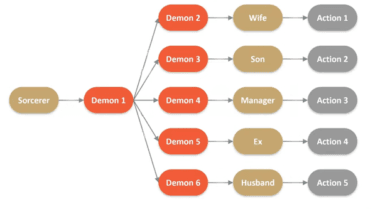
 

For more information:

When is the Night of Destiny?

What does the Quran Really Say About Hadith?

Quran: All You Need for Salvation

Join us to listen to our online Friday meetings every Friday.